
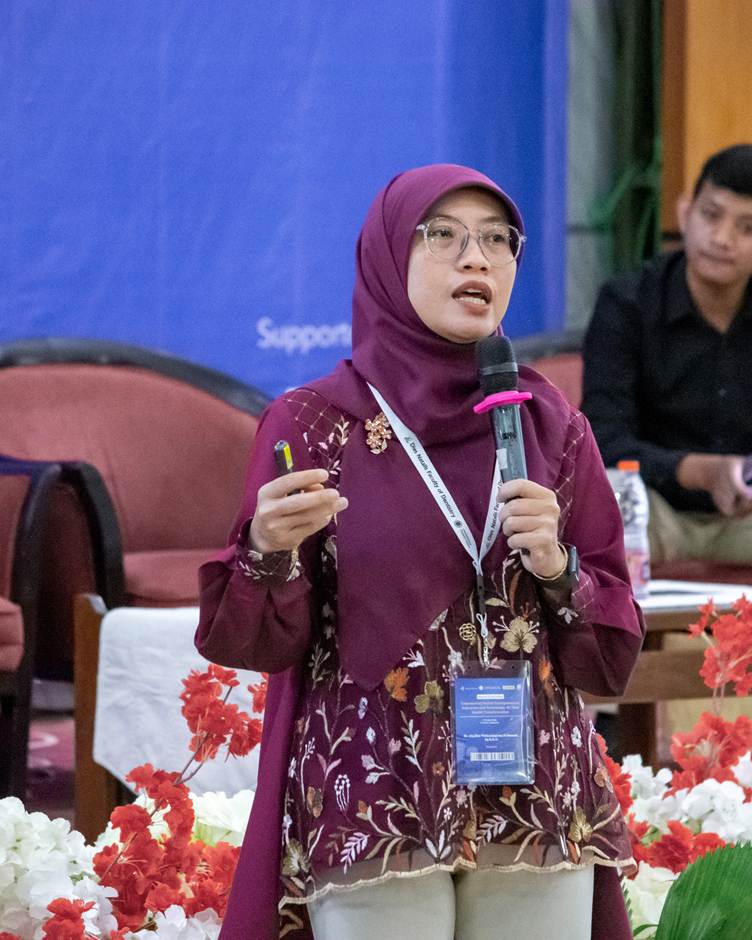
Behind radiographic screens that have long been interpreted solely through the eyes of clinicians, a “new language” is now emerging—translated by artificial intelligence (AI). During the 78th Anniversary Symposium of the Faculty of Dentistry, Universitas Gadjah Mada (FKG UGM), this transformation was showcased: from images into meaning, from pixels into diagnostic precision.
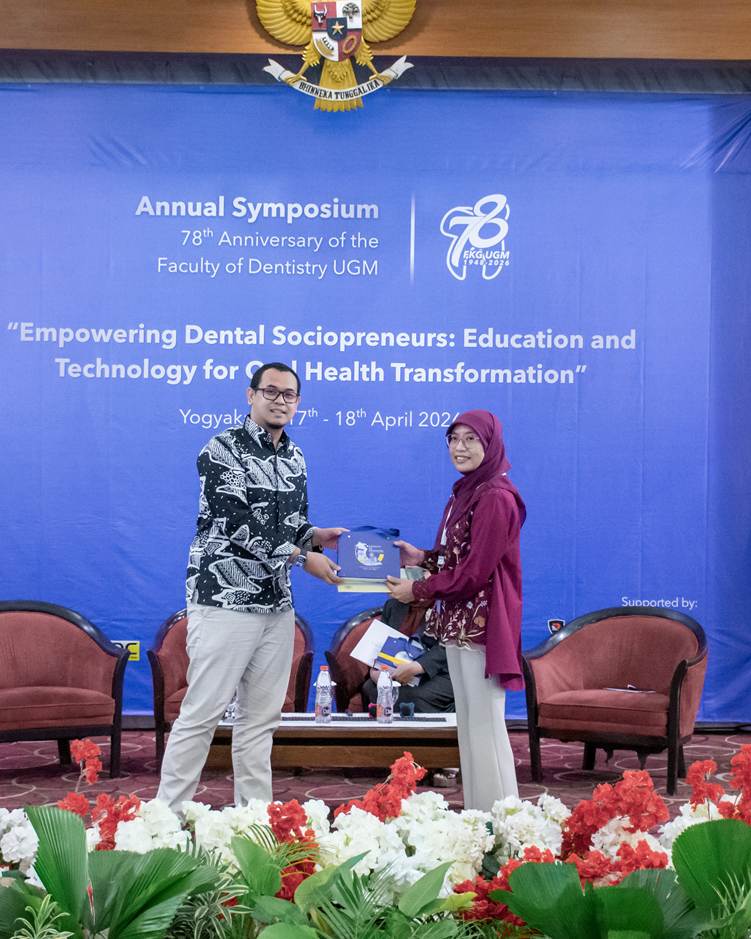
Carrying the theme “Empowering Dental Sociopreneur: Education and Technology for Oral Health Transformation,”the symposium not only celebrated the anniversary of FKG UGM, but also emphasized a new direction in dentistry driven by collaboration with cutting-edge information technology.
The spotlight emerged during a presentation by Rini Widyaningrum, who proposed that AI is no longer merely a tool,but a clinical partner, particularly in dental radiology.
“What is changing is not only the technology, but also the way we analyze disease. AI helps us recognize patterns that were previously difficult for humans to identify consistently,” said Rini.
AI and Periodontitis
Periodontitis, an inflammatory disease affecting the supporting tissues of the teeth, has long posed diagnostic challenges because interpretation of radiographs often depends heavily on subjective clinical judgment. Differences in clinicians’ experience frequently influence diagnostic outcomes.
Through a Deep learningapproach, the FKG UGM team developed a system capable of automatically segmenting and classifying periodontal conditions. The technology not only detects the presence of disease but also evaluates its severity.
“The model we developed can identify important anatomical structures and calculate bone loss more objectively. This is essential for determining the appropriate therapy,” Rini explained.
A two-stage convolutional neural network (CNN) approach became one of the major breakthroughs, enabling more systematic separation between detection and classification processes.
The development of AI at FKG UGM has not stopped at a single model. The integration of architectures such as Mask R-CNN and DenseNet169 demonstrates serious efforts to improve accuracy and reliability.
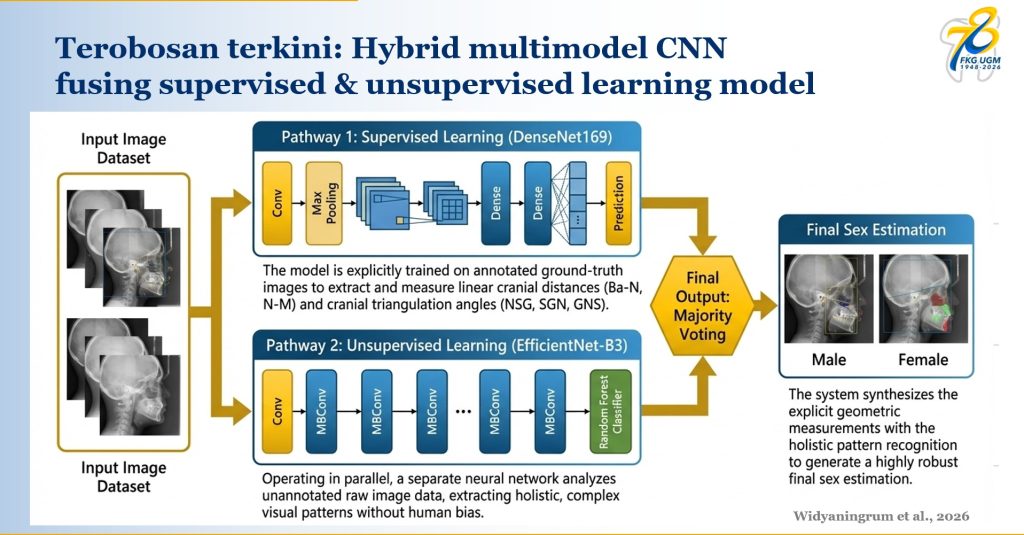
More advanced still, a hybrid multimodel CNN approach is now being developed. This system combines multiple learning models to produce consensus-based decisions.
“With a multimodel approach, we are not dependent on just one algorithm. This increases confidence in the analytical results, especially in complex cases,” Rini stated.
The technology is not limited to periodontal disease. It has also expanded into orthodontics and forensic odontology, including sex estimation based on cephalometric imaging—an innovation with significant potential in forensic identification.
Collaboration as the Foundation
Interestingly, the development of this AI system does not rely on a single discipline. Collaboration among radiologists, periodontists, orthodontists, and forensic experts has become the key foundation.
This interdisciplinary approach ensures that the technology is not only technically sophisticated but also clinically relevant.
“AI must be built from real clinical needs in the field. That is why collaboration is extremely important,” Rini emphasized.
Between Hope and Reality
Although promising, the path toward widespread implementation of AI in clinical practice still faces challenges. The availability of high-quality data, regulatory frameworks, and healthcare workforce readiness remain major concerns.
In addition, ethical issues—particularly regarding patient data security—cannot be overlooked.
The symposium served as a sign that change is already underway, moving steadily and inevitably forward.
“This is not about replacing doctors, but about strengthening the role of doctors with smarter tools,” Rini remarked.
From Screens to Services
What was presented in this symposium demonstrated that dentistry has entered a new era—an era in which clinical decisions are no longer based solely on experience, but are reinforced by deep data analysis. The next step for FKG UGM is to focus on one concrete initiative: GAMA-Self. What is it? Stay tuned for future updates.
(Reporter: Andri Wicaksono, S.Sos., M.I.Kom.; Photography: Fajar Budi Harsakti, SE)