
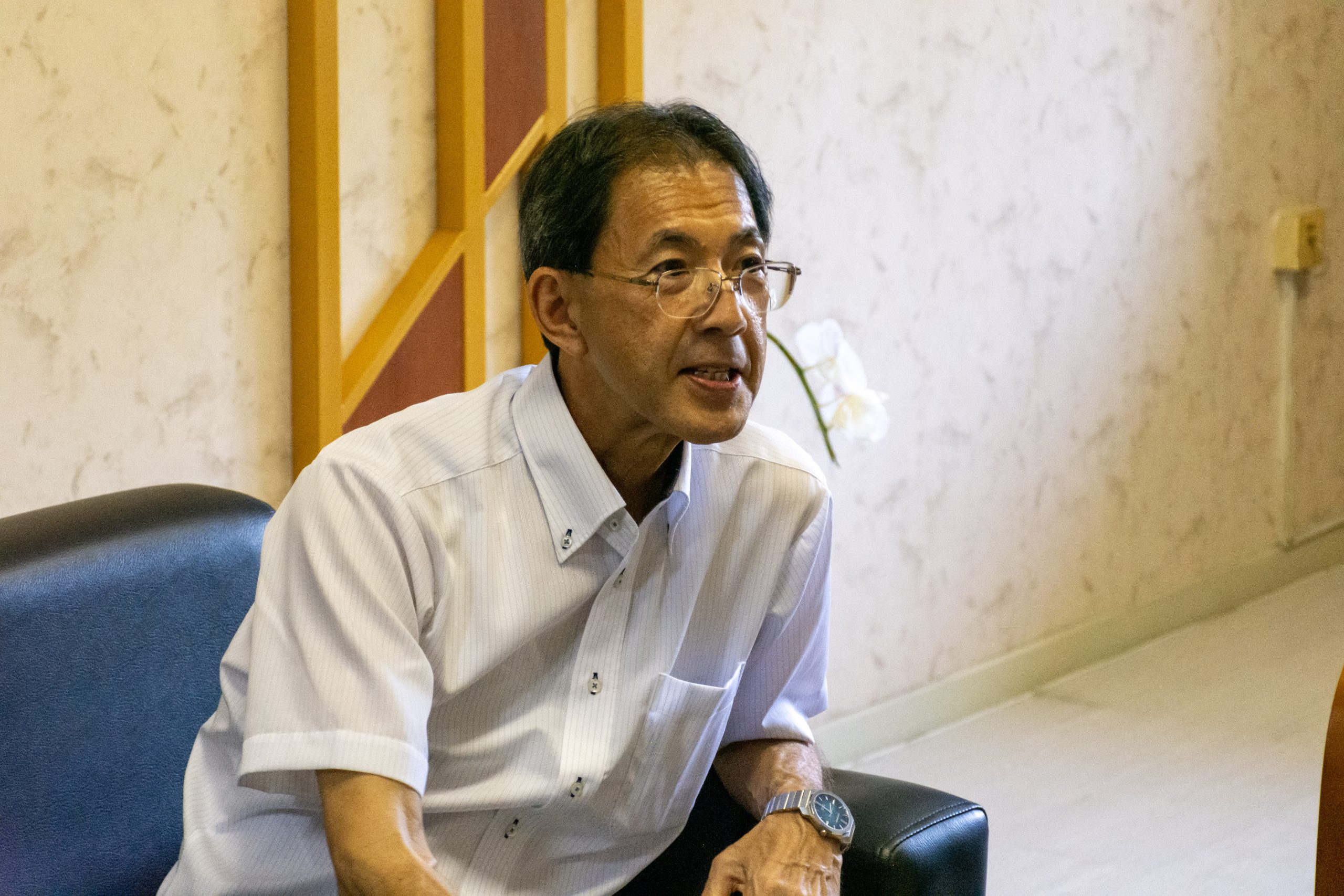
“I do not want to stop at publications. I want to continue until we can create products. We must create products that will actually be used, not merely products that exist in academic records.”
–Prof. Yasuhiko Tabata, D.Eng., D.Med., D.Pharm.–
Amid growing global challenges in dental science — such as antibiotic resistance, post-operative infections, and the need for safer regenerative technologies — Prof. Yasuhiko Tabata has emerged as one of Asia’s most influential scientists in the fields of biomaterials, Drug Delivery Systems (DDS), and regenerative medicine.
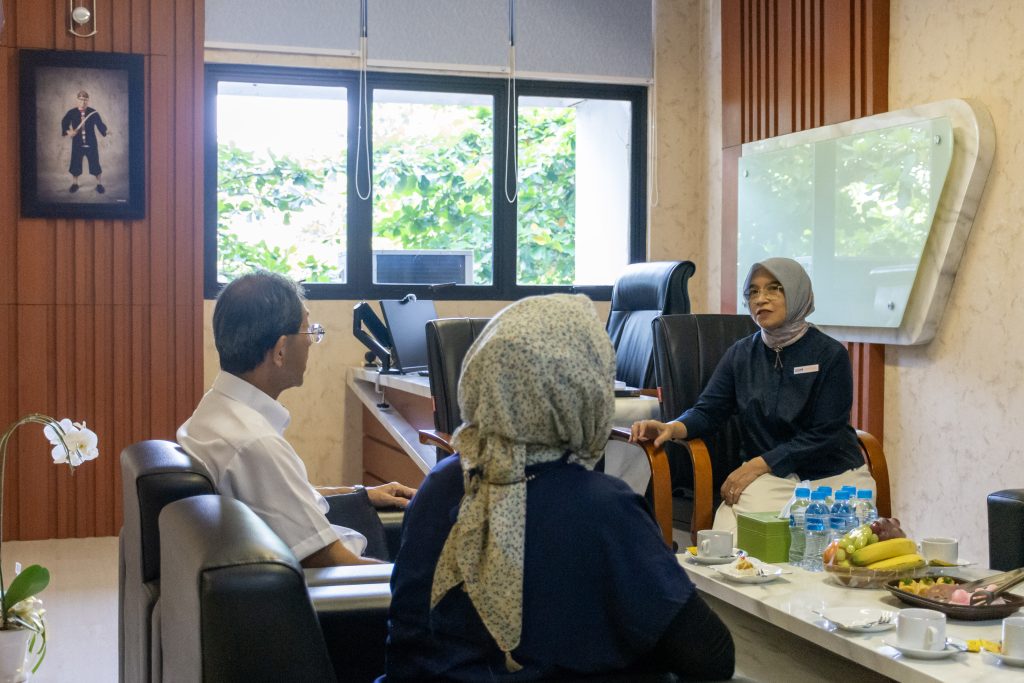
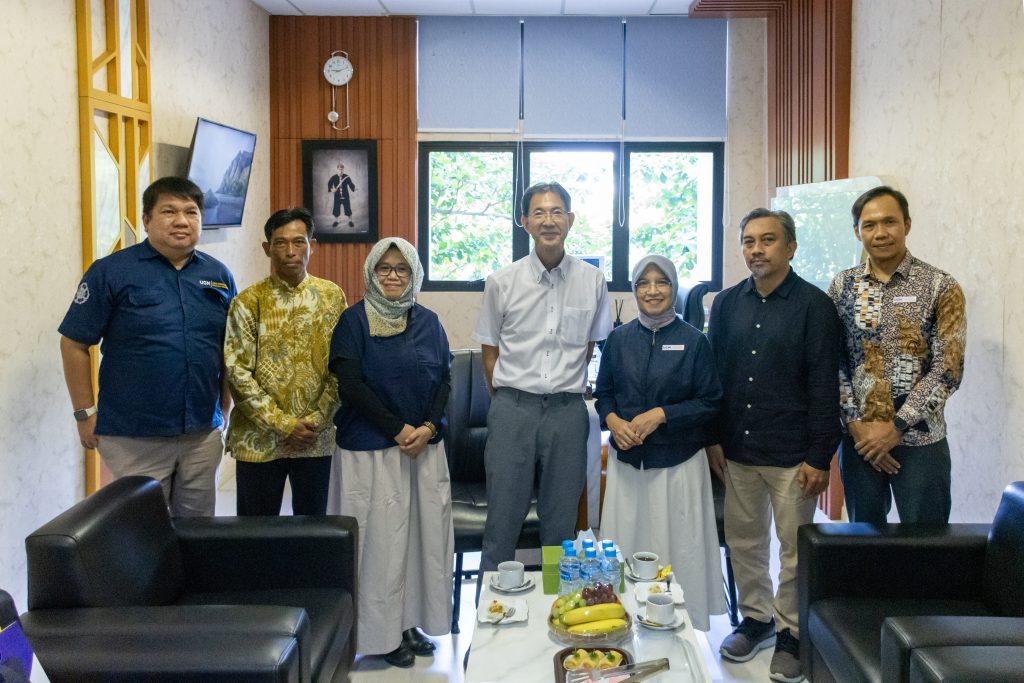
Prof. Tabata, as he is commonly known, was warmly welcomed during his visit and intensive discussions by the Vice Dean for Human Resources, Assets, and Finance of FKG UGM, drg. Heribertus Dedy Kusuma Yulianto, M.Biotech., Ph.D.; the Vice Dean for Research, Collaboration, and Community Service, drg. Trianna Wahyu Utami, MD.Sc., Ph.D.; the Head of the Doctoral Program in Dental Science, Prof. drg. Ika Dewi Ana, M.Kes., Ph.D.; along with lecturers and staff of FKG UGM. The extensive discussions regarding research collaboration, technology transfer, halal biomaterial development, and medical product downstreaming reflected a new direction in Asian scientific diplomacy: research should no longer stop at publications, but must evolve into products that directly benefit patients and industry.
A Scientist Bridging Basic Science and Industry
Prof. Tabata is widely recognized as a pioneer of modern biomaterials in Japan. According to his academic profile, he is a Professor Emeritus at Kyoto University and leads the “Cell Biotechnology” research group at the Graduate School of Medicine, Kyoto University. He possesses an extraordinary academic track record, including more than 1,700 scientific publications, 130 patents, and numerous international awards in biomaterials and regenerative medicine.
His academic career was built upon multidisciplinary studies involving polymer chemistry, pharmacy, cell biology, regenerative medicine, and medical diagnostic technology. He also served as a visiting scientist at the Massachusetts Institute of Technology (MIT) alongside Robert Langer, one of the most influential figures in modern bioengineering.
However, what truly distinguishes Prof. Tabata is not merely his scientific productivity, but his dedication to translational research that bridges laboratories with clinical and industrial needs.
During the courtesy meeting with FKG UGM, Prof. Tabata explained his research philosophy:
“I do not want to stop at publications. I want to continue until we can create products. We must create products that will actually be used, not merely products that exist in academic records.”
His statement felt like a self-critique of academic culture that often becomes trapped in publication numbers without the courage to turn research into real-world products.
Biomaterials, Antibiotics, and Future Health Crises
One of the most important discussions focused on the threat of antibiotic resistance and hospital-acquired infections — infections that emerge after medical procedures in hospitals.
Prof. Ika explained that scaffold and hydrogel technologies for tissue regeneration have developed rapidly. However, major challenges arise when these materials are used in infected areas such as periodontitis or osteomyelitis.
"Scaffolds are excellent for improving regeneration, but when infections occur, their degradation becomes extremely rapid and difficult to control,” explained one researcher during the forum.
Prof. Tabata responded by stating that biomaterials must not only be structural, but must also be capable of “communicating” with the body’s biological systems.
He encouraged combining hydrogels, local antibiotic delivery systems, macrophage activation, and chronic inflammation control. According to him, the future of regenerative medicine lies not only in tissue repair, but also in precisely regulating the body’s immune response.
“We must activate macrophages. That is very effective for controlling chronic inflammation,” said Prof. Tabata.
This approach reflects a major paradigm shift in modern biomaterials: from passive biomaterials toward intelligent biomaterials.
Indonesia Viewed as a Strategic Partner
Interestingly, Indonesia was not positioned merely as a market for Japanese technology. Instead, Indonesia was viewed as having strategic potential as a producer of biomaterials and medical devices. Several supporting factors mentioned included competitive human resources, technopark and sterilization facilities, standardization networks, and opportunities for developing halal biomaterial products for the global Muslim market.
During the courtesy meeting , significant discussions emerged regarding opportunities for producing biomaterials based on silk elastin hybrid proteins protein in Indonesia.
The conversation expanded further, highlighting the vast potential of halal biomaterial products for Southeast Asian, Middle Eastern, and even European markets.
Prof. Tabata enthusiastically welcomed the idea. “Oh, that is very good news,” he said when hearing about Indonesia’s potential for halal standardization and certification.
Mitochondrial Therapy and the Future of Regenerative Dentistry
In another part of the discussion, Prof. Tabata touched upon a far more futuristic topic: mitochondrial therapy. He explained how mitochondrial transplantation is beginning to be seen as a new approach in regenerative medicine.
“Mitochondria are the house of energy,” he stated.
According to him, the greatest challenge lies in maintaining biological compatibility and effectively delivering mitochondria to target tissues. Here again, biomaterials play a central role.
This topic demonstrates that the next generation of regenerative medicine may no longer focus solely on stem cells, but also on cellular organelle engineering, nano delivery systems, and intelligent biomaterials.
From Kyoto to Yogyakarta: Building the Future of Biomaterials
The discussion also highlighted how Asian scientists are attempting to build a new scientific axis that is no longer entirely dependent on the Western world.
Prof. Tabata is one of the founders of the Asian Biomaterial Federation (ABF) and has actively developed biomaterials networks across Asia for decades. During the courtesy meeting , ideas emerged regarding student exchanges, mentoring from Kyoto laboratories, Asian biomaterials conferences, and strengthening cross-country regenerative research networks.
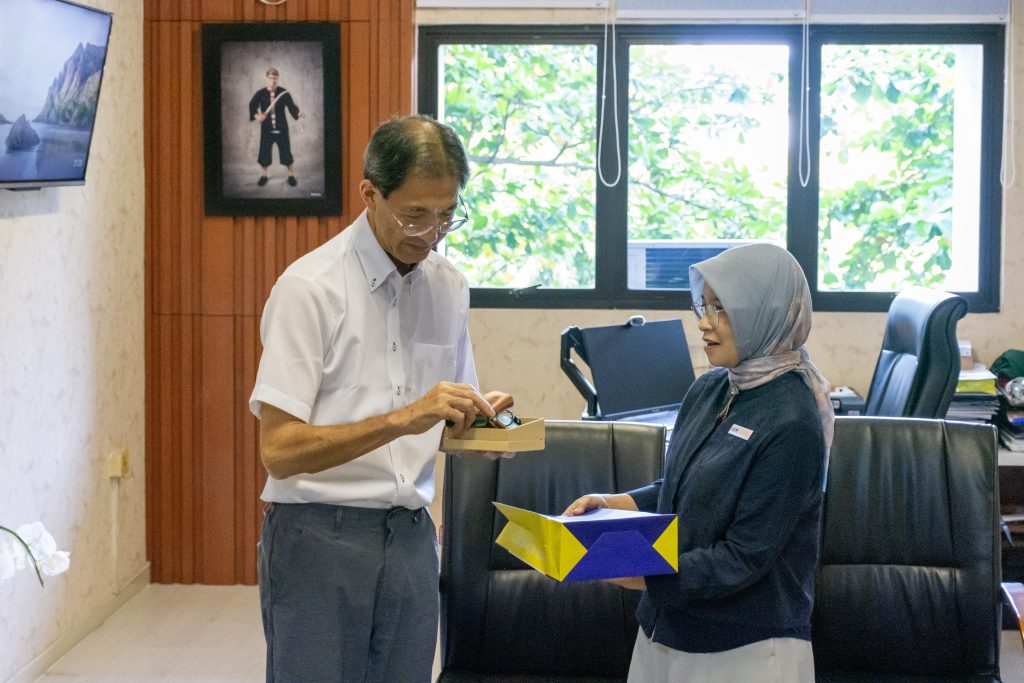
Prof. Tabata opened opportunities for lecturers and students from FKG UGM to study directly in his laboratory in Kyoto, Japan.
“Of course. Because our lecturers also need some training and new insights,” he said when asked about mentoring possibilities for lecturers and students.
His attitude reflects an important characteristic of scientific leadership in Asia: building new generations through the transfer of experience, not merely technology.
Criticism of the Academic World
Behind the relaxed conversation, there was also criticism of the modern research world. Prof. Tabata repeatedly emphasized the importance of sustainable industry-academia collaboration. He mentioned that many laboratories struggle to secure funding because long-term industrial relationships are not properly developed.
“It is very difficult to obtain funding. I feel fortunate because I have maintained long-term collaboration with companies for more than 20 years,” he explained.
This message is highly relevant to Indonesia’s academic world, which often becomes trapped in short-term projects and administrative orientations.
In Prof. Tabata’s view, scientific reputation is built through consistency, industrial trust, courage in technological translation, and active international networks — not merely citation indexes.
Inspiration for Asia’s Young Generation
Despite his global reputation, Prof. Tabata continues to show strong concern for younger generations. He spoke about the importance of student exchange, international mentoring, and collaborative interdisciplinary ecosystems.
For Prof. Tabata, the future of biomaterials and regenerative medicine cannot be built by a single discipline alone. Chemists, doctors, microbiologists, engineers, pharmacists, and industry players must work together within one ecosystem.
Kyoto is known not only for famous Japanese rock bands such as The Brilliant Green and 10-FEET, but also for producing figures like Prof. Yasuhiko Tabata, who has shaped Asia through his expertise in Cell Biotechnology at the Graduate School of Medicine, Kyoto University.
Collaboration is the key, synergy is the essence, and sectoral ego must be reduced in order to realize the downstream transformation of research into real-world applications.
(Reporter: Andri Wicaksono, Photographer: Fajar Budi Harsakti)