
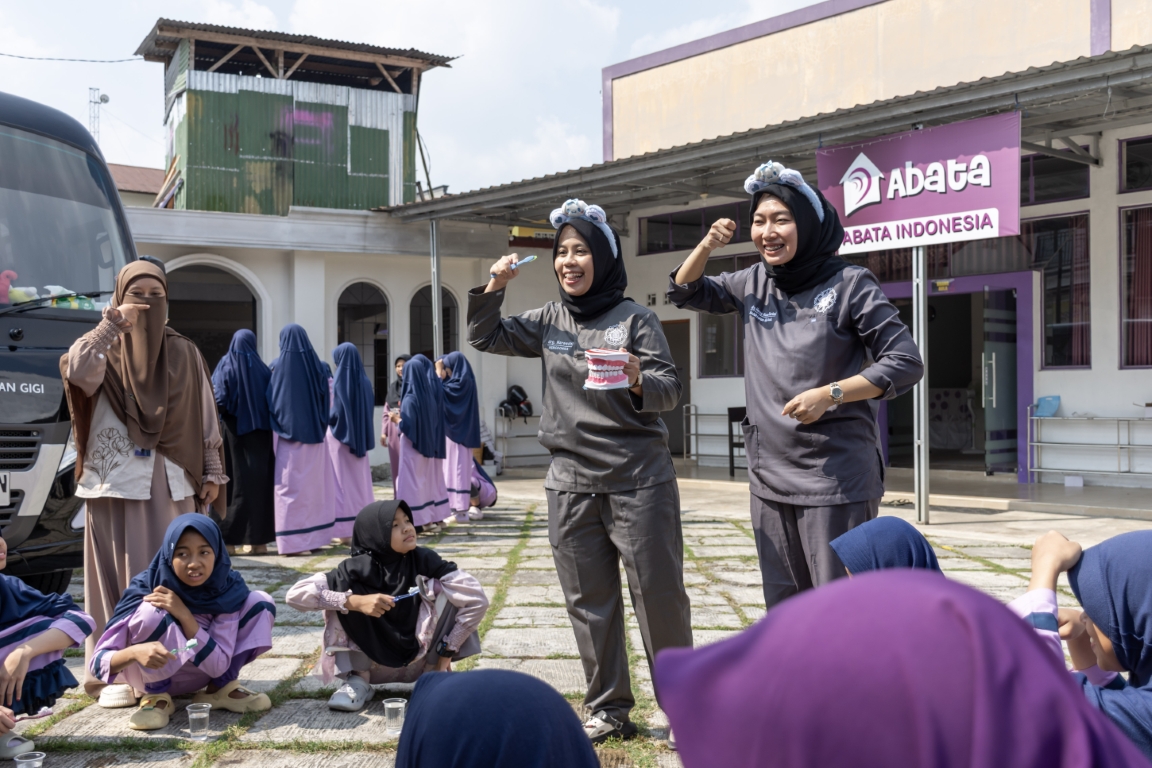
A total of 58 students from Abata Indonesia Temanggung participated in oral health education and dental examinations organized by the Master of Clinical Dental Sciences (IKGK) Study Program, Faculty of Dentistry, Universitas Gadjah Mada (FKG UGM), on 6 June 2026. The community service activity also included a supervised toothbrushing session involving lecturers and resident students from the Master of IKGK program.
The Head of the Master of IKGK Study Program at FKG UGM, drg. Asikin Nur, M.Kes., Ph.D., explained that children with hearing impairments have specific needs that require attention in healthcare services, including oral and dental healthcare. According to her, communication limitations can become a challenge during examinations and health education activities. Therefore, healthcare professionals need to understand appropriate approaches so that health information can be effectively received by children with special needs.
“Every child has the same right to receive high-quality healthcare services. Through this activity, we aim to understand their needs more closely while providing dental health education and examinations that are appropriate to their conditions and characteristics,” she said.
She added that community service activities should not stop at providing dental examinations alone. The data and findings collected during the activity will serve as evaluation materials for developing more targeted follow-up programs.
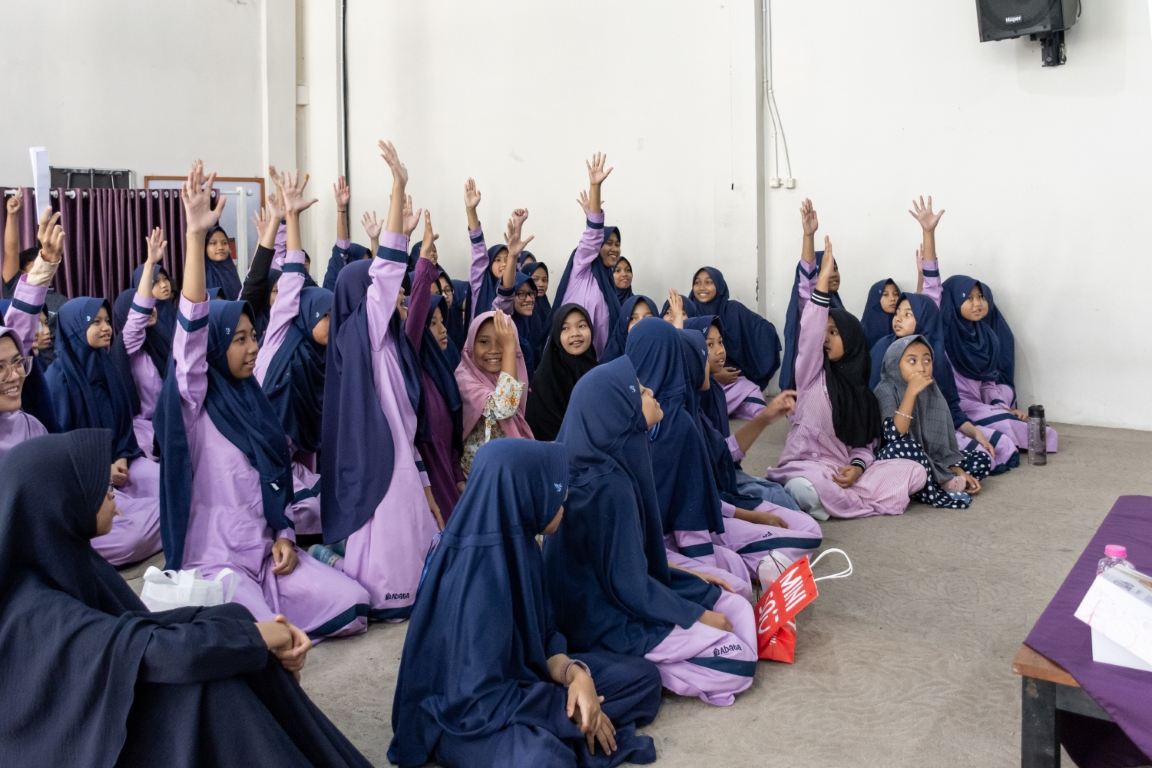
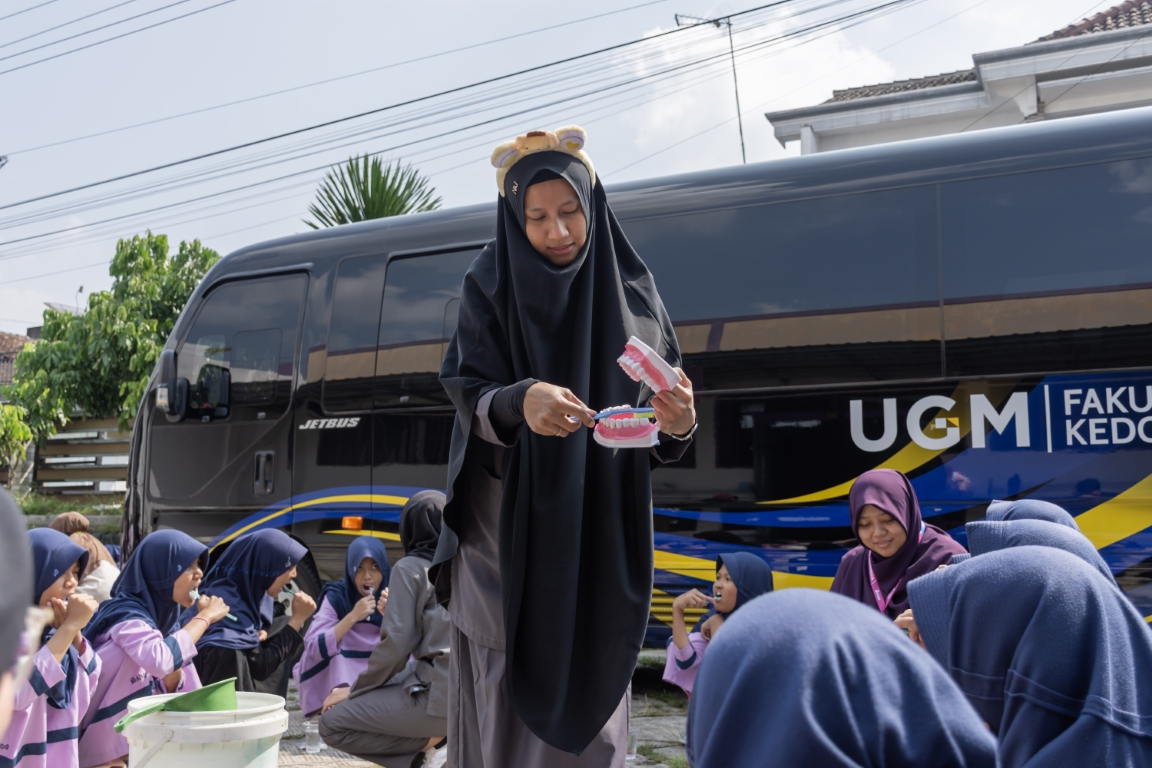
During the activity, students received education about the importance of maintaining oral and dental health. Following the educational session, the team conducted dental examinations to assess the participants’ oral health conditions. The materials provided were then practiced through a supervised toothbrushing activity directly guided by resident students from the Master of IKGK program.
Abata Indonesia is a boarding-based educational institution that supports deaf children through formal education, religious education, and independence development programs. Established in 2016, the institution currently provides guidance and education for dozens of students from various regions.
The Principal of Abata Indonesia, Erlita Agustia, S.Pd., welcomed the community service program conducted by FKG UGM. According to her, the activity provided significant benefits for students, particularly in increasing awareness of the importance of maintaining personal health, including oral and dental health.
In addition to providing education and examinations, resident students also accompanied students during the toothbrushing session. The direct assistance allowed students to practice proper toothbrushing techniques according to the materials they had received.
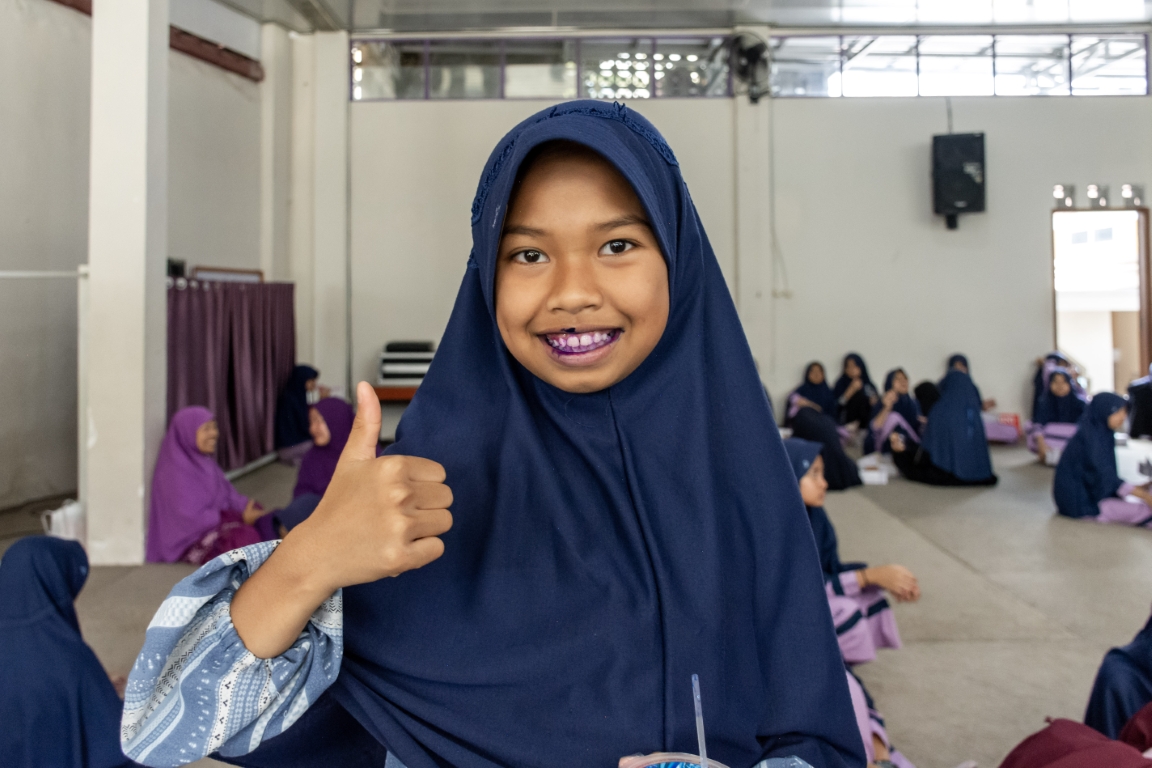
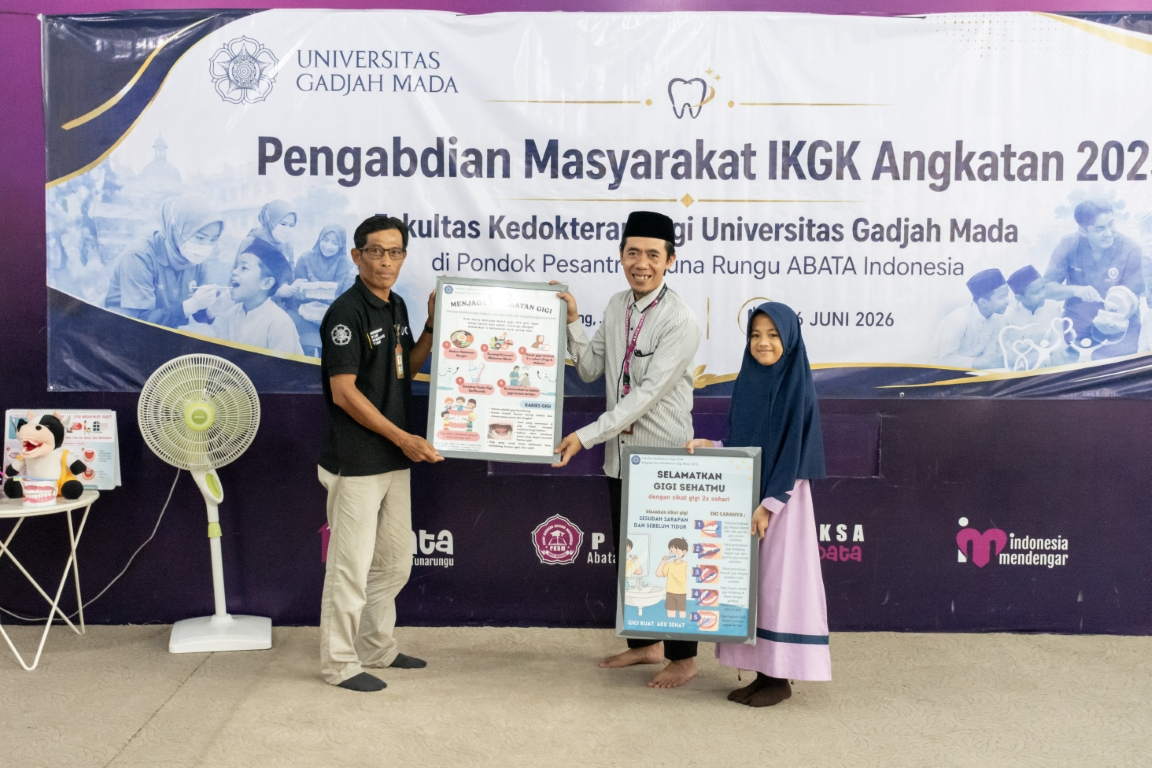
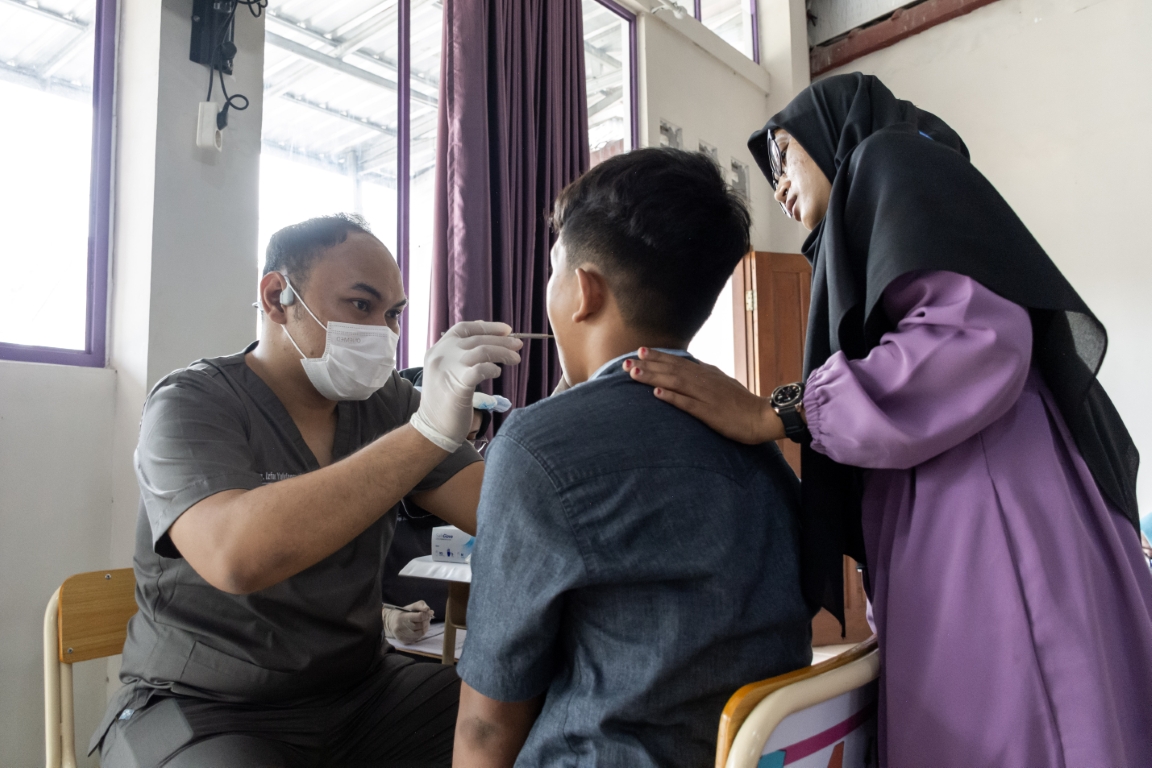
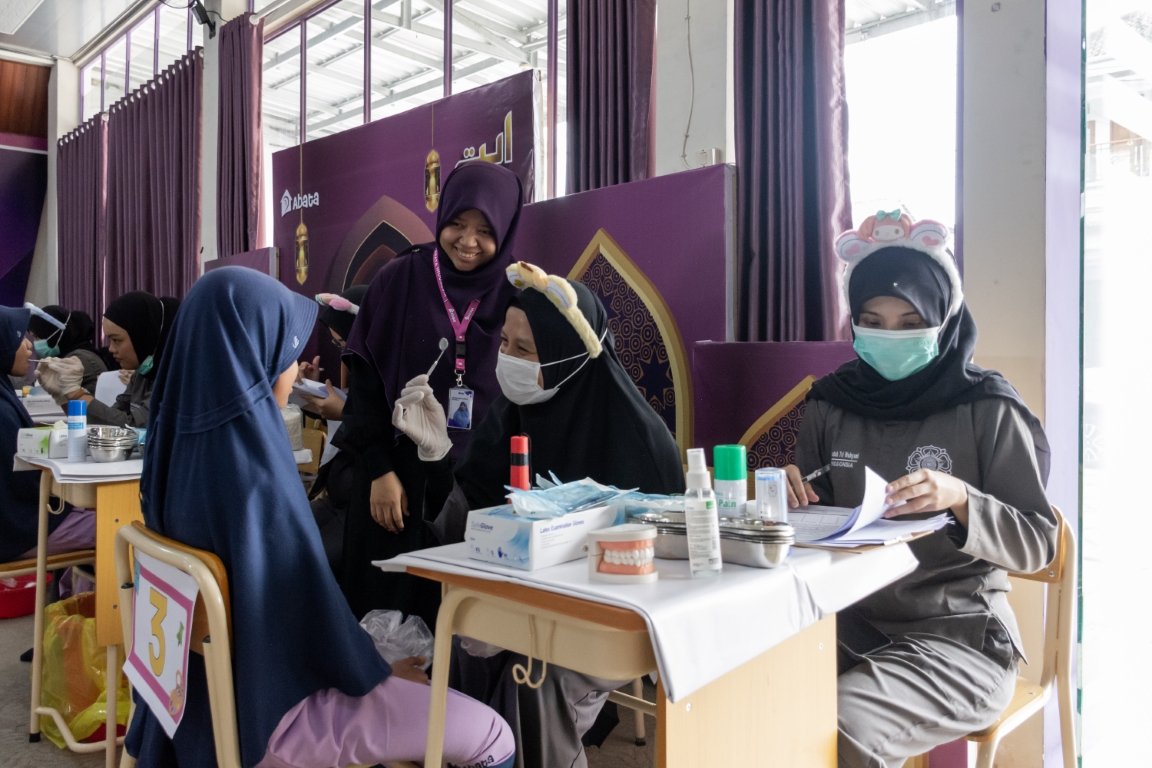
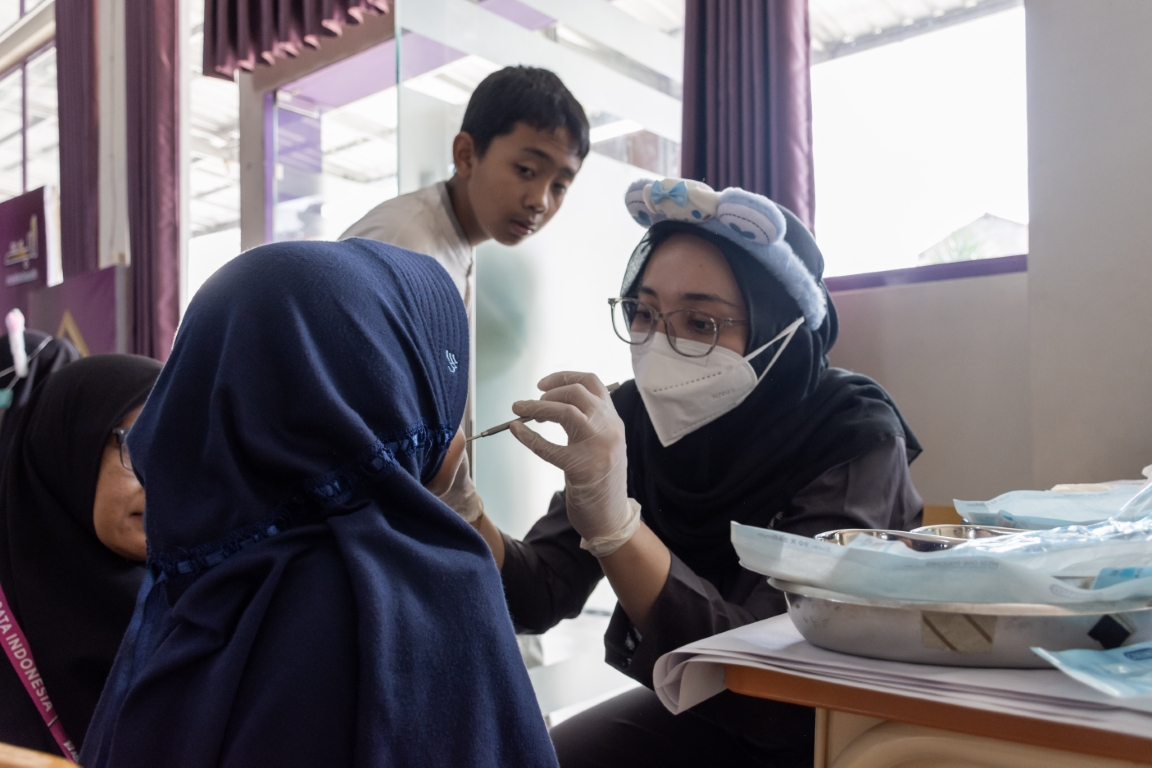
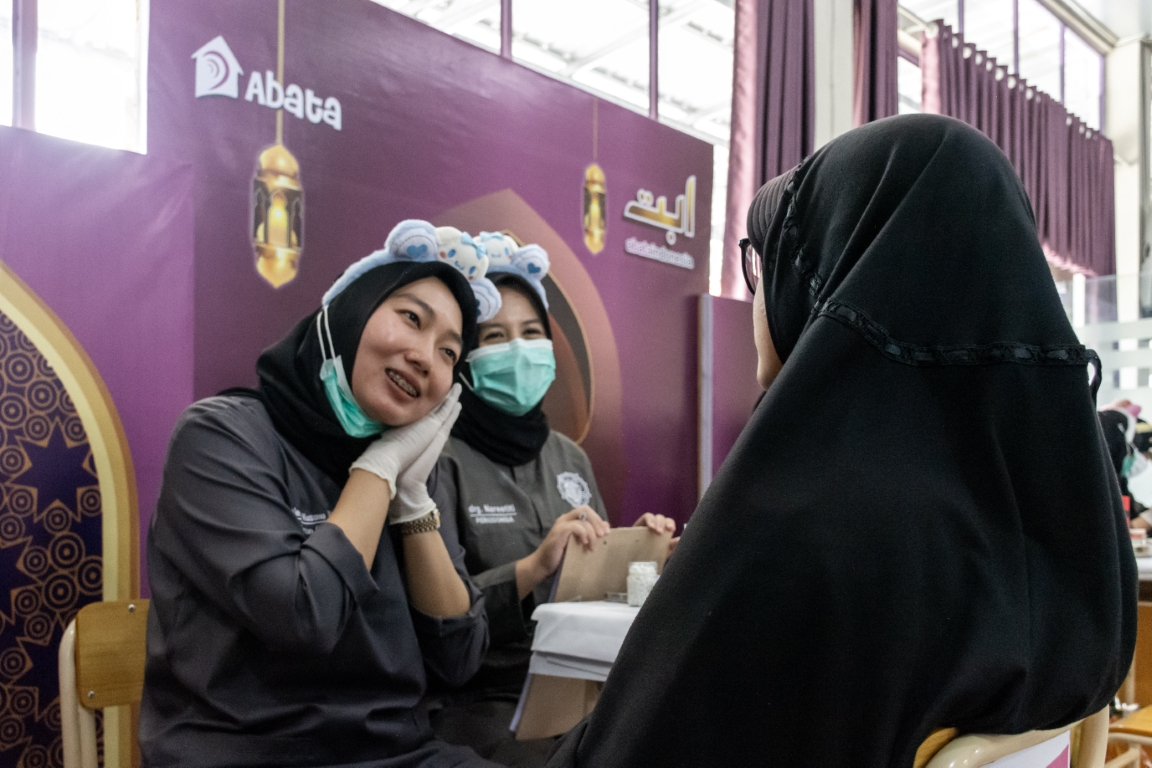
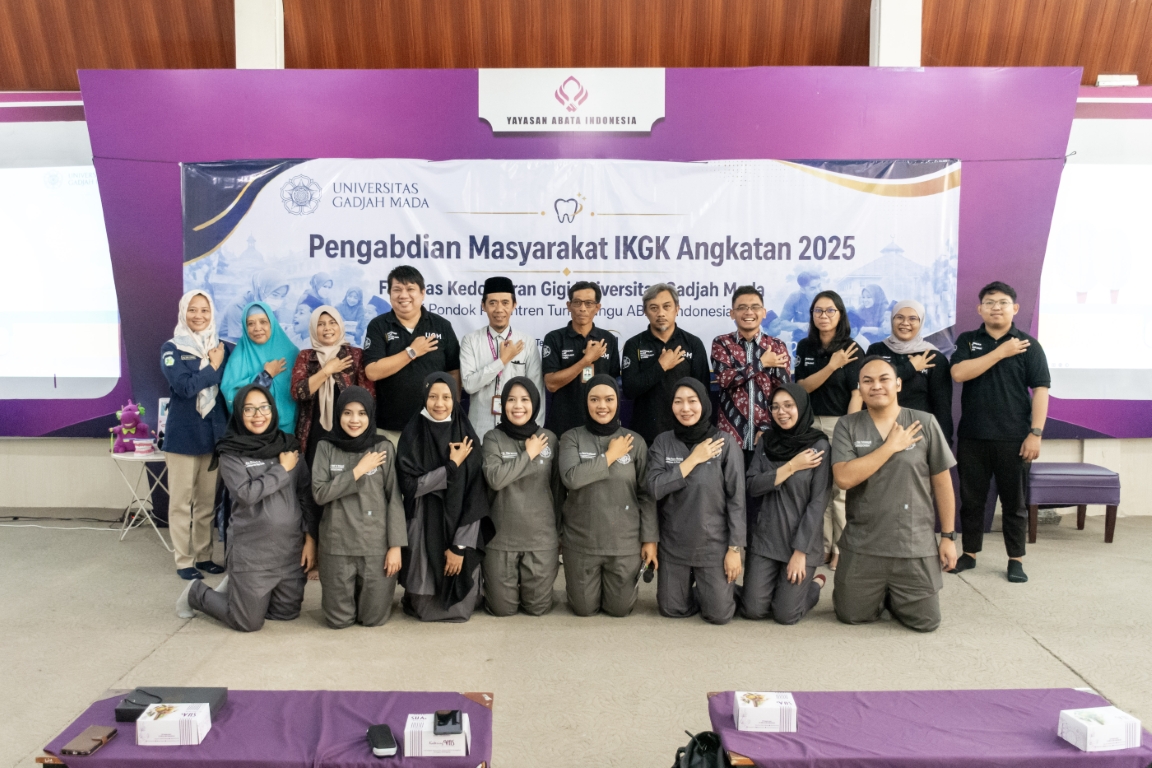
For resident students, this activity became a valuable experience in providing healthcare services to children with special needs. One of the Master of IKGK resident students at FKG UGM, drg. Nafisah Elok, shared that she gained many valuable lessons while interacting with students from Abata Indonesia.
“As an operator, I found this activity very meaningful. Treating pediatric patients requires patience, especially children with hearing impairments who require different communication approaches. However, deaf children were also very cooperative and enthusiastic, so I was happy to be able to examine them,” she said.
According to Elok, the main challenge during the examination was communication. Nevertheless, various forms of non-verbal communication became bridges that helped build connections with the participants.
“Communication difficulties certainly existed, especially when giving instructions such as asking them to open their mouths or explaining procedures. However, I learned that communication does not always have to rely on words. Smiles, eye contact, body language, and assistance from teachers or caregivers were very helpful in making children feel comfortable,” she explained.
The most memorable experience for her was seeing children who initially appeared hesitant gradually become comfortable and willing to cooperate throughout the examination process.
“The most memorable part of this activity was when the children began to feel comfortable and were willing to cooperate after initially appearing afraid during the examination. Through this activity, I learned that dental healthcare services for children, especially children with special needs, require not only clinical skills but also empathy, patience, and the ability to understand patients’ needs more broadly. This experience reminded me that every child deserves safe, comfortable, and compassionate dental healthcare services,” she concluded.
This activity became part of efforts to improve oral health awareness among deaf children while also obtaining an initial overview of participants’ dental health conditions. The examination results are expected to serve as a foundation for developing follow-up programs tailored to the needs of the partner institution.
Author: Fajar Budi Harsakti
Photo: Fajar Budi Harsakti