
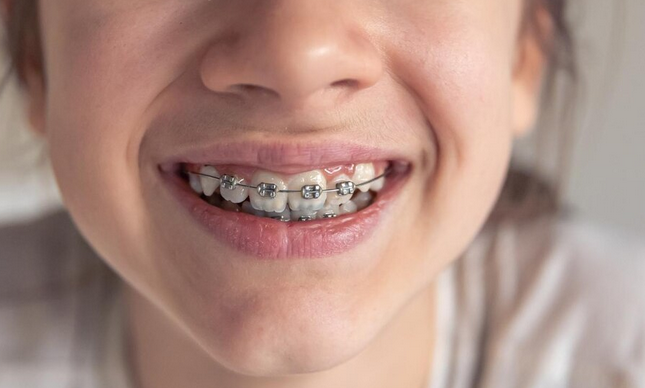
Speech is a complex function involving coordination between teeth, tongue, jaw, and oral soft tissues. Malocclusions—particularly anterior open bite and tongue thrusting habits—can interfere with the articulation of certain phonemes, including the pronunciation of the letter “S.” In orthodontics, improving speech function is as important as aesthetic and occlusal correction to ensure clear and confident communication.
A study conducted by FKG UGM student Utami, Sapti Ari, supervised by Dr. drg. Rinaldi Budi Utomo, M.S., Sp.KGA(K), titled “Perubahan pengucapan huruf ‘S’ selama perawatan ortodonti pada kasus gigitan terbuka anterior dengan tongue thrusting pada anak”, provides empirical insight into how orthodontic therapy affects speech in children with these conditions.
Research Findings on “S” Pronunciation
Based on this research:
- Subjects: Children with anterior open bite and tongue thrusting habits
- Focus: Changes in “S” pronunciation during orthodontic treatment
- Results: Post-treatment improvements in “S” articulation, likely due to better tongue positioning, closure of anterior teeth, and improved articulation space
Mechanisms and Contributing Factors
Several aspects that explain why orthodontia can affect speech function, especially the letter “S”:
- Tongue Position and Tongue Thrust
- Tongue thrust causes forward tongue placement during “S” pronunciation, resulting in distortion
- Orthodontic correction provides more stable articulation support
- Anterior Bite Closure
- Open bite creates a gap allowing abnormal tongue positioning
- Bite closure facilitates proper tongue placement at the alveolar ridge
- Speech Adaptation After Orthodontic Treatment
- Patients require time to adapt speech following tooth movement
- Proper treatment design reduces “S” distortion over time
Challenges in Therapy and Speech Function
Although orthodontia offers potential for improvement, there are several challenges:
- Habit relapse without myofunctional therapy
- Individual anatomical variability
- Patient communication and education
- Time required for speech improvement
Solutions and Recommendations
From research and clinical practice, here are some solutions to make orthodontic therapy effective in improving speech function:
- Kombinasi Terapi Ortodontik dan Myofungsional
- Gunakan latihan lidah, pelatihan posisi lidah saat istirahat dan saat berbicara, untuk mendukung perubahan anatomi.
- Desain Perawatan yang Memperhitungkan Fungsi Bicara
- Pada kasus gigitan terbuka, gunakan perangkat dan teknik yang dapat membantu closing bite tanpa mengorbankan kenyamanan.
- Pilih peranti yang memungkinkan ruang artikulasi yang baik untuk lidah.
- Evaluasi Fungsi Bicara Sebelum dan Sesudah Perawatan
- Melakukan tes pengucapan fonem (termasuk “S”) sebagai bagian dari evaluasi awal dan diikuti selama perawatan untuk memantau perbaikan.
- Pendekatan Tutup dan Jangka Panjang
- Setelah ortodonti selesai, gunakan retainer atau alat pencegah relapse, dan pantau kebiasaan seperti tongue thrust untuk menjaga kejelasan pengucapan.
***
Orthodontic therapy in anterior open bite cases with tongue thrusting can positively affect speech function, particularly “S” pronunciation. Research by Utami et al. at UGM demonstrates that orthodontic treatment improves not only dental alignment but also speech articulation in children.
Successful outcomes require malocclusion correction, bite closure, tongue habit management, and speech adaptation to achieve functional and communicative clarity.
References
UTAMI, Sapti Ari, Dr. drg. Rinaldi Budi Utomo, M.S., Sp.KGA(K), Perubahan pengucapan huruf “S” selama perawatan ortodonti pada kasus gigitan terbuka anterior dengan tongue thrusting pada anak, https://etd.repository.ugm.ac.id/penelitian/detail/11488
Author: Rizky B. Hendrawan | Photo: Freepik

