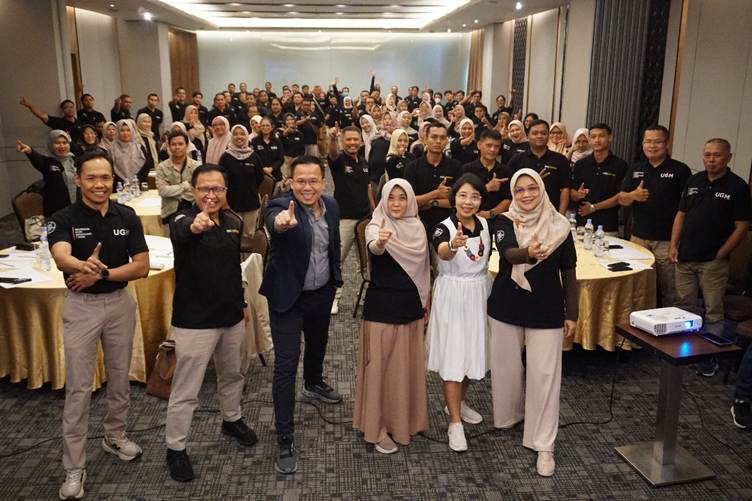
“Hello…Hi…” echoed throughout the educational staff workshop room at FKG UGM on April 11, 2026, delivered enthusiastically by speaker Arih Budi Utomo. Through his presentation, Arih opened the participants’ eyes to the idea that educational staff are also stakeholders. Stakeholders are parties who hold interests in the success and sustainability of an institution. They have different roles, goals, and interests related to institutional activities and decisions. Within a faculty, stakeholders include the deanery, lecturers, educational staff, students, and partners. As part of the campus community, educational staff are expected to strengthen their sense of ownership (handarbeni) toward the institution, reinforcing the faculty’s esprit de corps.
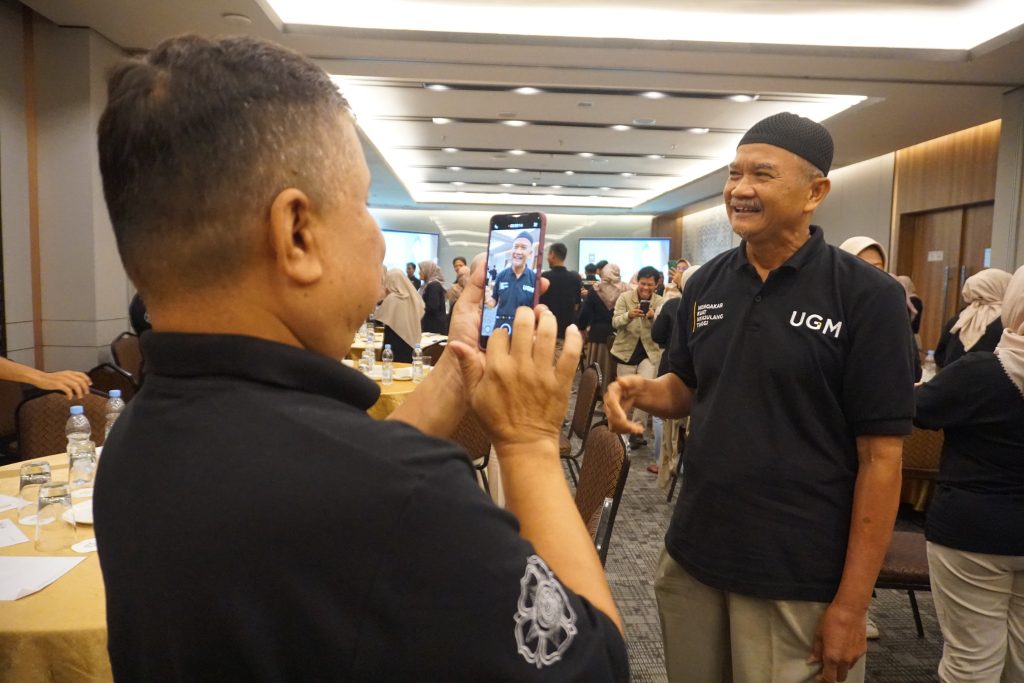
The Faculty of Dentistry, Universitas Gadjah Mada (FKG UGM), organized a Competency Development Workshop for Educational Staff on April 11, 2026, as part of its ongoing efforts to improve human resource quality and strengthen workplace culture within the faculty. The event was attended by 113 educational staff members of FKG UGM.
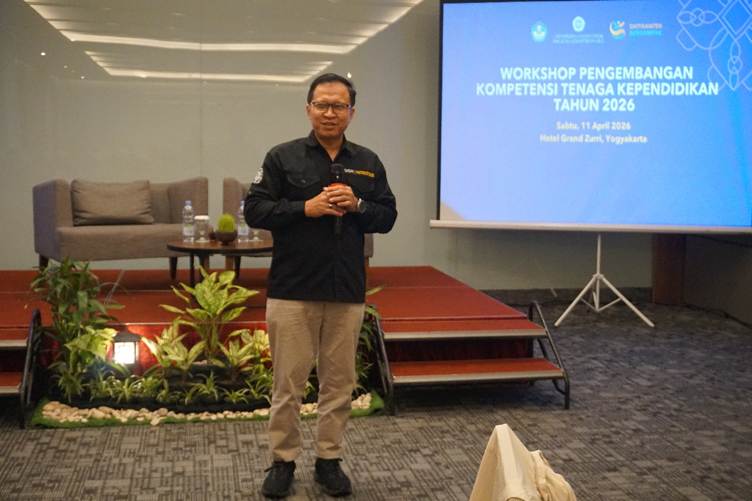
The workshop was officially opened by the Dean of FKG UGM, Prof. drg. Suryono, SH, MM, Ph.D., who emphasized the importance of both individual capacity development and stronger inter-unit collaboration. He stated that every element within the organization plays a strategic role in supporting the institution’s vision.
In his remarks, the Dean also expressed appreciation for the various self-development initiatives undertaken by educational staff, including their courage to share experiences at national forums and produce written works. He viewed these efforts as tangible manifestations of a spirit of learning and adaptation amid dynamic changes.
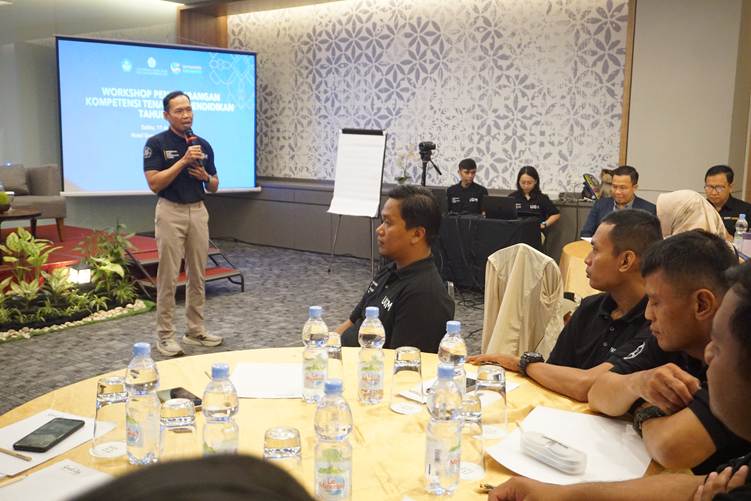
“We all have the potential to grow. With good collaboration, every individual can provide their best contribution to the institution,” said the Dean of FKG UGM. Meanwhile, the Vice Dean for Finance, Human Resources, Assets, and IT, drg. Heribertus Dedy Kusuma Yulianto, M.Biotech., Ph.D., emphasized that collaboration represents collective achievement and shared success for the entire FKG UGM community. The workshop materials were delivered by Arih Budi Utomo, a business communication consultant experienced in character development and organizational communication culture.
Strengthening Work Culture and Integrity
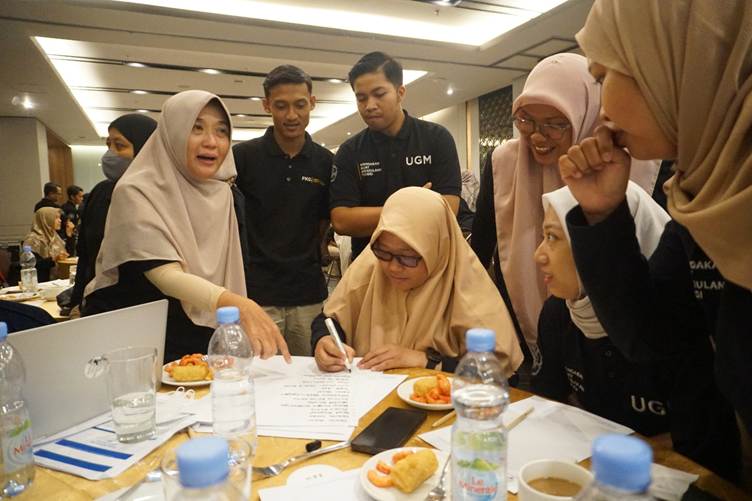
The workshop also highlighted the importance of a work culture based on integrity, responsibility, and professionalism. During discussions, participants were encouraged to reflect on daily work practices, including challenges in implementing flexible work systems.
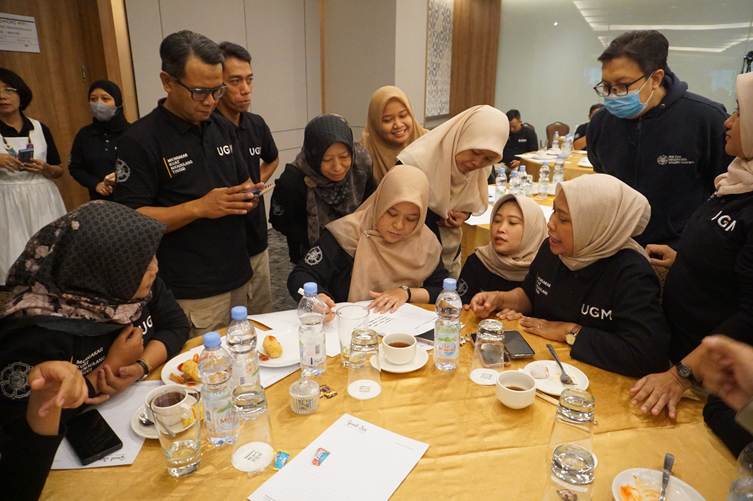
Several shared experiences demonstrated the need for alignment between institutional policies and individual commitment in carrying out responsibilities. Therefore, strengthening discipline and accountability became an important aspect of maintaining organizational trust and performance.
In a separate forum, the Minister of Higher Education, Science, and Technology, Prof. Brian Yuliarto, Ph.D., recently emphasized at a forum held at Universitas Airlangga the importance of encouraging educational staff to utilize technology, particularly artificial intelligence (AI). This face-to-face activity represented the third stage of an ongoing series of programs. Today, educational staff are no longer limited to operational roles alone; they are also expected to expand into conceptual domains according to their expertise. Higher education institutions require conceptual expertise in areas such as IT, corporate communication, e-budgeting, sustainable technology, green campus initiatives, and other support systems. According to him, without professional and adaptive educational staff, it would be difficult for the country to realize high-quality and competitive higher education.
“Today’s educational staff are not only responsible for administration, but also act as locomotives for system improvement and conceptual development. In the digital era, we are required to work smarter and leave old methods behind,” he stated.
Collaboration as the Key to Organizational Performance
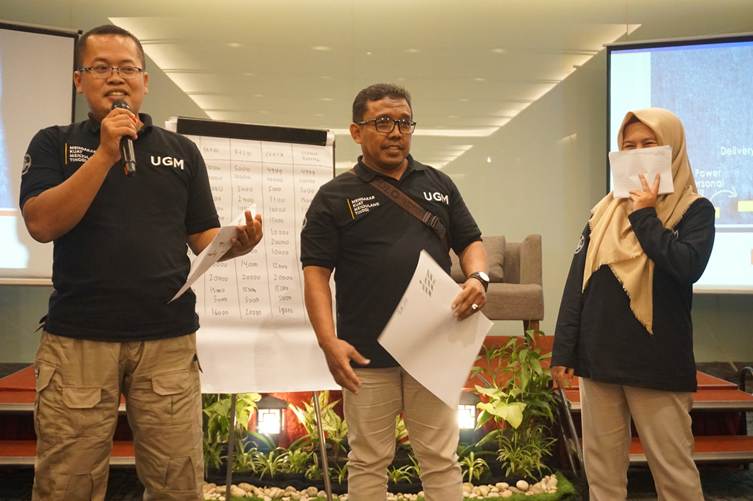
Through various interactive sessions, participants were encouraged to understand that organizational success is not determined by individuals alone, but by the ability to work together effectively. The concept of cross-functional collaboration became a primary focus, emphasizing that diversity of roles actually strengthens team performance.
The participatory approach implemented through group discussions, simulations, and collective reflection was expected to strengthen communication and build better synergy among educational staff members.
Adapting in an Era of Change
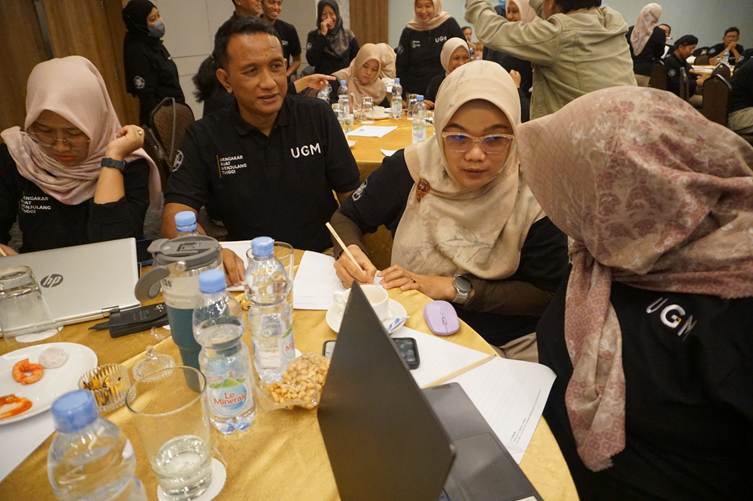
During the workshop sessions, participants were also invited to understand the increasingly rapid dynamics of change, including technological developments and growing demands for professionalism in the workplace. The ability to adapt, engage in lifelong learning, and utilize technology are essential competencies that must continue to be developed.
The workshop also served as a “pit stop” for all participants to evaluate themselves, strengthen motivation, and realign individual goals with the faculty’s strategic direction.
Commitment Toward Sustainable Performance
Through this activity, FKG UGM reaffirmed its commitment to building a productive, collaborative, and service-oriented work environment focused on continuous quality improvement.
It is hoped that the outcomes of this workshop will not stop at conceptual understanding alone, but will be implemented concretely in daily work activities, enabling educational staff to contribute optimally to institutional development in the future and further enhance the human resource capacity of FKG UGM educational staff.
(Editorial Team: Andri Wicaksono, S.Sos., M.I.Kom)