
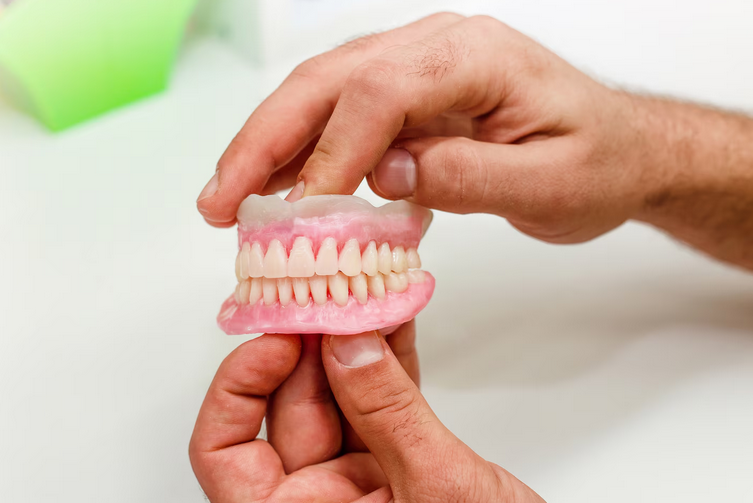
A removable partial denture (RPD) is a commonly used prosthodontic solution for replacing missing teeth. Its primary objectives include restoring mastication, aesthetics, phonetics, and patient comfort. However, for a denture to function optimally and maintain long-term stability, occlusion—that is, how the denture interacts with opposing teeth and supporting tissues—plays a crucial role in ensuring stability and comfort in use.
Poor occlusion (whether too high, uneven, or traumatic) may result in several negative effects, such as excessive pressure on the mucosal tissue or residual alveolar ridge, increased mobility of remaining teeth, trauma to periodontal tissues, irritation of surgical wounds (in the case of an immediate denture), and discomfort in chewing and speech functions.
Case Study: Immediate Removable Partial Denture in a Patient with Chronic Periodontitis
In an article published in the MKGK Journal of FKG UGM titled “Immediate Removable Partial Denture Treatment in Patients with Chronic Periodontitis,”written by Adi Kristanto Tandadjaja, Prof. Dr. drg. Haryo Mustiko Dipoyono, MS, Sp.Pros(K), Dr. drg. Suparyono Saleh, Sp.Pros(K), and Dr. drg. Endang Wahyuningtyas, M.S., Sp.Pros(K), it is described that the patient with chronic periodontitis experienced severe tooth mobility and significant tooth loss. Treatment involved tooth extraction followed by the immediate placement of a removable partial denture, with the aim of promptly restoring chewing function and aesthetics. It was reported that “Based on anamnesis, clinical examination, and prosthetic rehabilitation through immediate extraction of teeth 17 and 36 and insertion of the removable partial denture, the results showed: the denture was retentive and stable, no traumatic occlusion was present, and aesthetics were satisfactory.”
Additional findings from the study include:
- 24-hour post-insertion evaluation indicated no complaints, no bleeding, and no pressure from the denture on the extraction site.
- Subsequent follow-up showed complete wound healing, and the patient reported satisfaction as chewing function had returned.
Analysis: How Occlusion Influences Denture Stability
Based on the study and general prosthodontic literature, the following mechanisms illustrate how occlusion affects denture stability:
| Occlusal Aspect | Impact if Not Optimal | Implications for Denture / Periodontitis |
|---|---|---|
| Occlusal Contact (high/low) | If the denture is too high → premature contact → excessive pressure on the denture and supporting tissue, increasing mobility of remaining teeth. If too low → insufficient support → denture may feel loose. | The study notes the absence of traumatic occlusion →indicating that proper occlusal adjustment is essential to ensure stability and comfort. |
| Load Distribution | Load must be evenly distributed to prevent excess pressure on any area. Uneven load may accelerate damage to mucosa or residual alveolar ridge. | Immediate denture aids in quickly restoring chewing function and distributing load, provided occlusion is properly adjusted. |
| Periodontal Tissue Adaptation | In chronic periodontitis, periodontal tissues are already weakened. Incorrect occlusion may worsen tooth mobility. | The study shows that with proper occlusal adjustment, the denture was retentive and stable without traumatic occlusion. |
| Comfort and Function | Poor occlusion may cause pain, difficulty chewing or speaking, and discomfort during daily activities. | In this case study, chewing function was restored and the patient reported no complaints during follow-ups. |
Clinical Practice Recommendations for Ensuring Good Occlusion
To ensure that occlusion supports denture stability, especially in cases of immediate dentures in chronic periodontitis, the following steps are recommended:
- Careful Pre-operative Planning
- Evaluate periodontal condition of remaining teeth, including mobility and recession.
- Analyze opposing occlusion and freeway space to determine appropriate denture height.
- Accurate Working Model Fabrication
- The impression must accurately capture the extraction socket and residual alveolar ridge to ensure proper fit and stability.
- Occlusal Adjustment at Insertion
- Ensure the denture does not create traumatic occlusal contact; perform adjustment if necessary.
- Assess occlusion in both static and dynamic conditions (chewing, closing and opening movements).
- Post-Insertion Follow-Up
- Conduct an immediate 24-hour follow-up to check for tissue pressure or wound irritation.
- Perform periodic follow-ups to assess tissue adaptation, alveolar ridge resorption, and retention stability.
- Supportive Periodontal Therapy
- Due to weakened periodontal support, periodontal maintenance (scaling, root care, plaque control) must be performed to prevent further deterioration.
***
Occlusion is one of the key determinants of denture stability and retention, particularly in patients with compromised periodontal tissues such as those with chronic periodontitis. With careful design, precise occlusal adjustment, and systematic clinical follow-up,immediate removable partial dentures can provide stable, retentive, and aesthetically acceptable results without traumatic occlusion, as demonstrated in this UGM case study.
References
MKGK, Adi Kristanto Tandadjaja, Prof. Dr. drg. Haryo Mustiko Dipoyono, MS, Sp.Pros(K), Dr. drg. Suparyono Saleh, Sp. Pros(K), Dr. drg. Endang Wahyuningtyas, M.S., Sp.Pros(K), Immediate Removable Partial Denture Treatment in Patients with Chronic Periodontitis, https://jurnal.ugm.ac.id/mkgk/article/download/55744/31197
Author: Rizky B. Hendrawan | Photo: Freepik

