
At the eastern tip of Madura Island lies Sumenep Regency, a region encompassing hundreds of small islands and embodying a profound paradox in healthcare services—particularly dental healthcare. Administratively, Sumenep belongs to East Java Province. Yet geographically and in terms of healthcare access, it more closely resembles the remote regions of eastern Indonesia. With 126 islands—most of them inhabited and spread far apart—the challenges of healthcare services in Sumenep Regency are not merely about facilities, but about determination and courage in breaking through crashing ocean waves to deliver proper healthcare for communities.
Geography That Tests the Nation’s Integrity
Traveling to one of the outermost regions such as Masalembu can require up to 18 hours by sea. Even from the regency center to hospitals on Kangayan Island, additional hours of travel are still needed, whether by sea or by limited-frequency flights. These conditions create a harsh reality: access to healthcare is not only a matter of cost, but also distance, weather, and transportation availability.
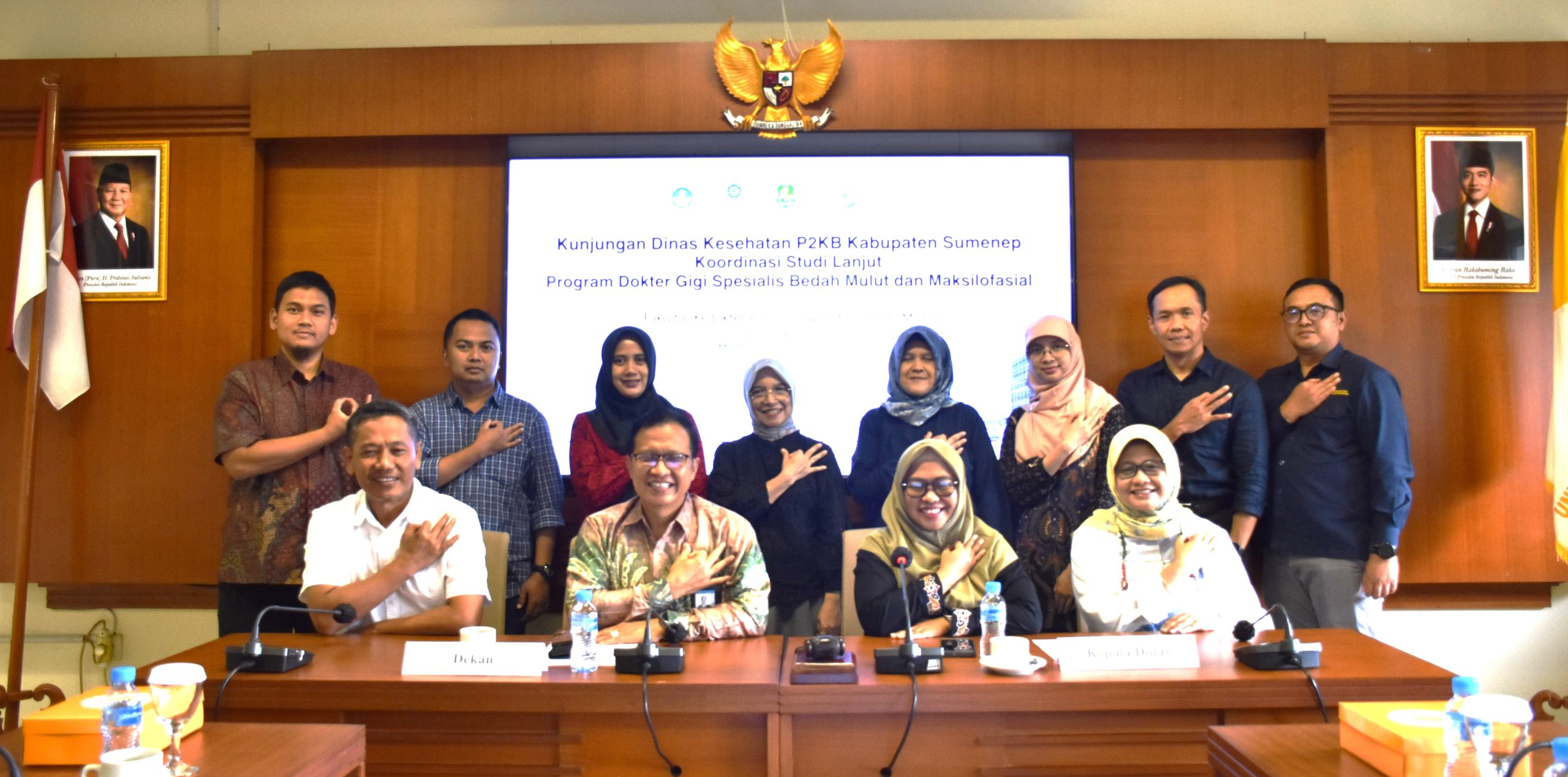
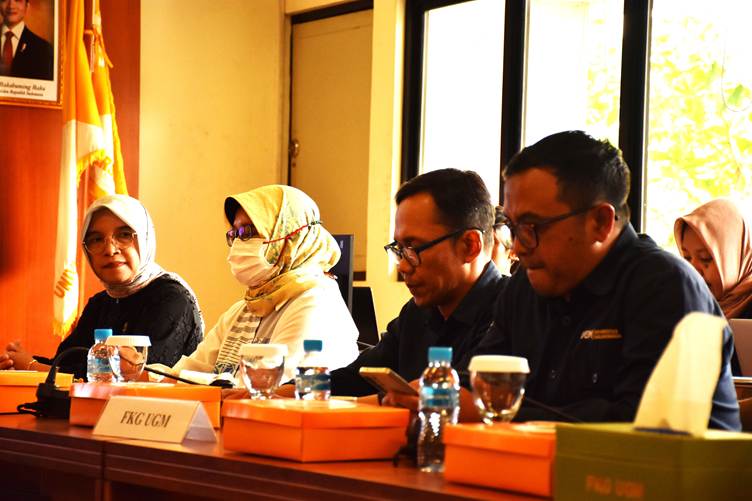
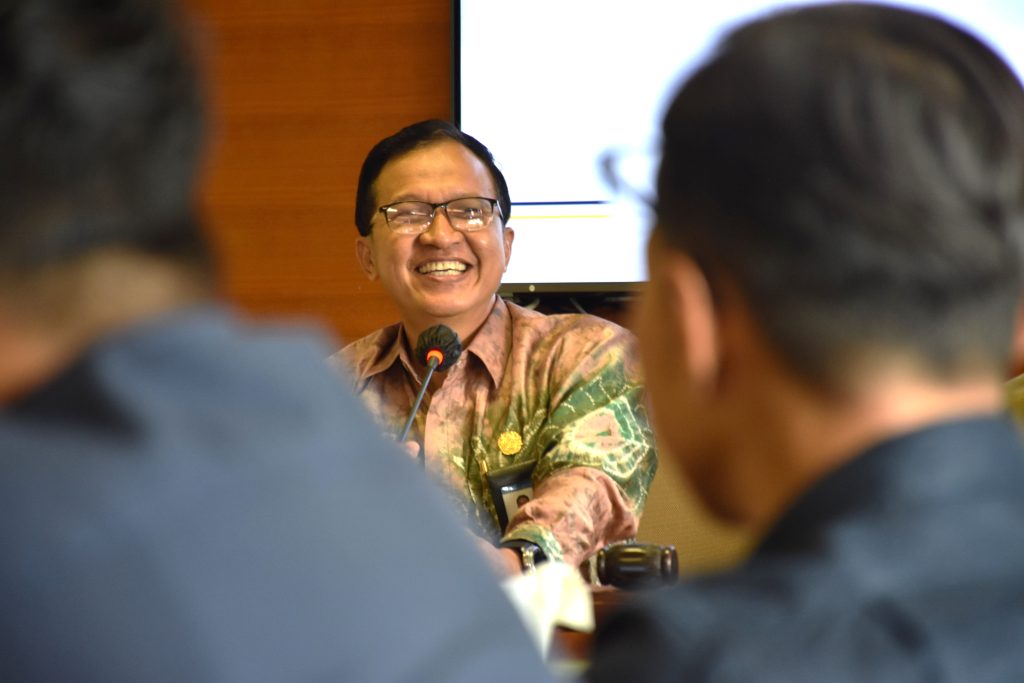
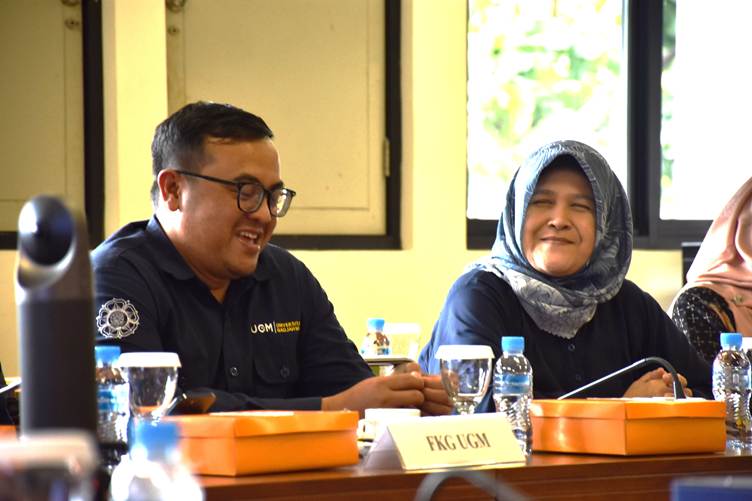
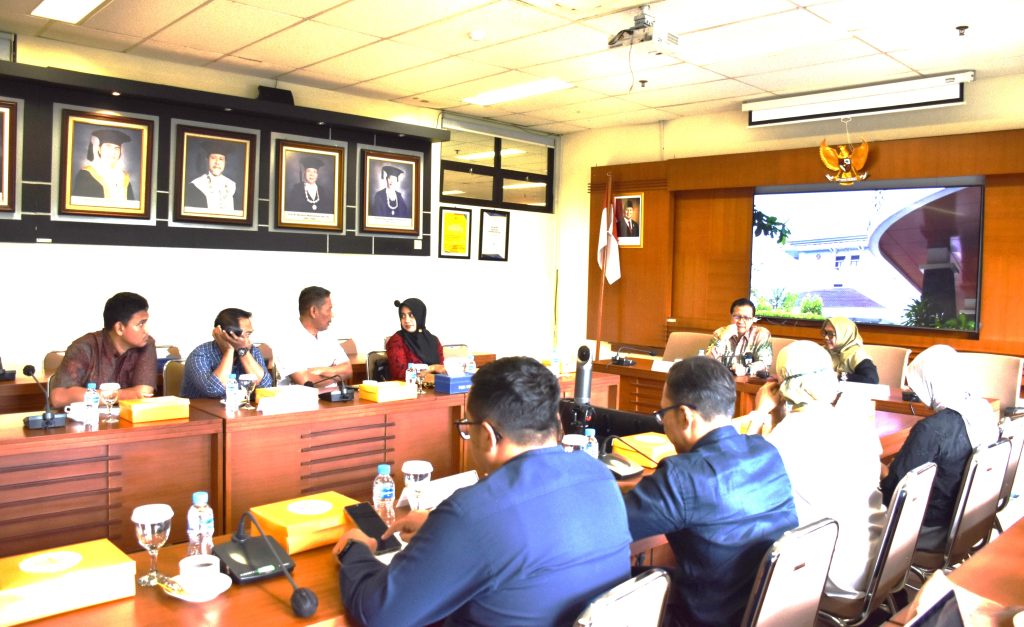
Rabu, 1 April 2026 FKG UGM menerima kunjungan kemitraan dari Dinas Kesehatan Kabupaten Sumenep yang diawaki oleh: Kepala Dinas Kesehatan Kabupaten Sumenep drg. Ellya Fardasah, M.Kes. Moh Nur Insan, S.Kep., M.Kes (Kepala Bidang-Bidang Sumber Daya Kesehatan Dinas Kesehatan P2KB Kabupaten Sumenep) Deddi Wahyono, S.Kep.Ners (Analisis Penanggulangan Krisis Kesehatan Dinas Kesehatan P2KB Kabupaten Sumenep), Syarifa Ainun, S.K.M. (Pengelola Program dan Kegiatan Dinas Kesehatan P2KB Kabupaten Sumenep) drg. Azmi Fauzan Nurwansyah (Dokter Gigi Puskesmas Pasongsongan Dinas Kesehatan P2KB Kabupaten Sumenep) diterima oleh Dekan FKG UGM Prof. drg. Suryono, SH, MM, Ph.D, Wakil Dekan Bidang Kerja Sama, Pengabdian Masyarakat, & Riset, drg. Triana Wahyu Utami, MDSc, Ph.D) Wakil Dekan Bidang Akademik Prof. Dr. drg. Rosa Amalia, M.Kes. Wakil Dekan Bidang SDM, Keuangan, Aset. IT drg. Heribertus Dedy Kusuma Yulianto, M.Biotech., Ph.D, Kepala Unit Kerja Sama FKG UGM drg. Raras Ajeng Enggardipta, Sp.KG, PhD. Kepala Departemen Bedah Mulut & Maksilofasial drg. Cahya Yustisia Hasan, Sp.B.M.M., Subsp. C.O.M.(K). Kaprodi Bedah Mulut & Maksilofasial drg. Pingky Krisna Arindra, Sp.B.M.M.Subsp.Ped.O.M.(K) beserta staf FKG UGM berlangsung dengan penuh antusias terkait ketimpangan kondisi khususnya pelayanan kesehatan gigi yang masih jauh dari harapan.
In emergency situations, delayed referrals are not exceptions—they are systemic risks. When high waves prevent ships from sailing, even oxygen supplies become threatened—an irony amid the local government’s commitment to Universal Health Coverage (UHC).
A Deeper Crisis: The Shortage of Specialist Doctors
The main issue is not only infrastructure, but also the acute shortage of specialist medical personnel, especially specialist dentists such as oral surgeons. Abuya Hospital, which serves around 100,000 residents across the islands, does not have a single specialist dentist. Even on mainland Sumenep, their numbers remain extremely limited.
As a result, patients with complex conditions must be referred to cities such as Surabaya—a process that is costly, time-consuming, and high-risk.
Ironically, healthcare services are theoretically “free” under BPJS. Yet in practice, the absence of specialist personnel strips health insurance of its substantive meaning.
When Regulations Fail to Recognize Reality
The irony deepens when central government policies fail to align with local realities. Although Sumenep possesses extreme archipelagic characteristics, it is not administratively categorized as a remote area. Consequently, it does not qualify for the placement of medical residents.
As a result, educational-based medical workforce distribution schemes—which should have become part of the solution—cannot be utilized.
This reveals a crucial issue: national standards often fail to capture local complexities, making policies rigid and non-adaptive.
Survival Strategies: From Scholarships to “Moral Contracts”
Facing structural deadlock, the regional government has pursued alternative strategies: sending doctors to specialist training through scholarships, providing high incentives (reaching tens of millions of rupiah) for healthcare workers willing to serve in the islands, and designing educational pathways for local students with the hope that they will return to serve their home regions.
However, these strategies are not without risk. Experience shows that not all doctors who receive educational support return to their regions, even after signing formal commitments.
This phenomenon raises both ethical and structural dilemmas:
Is a formal contract sufficient to guarantee healthcare workforce distribution?
Or is a broader systemic approach needed—one that binds professionals socially, economically, and professionally?
Building Hope Through University–Regional Government Synergy
Collaboration with educational institutions such as Universitas Gadjah Mada has become a source of hope. This cooperation extends beyond specialist education programs and includes: supervised deployment of medical personnel, community service programs, and broader healthcare partnerships.
This approach reflects a reciprocal collaboration model in which regions are not merely “objects,” but active partners within healthcare education systems.
The Social Dimension: When Illness Becomes a Collective Matter
Amid all these limitations, the people of Sumenep possess a unique social strength. Within local culture, when one person falls ill, the entire community becomes involved—a form of solidarity that acts as a buffer amid weak formal systems.
Yet social solidarity cannot replace the role of the state.
The State Must Be Truly Present
The Sumenep case reveals a classic problem in Indonesian development:, inequality exists not only between regions, but also between policy and reality. Several critical points deserve attention:
- the reclassification of remote regions must be based on geographic realities, not merely administrative status,
- healthcare workforce distribution requires stronger and more measurable combinations of incentives and obligations,
- decentralization of healthcare policy must allow adaptive flexibility for archipelagic regions, and
- long-term investment in local human resources remains the most sustainable solution.
So, is healthcare justice in Indonesia truly equitable?
Sumenep is not merely a story about a peripheral region—it is a reflection of a much larger question.Amid ocean waves and limited access, the struggles of healthcare workers and regional governments prove that hope still exists. Yet without more adaptive and equitable policy reforms, those struggles will continue to remain stagnant.
And for the people living on those small islands, time is not merely a number
—it determines the difference between life and loss.
Reporter & Photography: Andri Wicaksono