
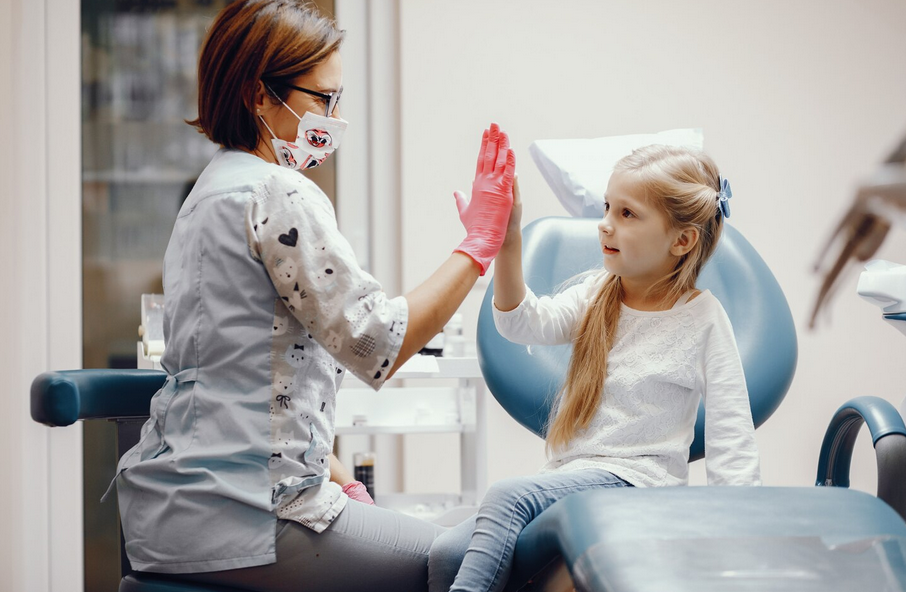
Dental phobia or anxiety is a significant clinical issue in pediatric dentistry. Fearful children may have difficulty complying with treatment, refuse procedures, or exhibit uncooperative behavior that hinders therapeutic success. Therefore, psychological and operational management strategies must be specifically designed to ensure that children’s visits to dental clinics are comfortable and effective.
Research conducted by an FKG UGM student, Maharani Audhika Putri Zega, under the supervision of Dr. drg. Indra Bramanti., M.Sc., Sp. KGA (K) and Dr. drg. Indah Titien S., SU., Sp. KGA (K), titled Gambaran Tingkat Kecemasan Dental pada Anak Usia 5–8 Tahun di Klinik Gigi (RSGM UGM Prof. Soedomo Yogyakarta), describes the characteristics of dental anxiety in early childhood as a basis for effective management.
Research Findings: Anxiety Levels in Children Aged 5–8 Years
Based on a study involving 96 children aged 5–8 years (48 boys and 48 girls) conducted from October to December 2024 at RSGM UGM:
- Anxiety levels were measured using the Dental Anxiety Scale (DAS) based on age, gender, and type of treatment.
- No significant differences were found based on age (5, 6, 7, or 8 years) (p = 0.549).
- No significant differences were found based on gender (p = 0.098).
- A highly significant difference was found based on type of treatment (p ≈ 1.72 × 10⁻⁸). More invasive procedures (such as extractions, pulpotomy, etc.) were associated with higher anxiety levels compared to non-invasive procedures.
The type of dental procedure has a much greater influence on pediatric dental anxiety than age or gender.
Principles for Managing Children with Dental Fear
The following strategies and clinical techniques can be applied to reduce dental phobia or anxiety in children:
1. Preparation and Initial Approach
- Familiarization & Previsit
Allow children to become familiar with the dental clinic environment, such as the waiting area, dental chair, and simple instruments, before procedures. - Adaptive Communication
Use simple and positive language; avoid frightening words (e.g., “pain,” “needle”) when explaining procedures. - Tell-Show-Do
Show the instruments, explain them simply, and perform procedures gradually (e.g., starting with gentle tooth contact). - Modeling / Video / Positive Stories
Children may watch videos or stories of other children successfully undergoing dental treatment as positive examples.
2. Distraction and Relaxation Techniques
- Videos or music during treatment
- Light games or visual aids
- Deep breathing and simple relaxation techniques
3. Procedure Modification and Minimally Invasive Techniques
- Start with non-invasive procedures: examinations and light cleaning
- Use gentle, compact, and quick instruments
- Apply topical anesthesia and minimally traumatic anesthetic techniques to ensure comfort
4. Behavioral Control Strategies
- Positive Reinforcement
Praise, stickers, or small rewards after procedures. - Tell-Back / Child Confirmation
Ask children whether they understand and are ready before continuing. - Timeout / Short Breaks
Provide brief breaks if the child becomes anxious or uncooperative.
5. Gradual Approach and Continuous Evaluation
- Begin with simple procedures and gradually increase complexity
- Monitor children’s reactions and record anxiety and cooperation levels
- Repeat simple procedures in early visits to build trust
Challenges and Important Notes
- Young children may lack verbal skills to express fear; dentists and clinical teams must be sensitive to non-verbal signs (trembling, refusal, crying).
- Long-standing anxiety or anxiety due to past negative experiences requires more cautious approaches.
- Parental involvement: anxious parents who project fear can worsen a child’s anxiety; education and support for parents are essential.
- Clinical resources (time, staff, equipment) must be adjusted so management techniques do not become overly time-consuming.
References
Maharani Audhika Putri Zega, Dr. drg. Indra Bramanti., M.Sc., Sp. KGA (K) ; Dr. drg. Indah Titien S., SU., Sp. KGA (K), GAMBARAN TINGKAT KECEMASAN DENTAL PADA ANAK USIA 5-8 TAHUN SAAT di KLINIK GIGI (Kajian di RSGM UGM Prof. Soedomo Yogyakarta), https://etd.repository.ugm.ac.id/penelitian/detail/253203
Author: Rizky B. Hendrawan | Photo: Freepik

