
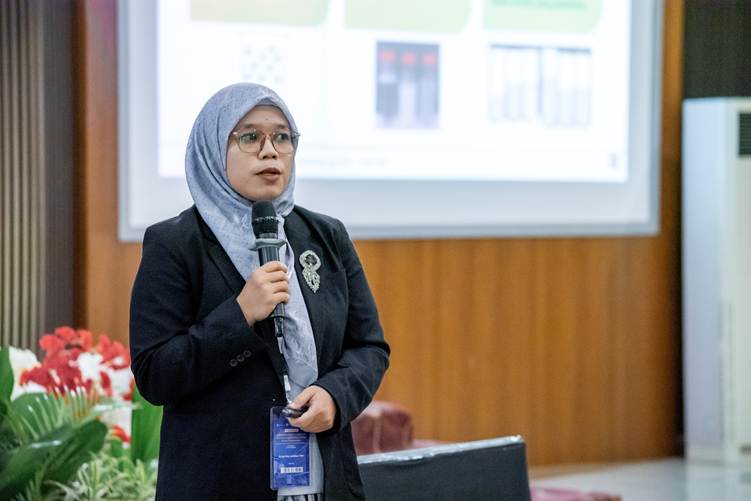
Efforts to improve oral and dental health among pregnant women have entered a new phase. During the 78th Anniversary Symposium of FKG UGM, a biomaterial-based innovation was introduced: a herbal nanoemulsion mouthwash specifically designed for maternal healthcare needs.
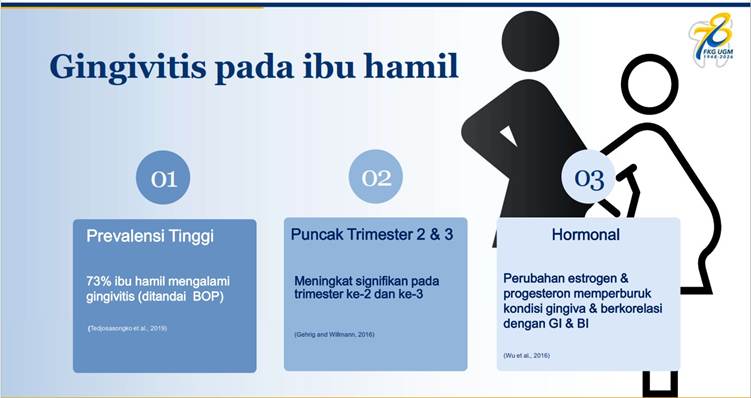
The research, presented by Dr. drg. Friska Ani Rahman, MDSc. from the Department of Biomaterials at FKG UGM, highlighted the high prevalence of gingival disorders among pregnant women. Data indicate that approximately 73% of pregnant women experience gingivitis, especially during the second and third trimesters, due to hormonal changes affecting gingival tissue conditions.
“Hormonal changes such as estrogen and progesterone contribute to increased gingival inflammation. Combined with nausea and fatigue, motivation to maintain oral hygiene also declines,” Friska explained during her presentation.
Limitations of Conventional Mouthwash
Chlorhexidine has long been recognized as the gold standard for controlling plaque and gingivitis. However, its use is not entirely ideal, particularly for pregnant women. Side effects such as bitterness, taste disturbances, and tooth discoloration are common concerns. In addition, the alcohol content found in some commercial products is not recommended for pregnant women.
This condition has created the need for a safer, more effective, and naturally based alternative.
Nanoemulsion: The Key Technology
The innovation lies in the use of nanoemulsion technology—a system with extremely small particle sizes (20–200 nm) that allows more optimal distribution of active substances. According to Friska, this technology offers several advantages:
- High stability without phase separation
- Increased bioavailability of active compounds
- Improved antibacterial and anti-inflammatory effectiveness
- Clearer and more aesthetically appealing product appearance
“With nano-sized particles, the surface area increases, allowing active substances to be absorbed more quickly and effectively,” she explained.
Harnessing the Potential of Local Herbal Ingredients
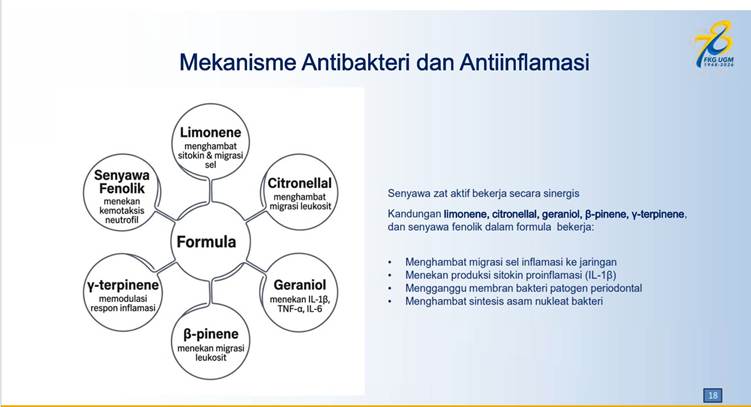
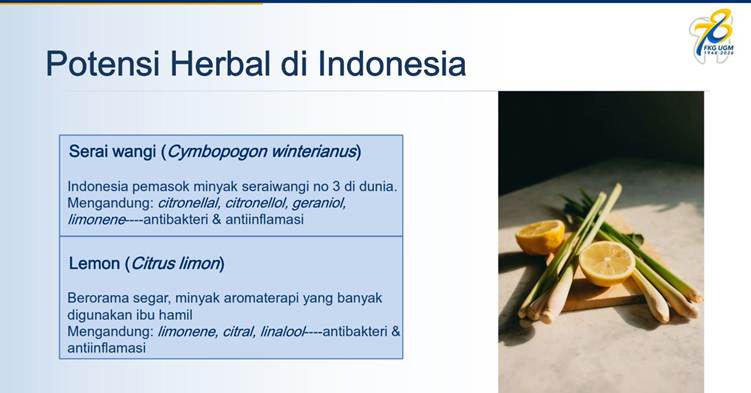
Interestingly, the mouthwash formulation utilizes Indonesian herbal ingredients, namely citronella oil (Cymbopogon winterianus) and lemon oil (Citrus limon). Both ingredients are rich in active compounds such as limonene, citronellal, and geraniol, which possess antibacterial and anti-inflammatory properties.
Indonesia itself is one of the world’s major producers of citronella oil, making this innovation not only medically relevant, but also strategically important in terms of raw material independence.
“The combination of citronella and lemon oil has the potential to become a safe, effective, and sustainable local solution,” Friska stated.
Test Results: Promising, but Further Validation Needed
Laboratory testing showed that the nanoemulsion formula demonstrated strong stability with particle sizes around 215 nm, high clarity levels (82% transmittance), and no phase separation (creaming index 0).
Biologically, the mouthwash proved capable of inhibiting the growth of bacteria responsible for periodontal disease, including both Gram-positive (Streptococcus sanguinis) and Gram-negative (Porphyromonas gingivalis).
Testing in vivo on pregnant animal models also demonstrated significant results:
- Reduced gingival inflammation scores (MGI)
- Decreased neutrophil infiltration
- Suppressed expression of the pro-inflammatory cytokine IL-1β
“This indicates that the formula is not only antibacterial, but also capable of controlling inflammatory responses,” Friska explained.
Future Challenges
Although the initial results are promising, Friska emphasized that clinical trials on humans are still necessary to ensure long-term safety and effectiveness.
Further research is also required to fulfill regulatory standards, including stability testing in accordance with regulations from Indonesia’s Food and Drug Supervisory Agency (BPOM).
Toward Inclusive Maternal Healthcare Solutions
This innovation demonstrates how biomaterial research can address the specific needs of vulnerable groups such as pregnant women. Furthermore, the use of local herbal resources opens opportunities for the development of an independent and sustainable healthcare industry.
In the context of public health, this breakthrough is not merely a new product, but a strategic step toward improving the quality of life for mothers and children from the earliest stages of pregnancy.
“We hope this innovation can become a real, safe, and widely accessible solution, especially for pregnant women,” Friska concluded.
Reporter: Andri Wicaksono, S.Sos., M.I.Kom.; Photography: Fajar Budi Harsakti, SE