
The field of dental radiology in Indonesia is currently experiencing significant development. Amid disparities in healthcare services across regions, limitations in diagnostic equipment, and uneven distribution of specialists, advances in artificial intelligence (AI) technology are beginning to open new pathways toward more precise, faster, and inclusive dental healthcare services.
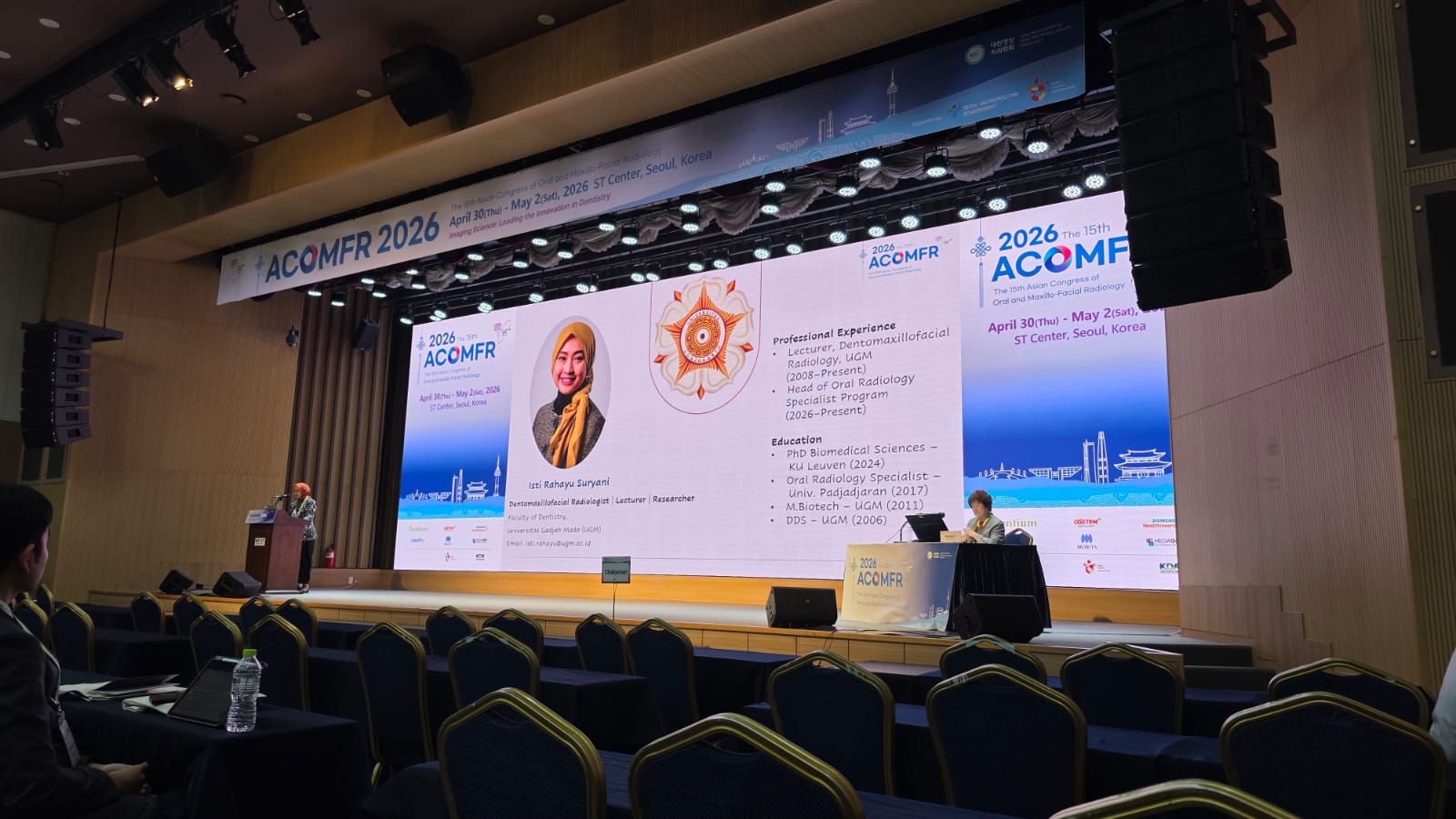
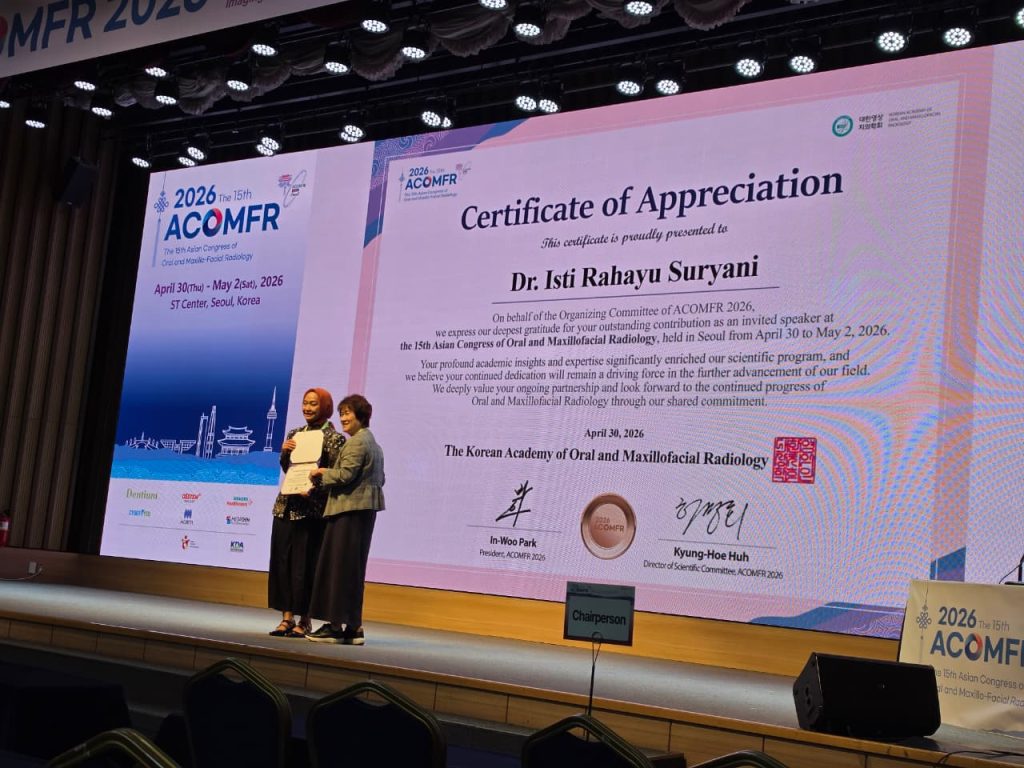
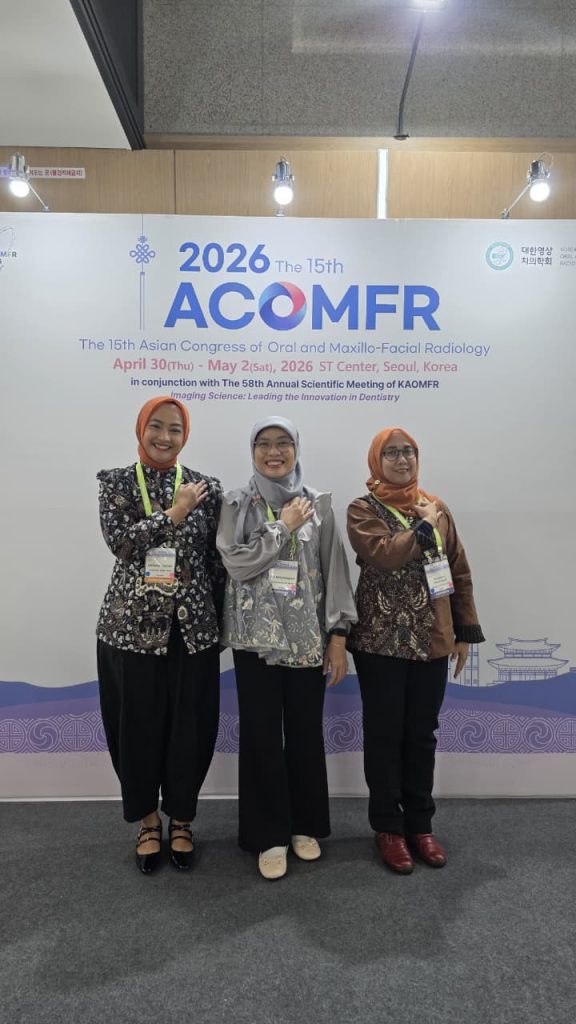
These issues were presented in a scientific presentation titled “Reimagining Oral Radiology in Indonesia: A Journey Toward Precision Dentistry” delivered by drg. Isti Rahayu Suryani, M.Biotech, Sp.RKG, Subsp.RDP(K), Ph.D., from the Department of Dentomaxillofacial Radiology at FKG UGM. She was accompanied by Dr. drg. Rurie Ratna Shantiningsih, MDSc, and Dr. drg. Rini Widyaningrum, M.Biotech., Sp.RKG, at The 15th Asian Congress of Oral and Maxillofacial Radiology in conjunction with The 58th Annual Scientific Meeting of the Korean Academy of Oral and Maxillofacial Radiology held in Seoul, South Korea.
In her presentation, drg. Isti emphasized that the development of oral radiology in Indonesia is no longer merely about modernizing equipment, but about how technology can address healthcare disparities in an archipelagic nation with more than 17,000 islands.
“Indonesia is moving toward precision dentistry, but the journey is not easy. We still face major challenges in access to radiology equipment, service standardization, and the distribution of dental radiology expertise,” Isti stated during her presentation.
According to her, the use of Cone Beam Computed Tomography (CBCT) has indeed increased rapidly in major cities. However, the reality in the field shows that many regions still lack adequate access to modern diagnostic imaging technology.
According to drg. Isti, the disparity involves not only the availability of equipment, but also the quality of radiographic interpretation and the integration of digital systems within healthcare facilities. As a result, the accuracy of diagnoses and patient treatment planning remains uneven across Indonesia.
“Technology should not be concentrated only in major cities. Precision dentistry must also reach communities in remote regions with equal service quality,” she emphasized.
Isti explained that advances in AI are now beginning to revolutionize the field of dental radiology. Deep learning algorithms are capable of assisting in the automatic detection of various dental and oral abnormalities, including pathology identification, implant planning, and anatomy mapping based on three-dimensional CBCT data.
In fact, several recent studies have shown that AI system accuracy in radiographic analysis has exceeded 90 percent across various clinical applications.
“AI is not meant to replace dentists or radiologists, but rather to strengthen clinicians’ abilities in making faster, more accurate, and personalized decisions,” she explained.
drg. Isti added that the integration of AI with digital treatment planning systems will become an important foundation for modern dentistry services that are minimally invasive and based on three-dimensional anatomical data.
Nevertheless, Isti reminded the audience that digital transformation will not run optimally without human resources that remain up to date with radiology technology developments. She noted that Indonesia still faces competency gaps in advanced imaging interpretation, especially in remote regions with limited access to education and training in the latest radiology technologies.
Therefore, drg. Isti encouraged the establishment of national collaboration among educational institutions, hospitals, professional organizations, and the government to accelerate the equal distribution of dental radiology competencies across Indonesia.
“Collaboration is the key. We need telemedicine-based consultation networks, regional training programs, and AI-based diagnostic support systems so that service quality does not depend on geographic location,” she stated.
Her statement also served as a subtle critique of the reality of Indonesia’s national healthcare system, which still suffers from unequal distribution of medical technology. On one hand, major hospitals in metropolitan cities are entering the era of AI-based digitalization, while on the other hand many healthcare facilities in remote areas still struggle with basic radiographic equipment limitations.
“This transformation is not merely about sophisticated technology, but about delivering healthcare services that are more equitable, precise, and affordable for all Indonesians,” concluded drg. Isti.
Reporter: Andri Wicaksono, Photo: Archive of the Dental Radiology Department, FKG UGM