
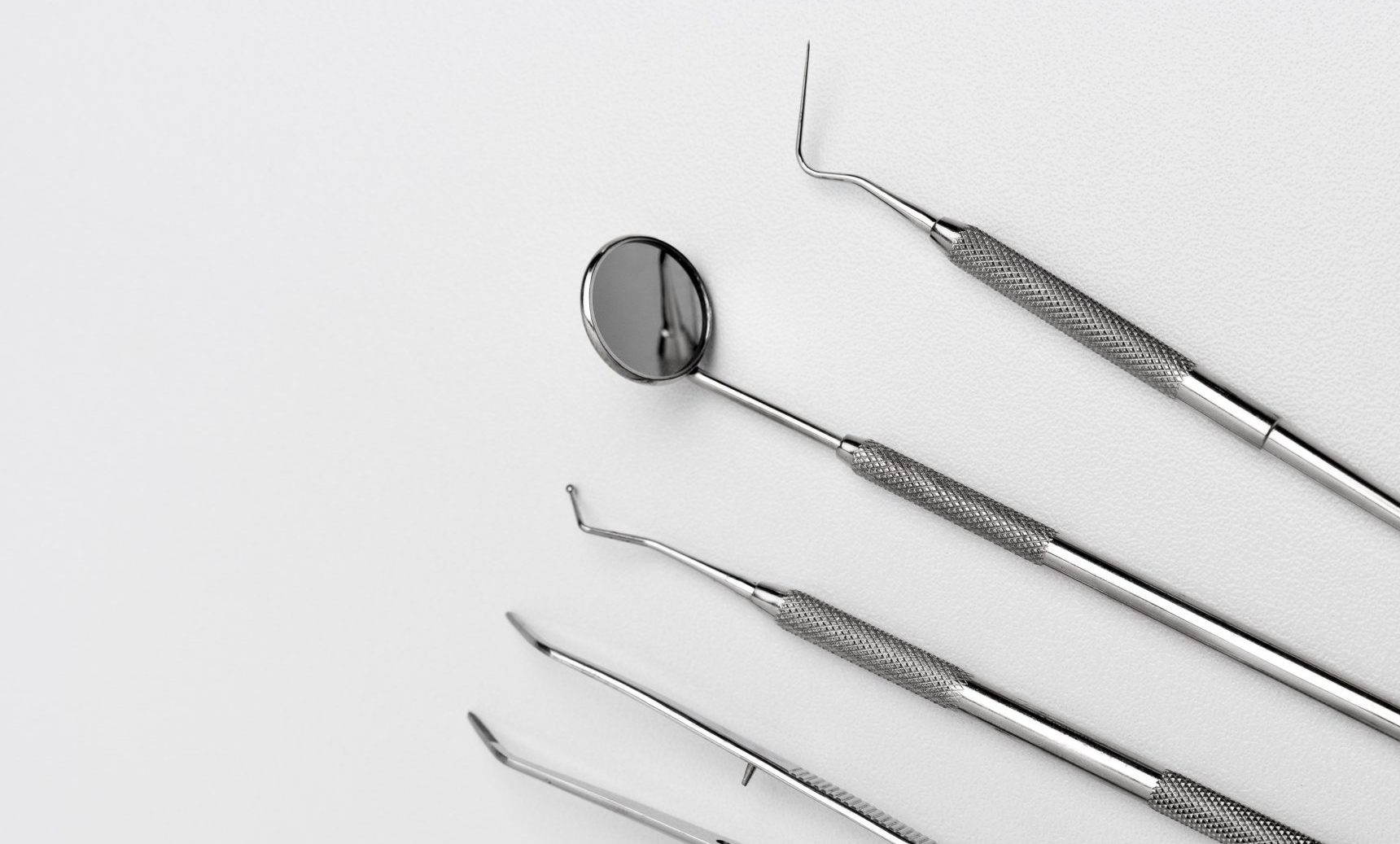
Good news for those who have severe problems with tooth decay! A research team from the Faculty of Dentistry, Universitas Gadjah Mada (FKG UGM), has identified the safest type of instrument for cleaning infected root canals. Led by drg. Margareta Rinastiti, Ph.D., the study demonstrated that the HyFlex CM instrument is considerably safer because it is less likely to make tooth roots fracture compared with two other popular brands, ProTaper Next and ProTaper Gold.
This finding is important because many people are unaware that the process of cleaning severely decayed teeth can pose risks to the structural strength of the tooth. Published in Indonesian Dentistry Magazine, the research provides encouraging findings for both the medical community and the public in the pursuit of healthier and more prosperous lives.
When a tooth is severely decayed and the infection reaches the nerve, the pain can be excruciating. The best solution for saving the tooth and avoiding extraction is root canal treatment (endodontic treatment). During this procedure, a small specialized rotating instrument made of nickel-titanium is inserted into the narrow canal inside the tooth root. Its job is to remove decayed nerve tissue, eliminate bacteria, and reshape the canal so that it can be properly sealed.
However, this cleaning process is something of a double-edged sword. Every time the instrument rotates and scrapes the inner walls of the tooth, considerable mechanical stress is generated. This stress can be dangerous. Friction from the instrument can create extremely small cracks in the root walls that are invisible to the naked eye.
Over time, the pressure generated when we chew everyday foods can cause these small cracks to widen, eventually resulting in a vertical fracture of the tooth root. If the root fractures beneath the gums, the dentist may have no choice but to extract the tooth. This creates a dilemma: while the goal is to save the tooth, the cleaning process itself may weaken its structure.
Untuk memecahkan masalah tersebut, drg. Margareta Rinastiti bersama timnya dari Departemen Ilmu Konservasi Gigi FKG UGM melakukan sebuah eksperimen langsung. Mereka ingin mencari tahu alat mana yang paling ramah dan minim risiko bagi gigi pasien. Tim peneliti membandingkan tiga merek instrumen rotari yang paling laris dan paling sering digunakan oleh dokter gigi di seluruh dunia, ProTaper Next (PN), ProTaper Gold (PG), dan HyFlex CM (HC).
In this study, they used 30 extracted human premolar teeth as samples. The teeth were evenly divided into three groups, with each group cleaned using one of the three instrument brands according to the manufacturers’ standard operating procedures.
After the cleaning process was completed, all tooth samples were taken to the laboratory and tested for strength using a universal testing machine. This sophisticated device applied continuous vertical pressure to the teeth, simulating the compressive load generated when humans chew forcefully, until the roots actually fractured. The maximum force each tooth could withstand before fracturing was recorded in Newtons (N).
In addition, the researchers sectioned the tooth roots and examined their inner walls using a highly advanced Scanning Electron Microscope at magnifications of up to 2,500 times. The aim was to assess how effectively the instruments cleaned debris from the root canals.
The laboratory test results produced clear and statistically significant findings. Teeth prepared or cleaned using HyFlex CM emerged as the strongest performer, demonstrating the highest level of safety. The average strength of the teeth in resisting pressure after treatment was as follows:
| Dental Treatment Instrument | Fracture Resistance (Newton) | Safety Status |
| HyFlex CM | 1,875.46 N | Very Strong & Safest |
| ProTaper Next | 1.399,18 N | Fairly Strong |
| ProTaper Gold | 1.385,66 N | Fairly Strong |
The table shows that teeth treated with HyFlex CM were able to withstand substantially greater pressure before fracturing. Meanwhile, teeth treated with ProTaper Next and ProTaper Gold had considerably lower resistance and tended to be more fragile. Interestingly, in terms of cleaning the root canal walls, all three instruments were equally effective at removing debris. However, HyFlex CM clearly outperformed the others in maintaining tooth structural strength.
“The differences in root fracture resistance among the three instruments are influenced by their different cross-sectional designs and taper sizes. HyFlex CM has a combination of a triangular-square cross-section with a constant taper, which appears to be more advantageous than the ProTaper systems,” stated drg. Margareta Rinastiti, M.Kes., Sp.KG(K)., Ph.D., and team, Indonesian Dentistry Magazine, 2023.
Why is HyFlex CM considerably superior and more tooth-friendly? UGM researchers identified several scientific reasons that can be simplified as follows:
Highly Flexible (Controlled Memory): This instrument is manufactured using specialized metal heat-treatment technology that gives it a “controlled memory” property. This means that the small file is highly flexible. It can bend and follow the natural curves of winding root canals without exerting excessive pressure on the tooth walls. Uniquely, the instrument can return to its original straight shape after being sterilized at high temperatures.
Gentler Contact with the Tooth Walls: The helix angle of HyFlex CM is only 8.3 degrees, considerably smaller than that of ProTaper Next (18.5 degrees) and ProTaper Gold (19.1 degrees). This smaller angle minimizes friction against the tooth walls, substantially reducing the risk of creating microcracks.
Preserves Tooth Structure: HyFlex CM uses a constant-taper design, unlike ProTaper, which becomes progressively wider toward the upper portion of the instrument. Instruments that widen too aggressively tend to remove more of the tooth’s original structure. The natural rule is simple: the more internal tooth structure that is removed, the thinner and more fragile the tooth becomes.
Faster and More Stable Rotation: The instrument operates at 500 rpm (rotations per minute), higher than the 300 rpm speed used by its two competitors. This higher speed actually enables more efficient removal of decayed tissue, with pressure distributed more evenly rather than concentrated at a single point.
A tooth that is already non-vital or severely decayed has essentially lost its nutrient supply and is therefore naturally more fragile than a healthy tooth. Through the findings of this FKG UGM research, dentists now have scientifically supported guidance for selecting their instruments. A medical instrument choice that may seem highly technical in the clinical setting can have very real long-term consequences for patients. Choosing an instrument that is gentler on tooth structure, such as HyFlex CM, may therefore be a crucial factor.
Author: drg. Achmad Zam Zam Aghasy, M.Kes., Annisa Dwi Noviyanti
Photo: FreePik
Source DOI: http://doi.org/10.22146/majkedgiind.82711