
Academic institutions are increasingly required to be adaptive to various potential crises, not only natural disasters but also reputational issues related to sexual violence, research integrity, and internal campus dynamics. Therefore, the implementation of crisis management has become a vital strategy in maintaining institutional stability and credibility.
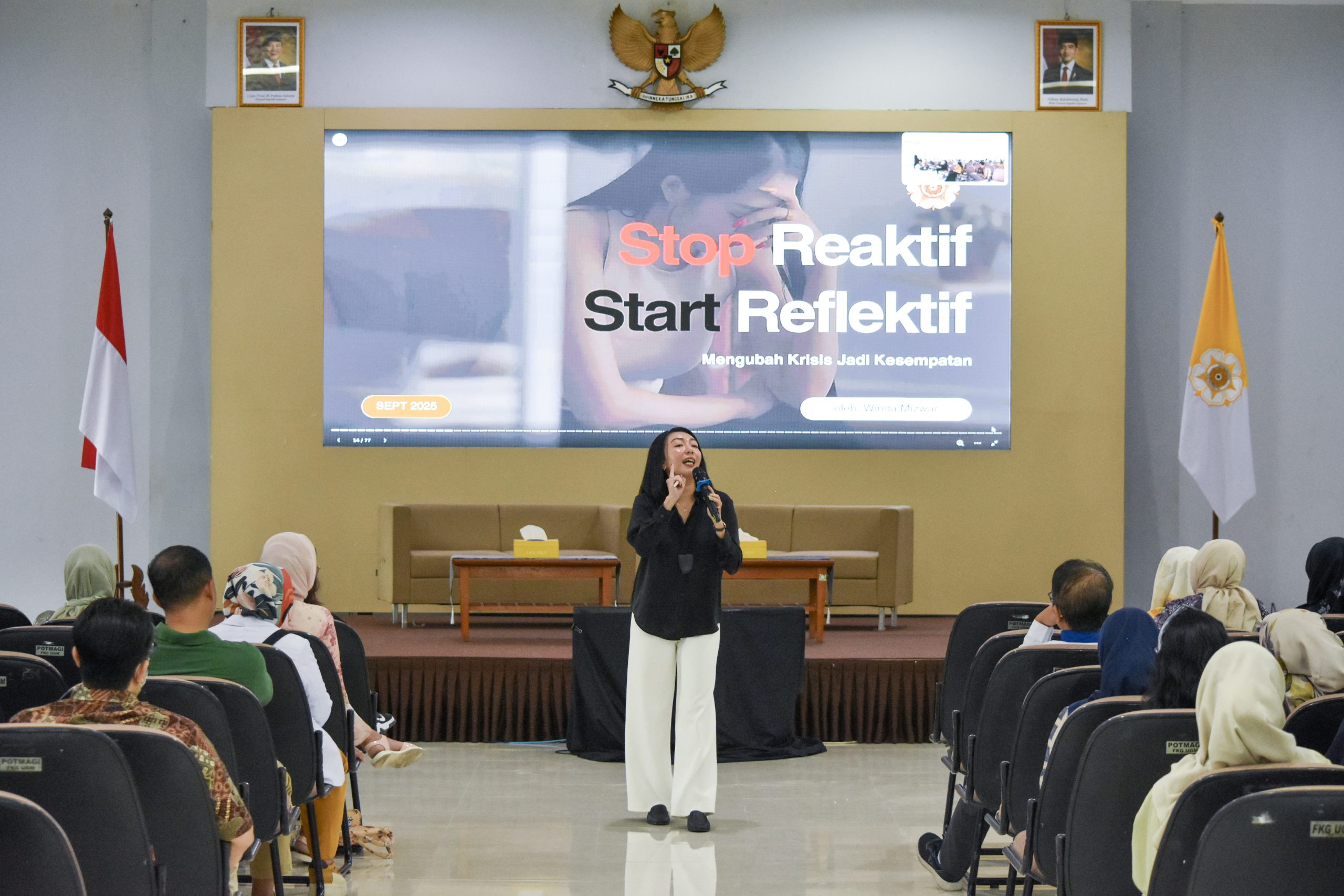
The Faculty of Dentistry, Universitas Gadjah Mada (FKG UGM), emphasized that responding to issues in academic environments must be done responsively to safeguard reputation and public trust. This was conveyed during the workshop “Managing Crises in Academic Settings”, held on Thursday, 19 September 2025.
The session was delivered by Winda Mizwar Pratiwi, SE., M.I.Kom., an expert in organizational communication. She explained that crisis management in academic institutions is not limited to physical emergencies such as natural disasters, but also includes issues of institutional image, academic ethics, integrity violations, and internal social dynamics.
Winda noted that crises are unpredictable and often arise suddenly, making it imperative for institutions to prepare appropriate and rapid mitigation strategies. “Universities are public trust-based institutions. When a crisis occurs, slow or misdirected handling can significantly affect public confidence in our institutional reputation,” she stated.
She further emphasized that crisis management must be based on reflective and responsive principles, positioning the institution rather than individuals. With this approach, incident reports, clarifications, and public responses can be delivered more quickly and in a more measured manner.
To ensure effective communication responses, participants were also invited to practice drafting official press releases. Winda explained that official statements should be ready within at least one hour after an issue becomes public and must contain two key elements: empathy and institutional commitment.
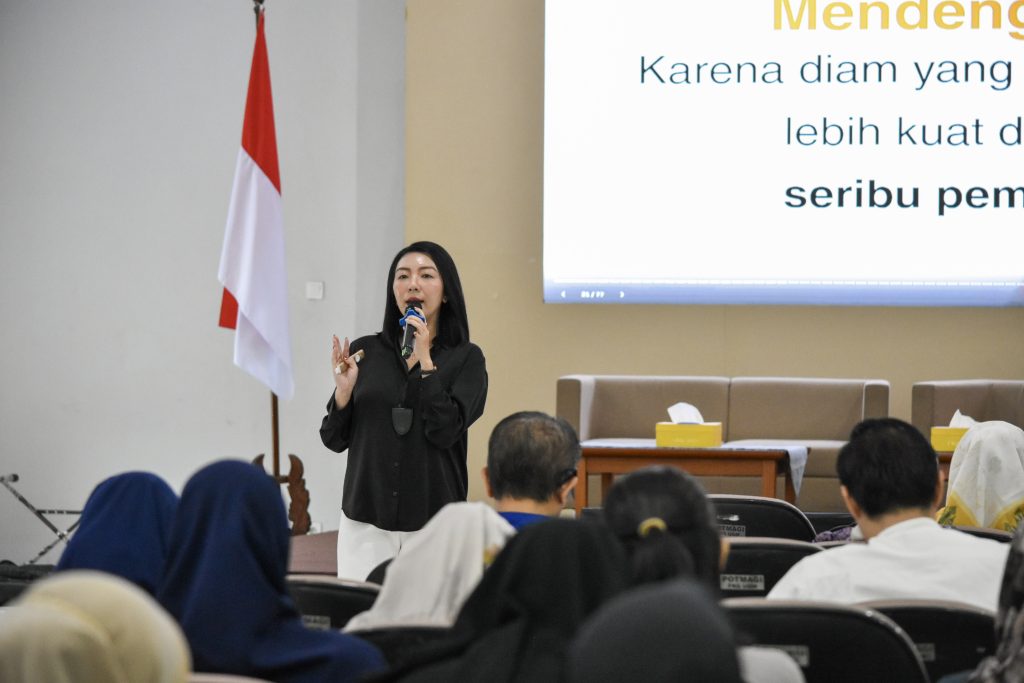
Empathy in crisis communication refers to statements that demonstrate the institution’s deep concern, express sympathy toward victims or affected parties, and acknowledge the seriousness of the situation. Institutional commitment, on the other hand, is a strong affirmation of the faculty’s responsibility, safety measures, and steps being or to be taken to resolve the issue.
The Vice Dean for Human Resources, Assets, and Finance of FKG UGM emphasized the importance of awareness and education regarding the faculty’s positioning in crisis management. “Crises cannot be avoided, but they can be managed. A campus that is prepared for crisis is one that is able to learn and adapt quickly,” he stated.
Through planned and continuous crisis management implementation, academic environments are expected to maintain integrity while preserving public trust in higher education institutions in Indonesia.
Writer: Andri Wicaksono | Photographer: Fajar Budi