
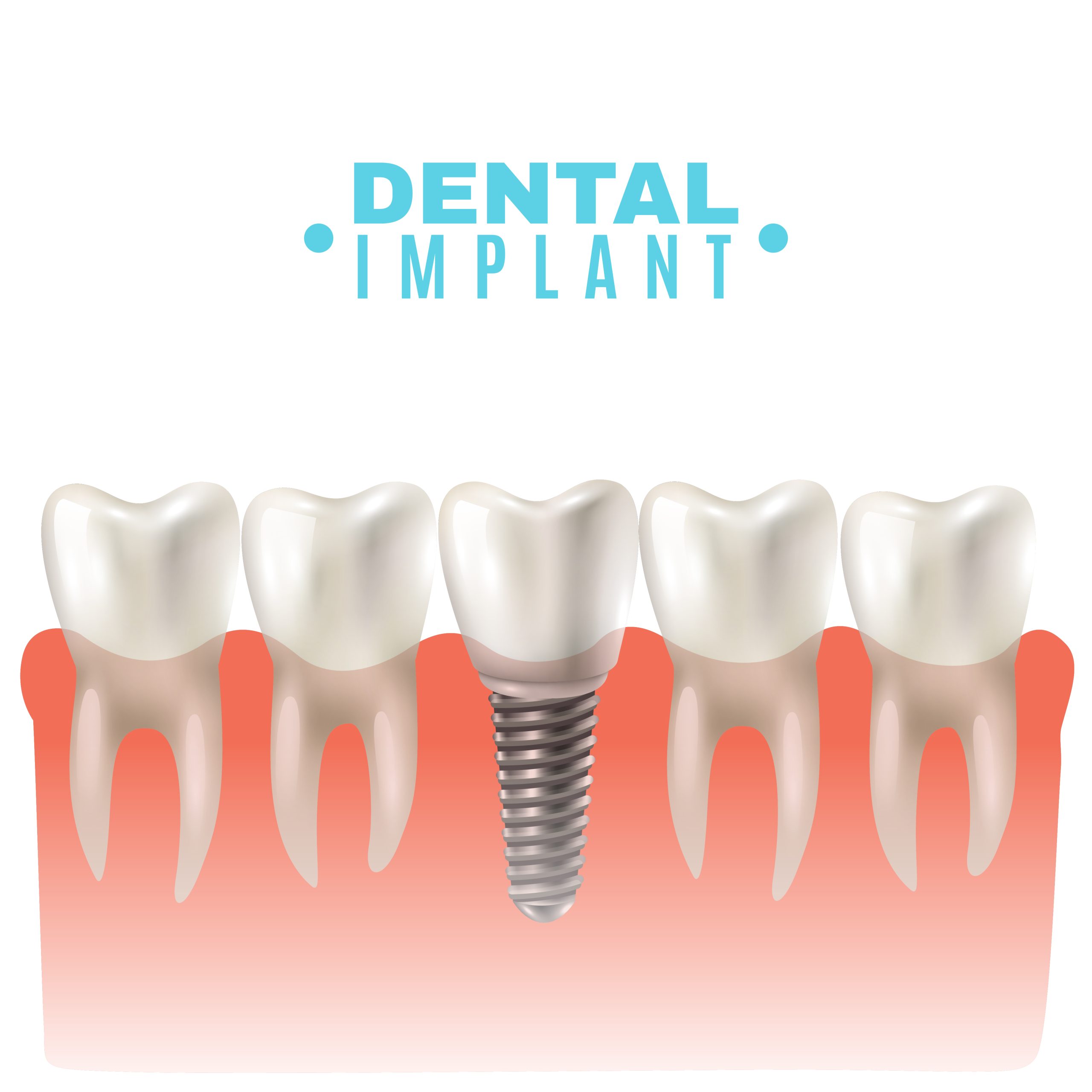
Dental implants have become a primary solution in tooth loss reconstruction, offering a more stable and aesthetic alternative compared to traditional prostheses. In oral and maxillofacial surgery, dental implants not only restore chewing and speech functions but also play a significant role in aesthetic rehabilitation and improving patients’ quality of life.
The Role of Dental Implants in Oral and Maxillofacial Surgery
A study titled “The Effect of Magnesium Hydroxide Concentration as a Dental Implant Coating Material on Fibroblast Cell Viability” was conducted by Hestiana Putri Nugroho, a student of FKG UGM, under the supervision of Prof. Dr. drg. Widowati Siswomihardjo, M.S. and Dr. drg. Harsini, M.S. The research explained that developing coating materials for dental implants, such as magnesium hydroxide, may influence implant success. This includes enhancing the viability of cells such as fibroblasts, which are crucial in healing and bone integration.
Dental implants are typically made of titanium due to its corrosion resistance and biocompatibility. Innovative coatings like magnesium hydroxide are believed to accelerate osseointegration and strengthen the bond between implant and bone. This is especially vital in maxillofacial surgery, which often involves complex reconstruction cases, including bone loss due to trauma, tumors, or periodontal disease.
Procedure and Advantages of Dental Implant Use
The procedure involves placing the implant into the jawbone, which then serves as the foundation for a permanent dental crown. The key advantages of implants include long-term stability, natural tooth-like function, and preservation of jawbone, which tends to deteriorate after tooth loss.
With innovative coating materials such as magnesium hydroxide, implant success rates can be improved by reducing implant failure caused by infection or poor integration. This highlights the continuous development of implant material technology to support successful surgical outcomes.
***
The use of dental implants in oral and maxillofacial surgery offers an effective solution for rehabilitating tooth loss—especially when supported by innovative coating technologies. Materials such as magnesium hydroxide can improve cell viability and healing, ultimately enhancing implant success and accelerating patient rehabilitation.
References
Hestiana Putri Nugroho, Prof. Dr. drg. Widowati Siswomihardjo, M.S.; Dr. drg. Harsini, M.S., The Effect of Magnesium Hydroxide Concentration as a Dental Implant Coating Material on Fibroblast Cell Viability, https://etd.repository.ugm.ac.id/penelitian/detail/249009
Author: Rizky B. Hendrawan | Photo: Freepik