
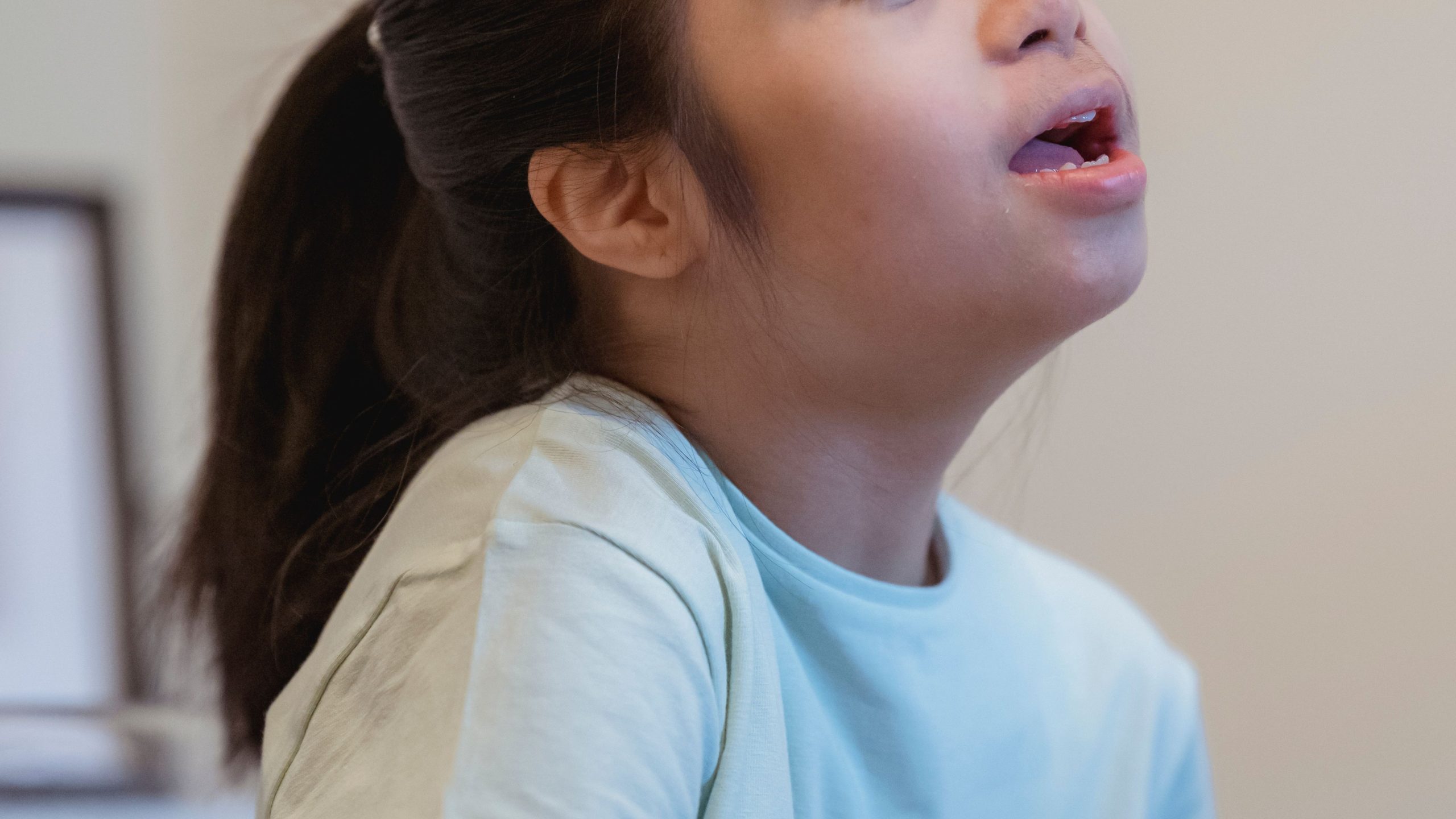
A five-year-old girl presented to the clinic with swollen lips, irritability, and refusal to eat. Two days earlier, she had fallen while playing at school and hit the floor. The wound had been cleaned and treated at the school clinic, but her condition did not improve. Clinical examination revealed something more than just a bruise: the superior and inferior labial mucosa were covered with yellowish-brown ulcers approximately 5 mm in diameter, with brown crusted edges and accompanied by edema.
This was the starting point of a case study written by drg. Putri Kusuma Wardani Mahendra, M.Kes., Sp.KGA., from the Department of Pediatric Dentistry, Universitas Gadjah Mada, together with Nendika Dyah Ayu Murika Sari from Universitas Muhammadiyah Surakarta, and published in the Journal of Holistic Nursing Science (2023).
When Corticosteroids Alone Are Not Enough
Before arriving at the clinic, the child had received topical corticosteroids for two days. These medications are commonly used for atrophic lesions of the oral mucosa and have been used for more than 50 years in the management of oral cavity lesions. However, in this case, they produced no results: the edema did not subside, the ulcers did not improve, and the child remained in pain.
The authors noted that topical corticosteroids work by suppressing inflammation and controlling symptoms rather than healing the wound. Their effectiveness also depends on an accurate diagnosis, appropriate drug selection, and the proper timing of administration. In this case, the ulcers were most likely infected with bacteria, considering that the trauma occurred in a non-sterile environment. Corticosteroids, which are not antibacterial agents, were therefore unable to address the underlying problem.
This condition is not an exception. Preschool-aged children are highly susceptible to mechanical trauma because they are active and frequently engage in play. The prevalence of fall-related trauma in children has been reported to range from 31.7 to 64.2 percent. The labial mucosa is one of the most vulnerable areas because its basement membrane is thin and easily damaged by impact.
Wet Gauze, a Simple Solution That Works Hard
The treatment subsequently applied was relatively simple but relied on a scientifically well-supported mechanism: gauze moistened with a 2% chlorhexidine gluconate solution was applied to the ulcerated area twice a day.
Chlorhexidine gluconate is soluble in water at physiological pH and releases positively charged chlorhexidine components. These positive charges interact with negatively charged phosphate groups on microbial cell walls, altering the osmotic balance of the cells and increasing cell wall permeability. At a concentration of 2%, its effect is bactericidal rather than merely bacteriostatic.
Furthermore, chlorhexidine gluconate has also been shown to accelerate wound healing by suppressing inflammatory reactions during the first 48 hours, stimulating plasma cell production, inducing angiogenesis, and completing the tissue remodeling process within seven days after application.
“Chlorhexidine gluconate can be an alternative treatment for labial mucosal ulcers in traumatic children. Healthcare professionals working in the hospital can use this treatment to treat ulcers as chlorhexidine gluconate has antibacterial properties.”
This was the conclusion written by Sari and Mahendra in their paper.
Seven Days, Without Scarring
The results spoke for themselves. Two days after the first application, the child no longer complained of pain and was willing to eat again. The swelling of the lips had subsided. At the follow-up visit on the seventh day, objective examination showed that the ulcers had healed completely, the edema had disappeared, and no scar tissue remained on the labial mucosa.
This scar-free healing was not coincidental. The complete wound-healing phases, including inflammation, proliferation, and remodeling, appeared to proceed optimally through the combination of mechanical cleansing by the gauze and the antibacterial and immunomodulatory activities of chlorhexidine gluconate.
The authors nevertheless remained cautious in drawing conclusions. This study was a single case report, and they called for further research to evaluate the effectiveness of chlorhexidine in other types of oral ulcers. However, as an inexpensive modality that can be easily applied by parents at home and does not require specialized equipment, 2% chlorhexidine-impregnated gauze offers something that is often most needed in pediatric care: reliable simplicity.
For clinicians and parents, these findings serve as a reminder that not every solution requires complexity. Sometimes, a piece of gauze properly moistened may be enough to help a child start eating again.
Source DOI: https://doi.org/10.31603/nursing.v10i2.8954
Authors: Nanda Ayu, drg. Achmad Zam Zam Aghasy, M.Kes.
Photo: Pexels