
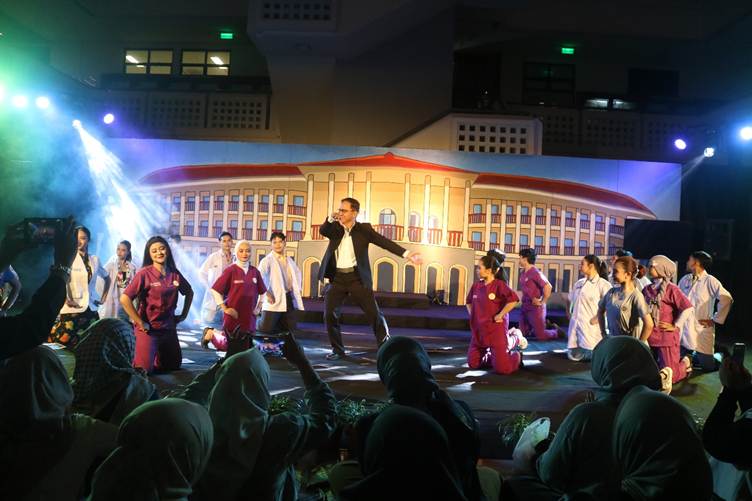
Under the warm glow of stage lights and the thunderous applause of the audience, an institutional memory was not merely performed, but truly brought to life through a dance drama performance. That evening, the stage transformed into a corridor through time. The dancers’ movements, the accompanying musical compositions, and the carefully crafted artistic arrangements merged fragments of history into a unified narrative about the journey of Universitas Gadjah Mada, particularly the Faculty of Dentistry (FKG UGM).
The dance drama was presented not merely as entertainment, but as a cultural reflection that blended traditional heritage with the spirit of today’s generation. It revealed another face of the university—not classrooms and laboratories, but a stage that animated values, history, and identity.
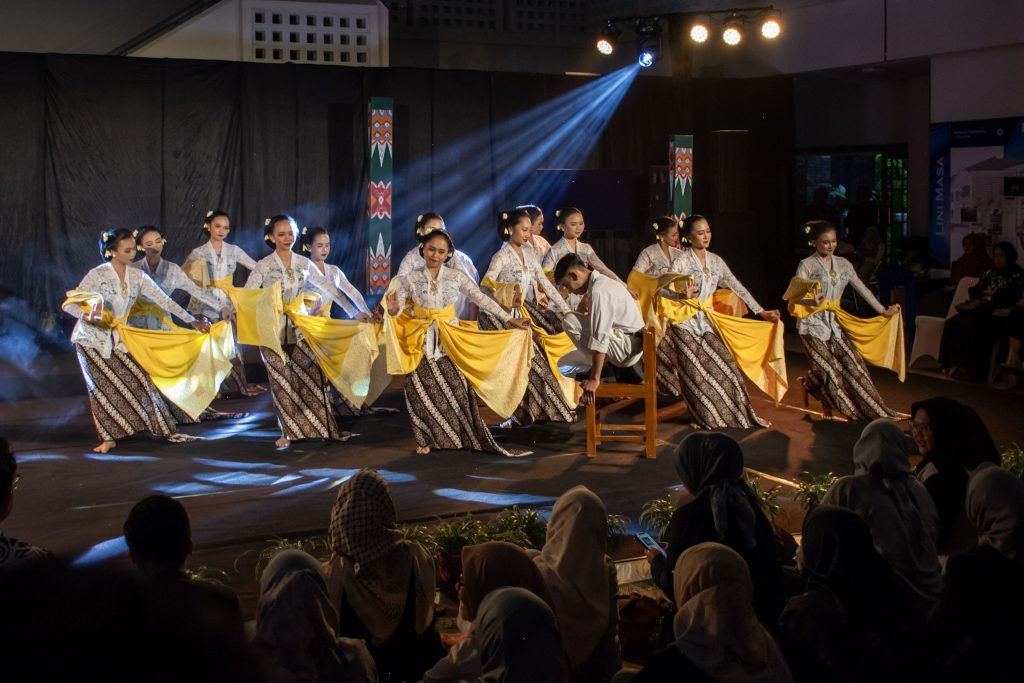
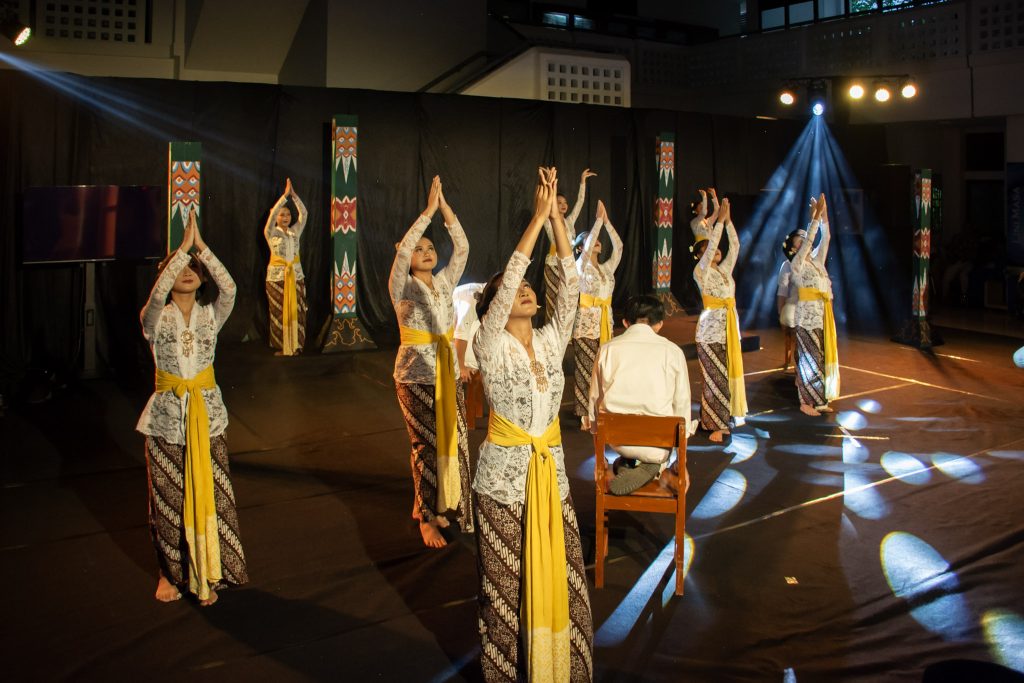
From Ngasem to Sekip, the journey of FKG UGM was woven into a fluid and expressive choreography. Each historical phase—from Ngasem, Mangkubumen, Bulaksumur, to Sekip—was translated into distinctive body language, creating a dialogue between the past and the present. Through this performance, the 78-year history of FKG UGM became more than a timeline; it became an experience to be felt, not merely remembered.
What made the performance particularly special was the people standing on stage. They were not professional dancers, but members of the FKG UGM academic community, including students, lecturers, and even the Dean of FKG UGM, Prof. drg. Suryono, SH, MM, Ph.D. The presence of academic figures dressed in traditional dance costumes conveyed a strong message: science and culture do not stand separately, but coexist harmoniously within academic life.
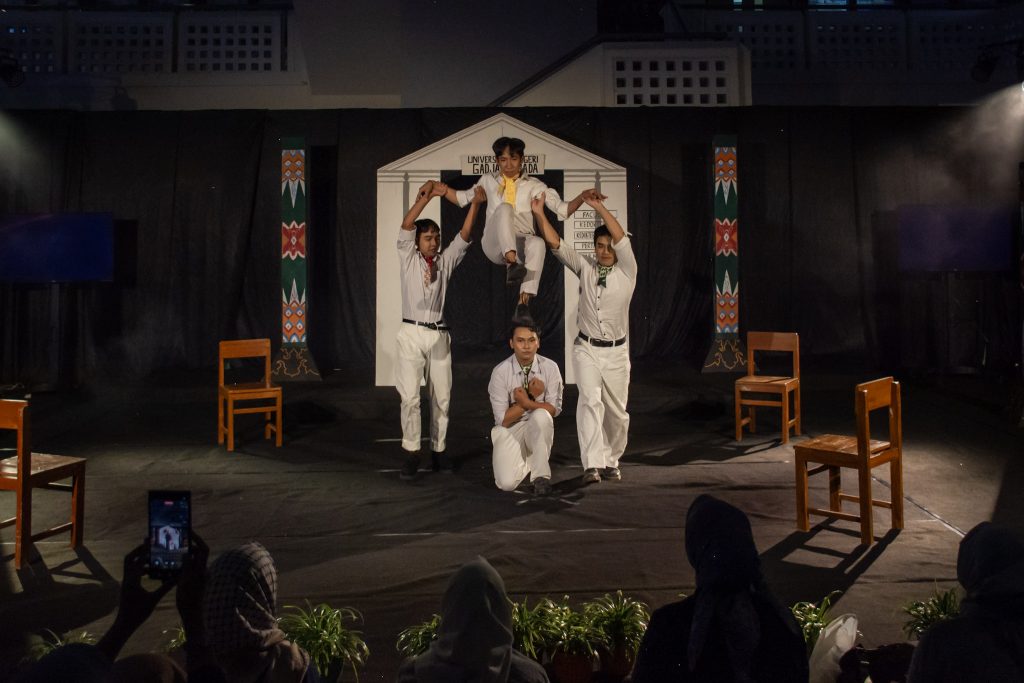
“This is not merely a performance, but our way of celebrating the institution’s long journey,” reflected the spirit conveyed by the creators of the production. Under the direction of Wibowo and the choreographers, movement became more than aesthetics—it became storytelling through dance.
The accompanying music was not merely background sound. It became the emotional pulse of the performance—sometimes soft and contemplative, sometimes powerful and dramatic—immersing the audience in the story unfolding on stage. Meanwhile, the costumes and artistic elements created rich visuals that highlighted changing eras without losing continuity.
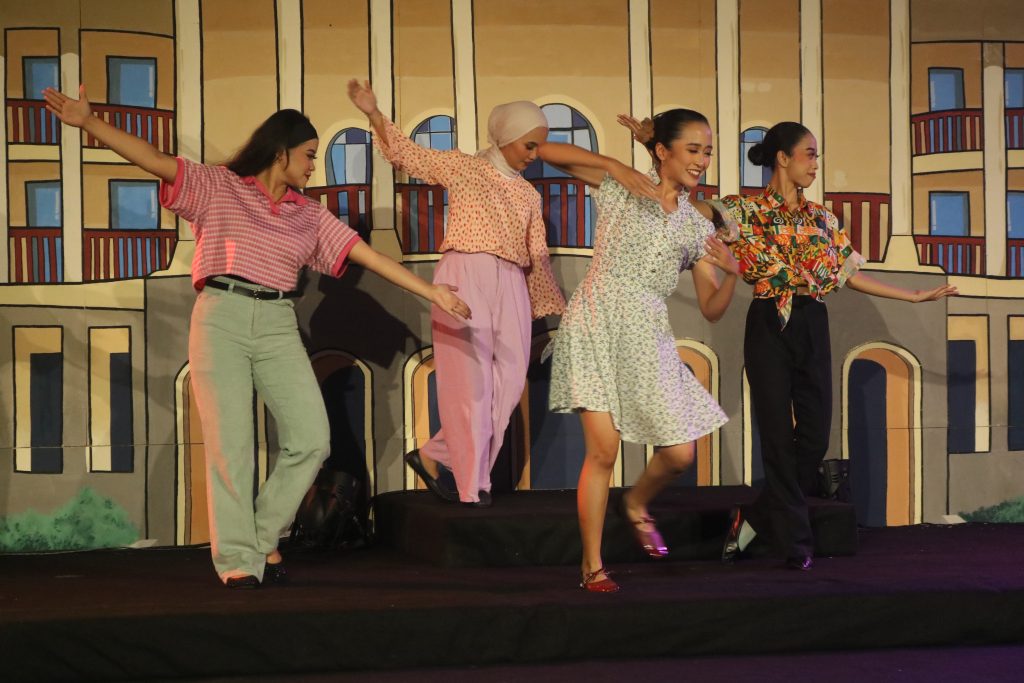
Amid today’s fast-paced and instant popular culture, the performance demonstrated that tradition still has a place and can remain fresh and relevant. It boldly reinterpreted classical forms into something more communicative while preserving their essence.
More than that, the performance conveyed something deeper: the spirit of learning, the pursuit of shared dreams, and devotion to the nation. Embedded within the dialogues and lyrics was a reminder that education is not merely about academic achievement, but also about character-building and togetherness in creating meaningful stories.
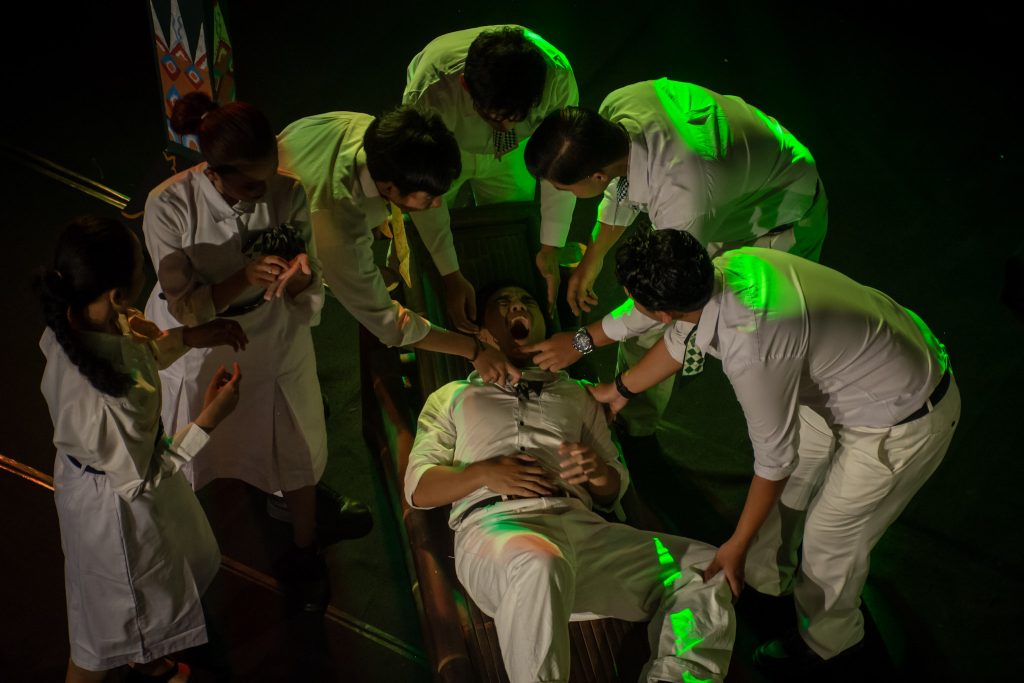
Behind the scenes, Angga Wibowo stood as the captain of the 78th anniversary dance drama production. He transformed ideas into stories and concepts into immersive visual experiences. Under his direction, movement became a language of meaning rather than simple choreography. Together with choreographers Bima Alfian and Raven Gref, every step was crafted into harmony. Every footstep and every hand gesture was designed to speak—about journeys, identity, and togetherness.
The musical arrangements composed by Ngatmin served as the soul of the movements. Melodies and rhythms flowed seamlessly, binding the audience emotionally to the narrative on stage. Meanwhile, Samuel Devan and Patricia Pramesti were entrusted with selecting and shaping the performers who would bring the story to life.
On the visual side, details became everything. Puput Rahmawati created costumes that were not only visually stunning but also strengthened each character. Every fabric, color, and texture became part of the narrative itself. The performance space was then brought to life by Nurcholish Ramadhan, who transformed the venue into an immersive world where the story unfolded.
This dance drama would not have been possible without the many people working behind the scenes. Names such as Taruna, Audrey, Dewi, Chika, and Nunu worked tirelessly to ensure costumes were always ready. Sidik and Hansel made sure every corner of the stage was safe and well arranged. Meanwhile, Abid, Talitha, Annisa, Devina, and Hero handled artistic details that often go unnoticed but are essential to the audience’s overall experience.
And when the stage lights finally illuminated the performers, the spotlight fell upon the dancers who breathed life into the story. From the experienced presence of Dean Prof. Suryono to the youthful energy of Marwa A’yunie Maulida, Muhammad Zakil M., and Auracahya M.B., each performer contributed unique colors to the collective narrative. Other performers, including Devina Naswa Alifah, Gagayu Sucita, Manuella Maureen, and Raras Dwi Nugraheni, added further depth and diversity to the performance.
Though they came from different backgrounds, their identities merged on stage. Their movements became a shared language—a language requiring no words, yet capable of touching emotions deeply. In every step of Andika Fachrie, every expression of Qotrunada Nabila, and the energy brought by Ahmad Faiq M. and others, there were traces of hard work, long rehearsals, and shared dreams.
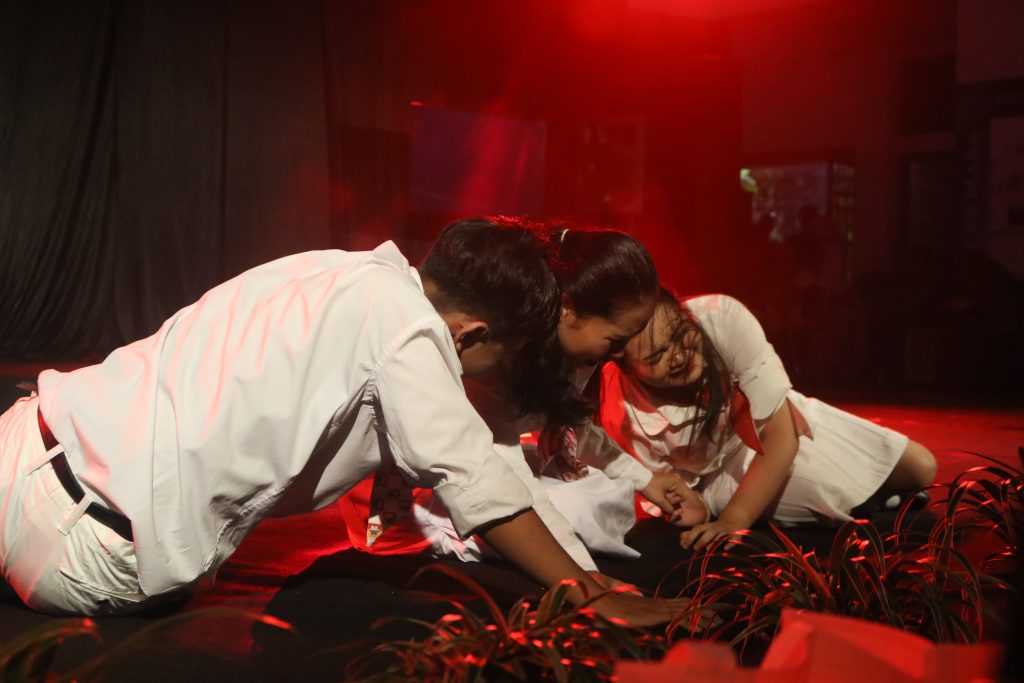
Ultimately, the performance was not only about those appearing before the audience, but about how every individual—from Monawati Rahayu Bhakti to Arba Adhya—became part of a much larger story: a story of collaboration, dedication, and courage in commemorating the 78-year journey of FKG UGM.
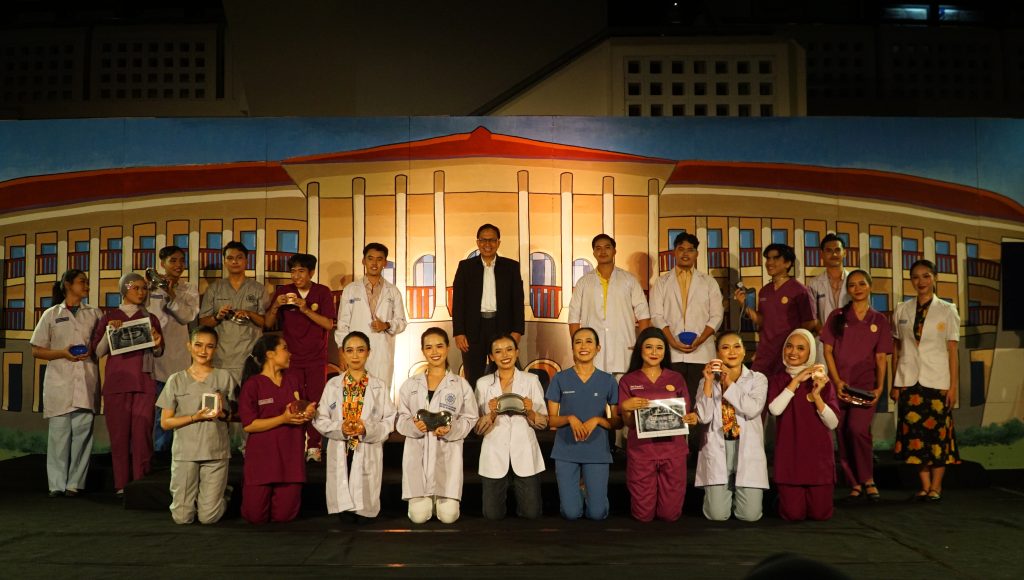
In the end, the dance drama stage became more than a performance venue. It became a meeting point between generations, between science and art, between tradition and modernity. And when the curtain finally fell, what remained was not merely applause, but the realization that retracing the history of an institution can be told with profound meaning—so that, as Sheila on 7 once sang,…semoga doa yang tersampaiakan, jadi cahaya jalan di depan, kau yang terbaik, memori baik…oh 78 tahun FKG UGM. (“may the prayers that have been spoken become the guiding light ahead; you are the best, beautiful memories… oh, 78 years of FKG UGM.”)
(Reporter: Andri Wicaksono, Photographer: Fajar Budi Harsakti & the 78th Anniversary Dance Drama Team Archive of FKG UGM)