
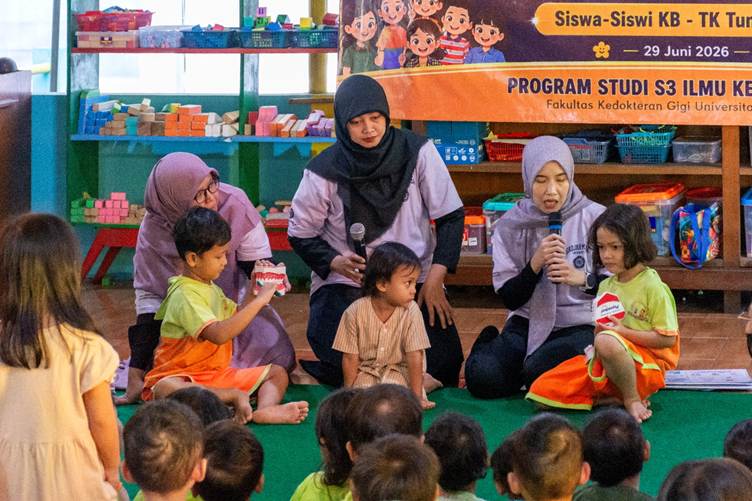
Laughter and excitement filled the hall of TPA-KB-TK Tungga Dewi UGM as 40 doctoral students from the Faculty of Dentistry (FKG UGM), accompanied by 10 faculty and administrative staff members, carried out a simple yet meaningful mission: instilling good oral health habits from an early age. Through this Community Service Program (Pengabdian kepada Masyarakat/PkM), the students not only provided oral health education and dental examinations but also created an enjoyable learning experience for children while strengthening collaboration between higher education and early childhood education institutions (29 June 2026).
The program represented a practical implementation of the Three Pillars of Higher Education (Tri Dharma Perguruan Tinggi) by integrating education, healthcare services, and community empowerment. Rather than serving merely as examination subjects, the children were placed at the center of the initiative as individuals laying the foundation for lifelong healthy behaviors.
Preparations were carried out systematically, with all doctoral students assigned specific responsibilities, including event coordination, health education, clinical examinations, participant management, documentation, logistics, and refreshments. The committee structure was carefully designed to ensure that services were delivered efficiently, effectively, and in a child-friendly manner.
Health Education Goes Beyond Treatment
Unlike conventional community outreach programs that primarily focus on curative services, this initiative placed education at its core. The education team divided Kindergarten A and Kindergarten B students into three small groups, allowing for more interactive learning experiences.
Using educational media, teaching aids, and live toothbrushing demonstrations, children learned the importance of maintaining oral hygiene, choosing foods that support dental health, and understanding that brushing their teeth is not simply a daily routine but a lifelong habit that influences their overall quality of life. Meanwhile, children in the playgroup program underwent dental examinations with age-appropriate guidance.
This approach reflects the understanding that health education for children cannot rely solely on lectures. Young children learn best through experience, play, interaction, and engaging examples.
Child-Friendly and Systematic Dental Examinations
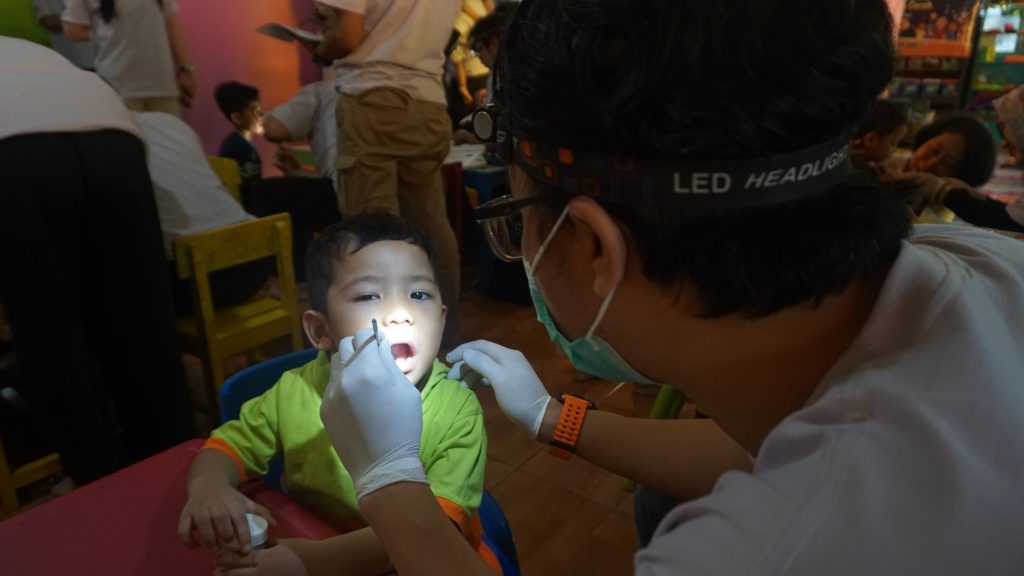
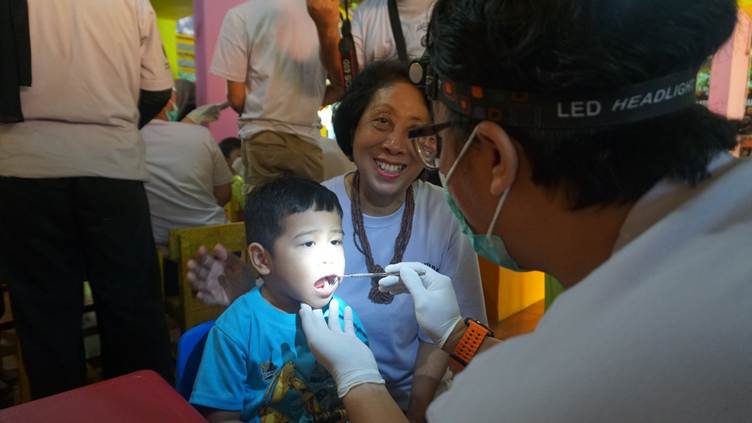
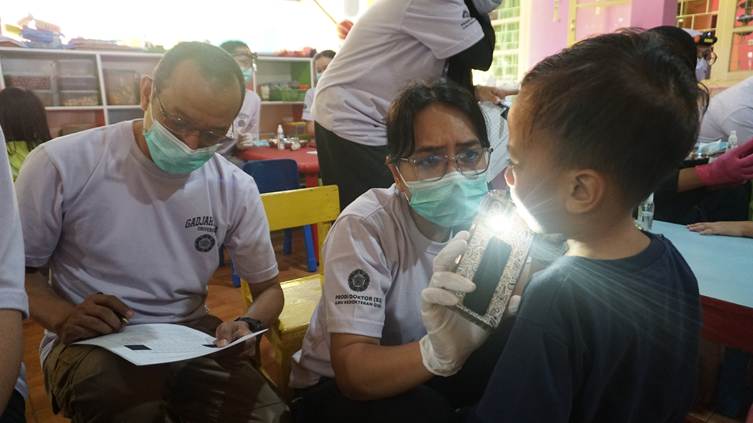
Following the educational sessions, participants proceeded to eleven examination stations, each staffed by two student examiners. This arrangement enabled efficient service delivery without compromising examination quality.
All examination findings were systematically recorded, and each child received a simple explanation of their oral health condition. If additional treatment was needed, parents were advised to seek follow-up care at a dental healthcare facility.
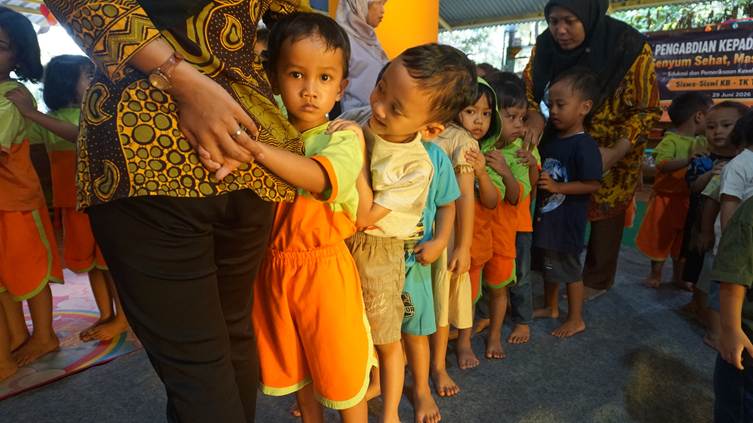
To ensure an orderly process, the committee implemented a participant tracking system. Children who had completed their examinations received a mark on the back of their hand to prevent duplicate examinations while reducing long waiting times—a common challenge in pediatric healthcare services.
Investing in Health During the Golden Years
Heni Widiawati, S.Pd., Head of TPA-KB-TK Tungga Dewi, expressed her appreciation for the school's selection as the community service partner.
"We are honored and grateful to be part of this highly beneficial program. We believe that oral health is an essential component of children's growth and development. Through this activity, we hope our children will learn and develop healthy habits from an early age."
She emphasized that children's education extends beyond academic achievement and character development to include health as a fundamental pillar of healthy growth.
She also expressed her hope that the partnership with FKG UGM would continue, enabling the school to foster a learning environment that supports children's education, health, and overall well-being.
Speaking the Language Children Understand
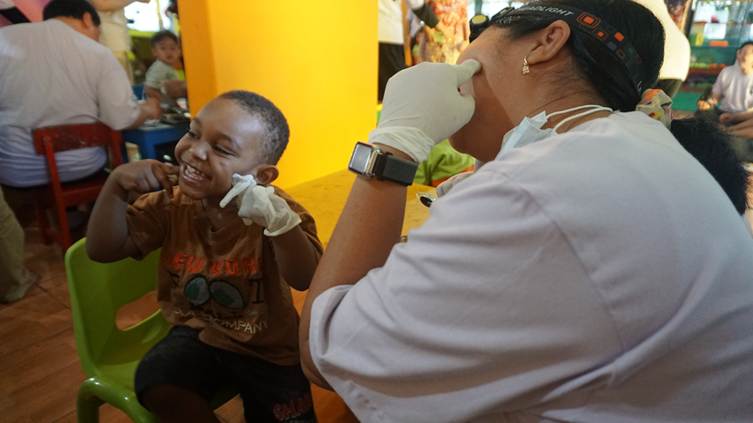
A warm atmosphere emerged when Prof. Drg. Ika Dewi Ana, M.Kes., Ph.D., Head of the Doctoral Program in Dental Science at FKG UGM, interacted directly with the children using simple, age-appropriate language. Rather than offering scientific explanations, she engaged them in conversation.
"Children, when you grow up, would you like to have all your teeth or no teeth? You want to keep them all, right? Let's check your teeth so they stay healthy and free from cavities."
The simple conversation immediately captured the children's enthusiasm, demonstrating that effective health communication with young children should be enjoyable rather than intimidating.
During the same event, Prof. Ika also emphasized the importance of maintaining oral health from an early age.
"If your teeth stay healthy, you'll be able to eat comfortably as you grow up, receive proper nutrition, and develop well."
Her message reinforced that oral health is not merely an aesthetic concern but is closely linked to nutrition, learning ability, and children's overall quality of life.
Learning Leadership Through Community Service
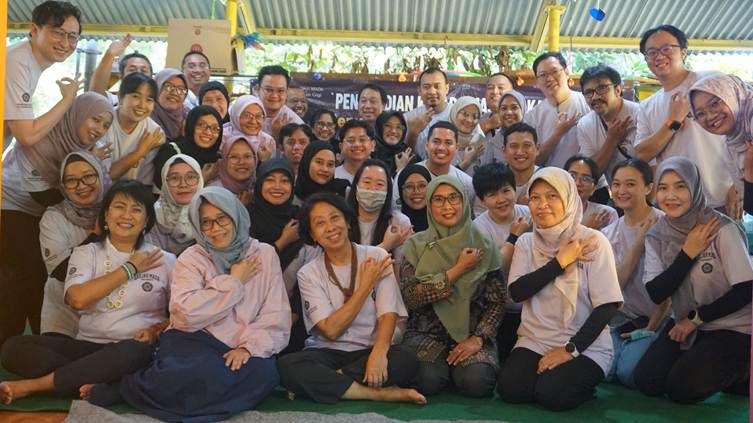
For the doctoral students, the program also served as an opportunity to develop leadership skills. They acted not only as healthcare providers but also as communicators, facilitators, educators, and community advocates. The carefully structured division of responsibilities—including supervisors, project coordinators, education teams, examiners, participant coordinators, and documentation teams—demonstrated the professional management standards applied throughout the activity.
This collaborative working model reflects the reality that community healthcare requires multidisciplinary teamwork, effective coordination, and strong communication skills across different age groups.
Building a Generation with Healthy Smiles
Although the activity lasted only a few hours, it carried a far-reaching message. Oral health problems among Indonesian children remain a significant challenge, while healthy dental habits must be established during early childhood.
Through child-friendly education, systematic dental examinations, and close collaboration between universities and educational institutions, the Community Service Program at TPA-KB-TK Tungga Dewi demonstrated that meaningful change can begin with simple actions: teaching children how to brush their teeth properly, encouraging them to smile without fear of visiting the dentist, and helping them understand that healthy teeth are an essential part of a healthy future.
More than a routine health screening, the program represented a social investment in fostering lifelong healthy habits. As the children returned home with brighter smiles and a greater understanding of oral health, they carried with them a lesson that will remain valuable throughout their lives—that good health begins with small daily habits, nurtured together from the earliest years.
Overall, the program was supervised by Yosaphat Bayu Rosanto, who provided strategic direction, oversight, and evaluation throughout its implementation. Operational coordination was led by Sito Resmi Hayuning Wardanias the Person in Charge (PIC), ensuring that every stage of the program proceeded according to plan while coordinating the work of all field teams.
Event management was coordinated by Welly Anggarani, together with Asri Riany Putri, Tine Martina Winarti, Dendy Murdiyanto, and Levina Azaria Winantyo, who designed the program, organized the event flow, and ensured that every educational and examination session was conducted on schedule. Educational materials and examination facilities were prepared by the logistics team led by Didit Istadi, assisted by Eko Hadianto and Aulia Ayub, who were responsible for teaching materials, visual aids, and dental examination equipment.
The program's success was further supported by several additional teams. Nadia Putri Palupi and her team coordinated refreshments and distributed event T-shirts, while Moh. Yusuf, Rosa Pratiwi, and William Ardy Surya documented every stage of the activity for reporting and publication purposes. Communication with the school and participants was managed by the public relations team led by Iffah Mardhiyah and Shoimah Alfa Makmur, while Vilianti Eka Fitri Rahatina and Regia Aristiyanto served as event emcees. Multimedia support was provided by Dias Bintang Raka Siwi and Budi Suhartono, ensuring that every educational session remained engaging and interactive.
Reporter: Nanda Ayu, Photographers: Andri Wicaksono & Fajar Budi Harsakti