
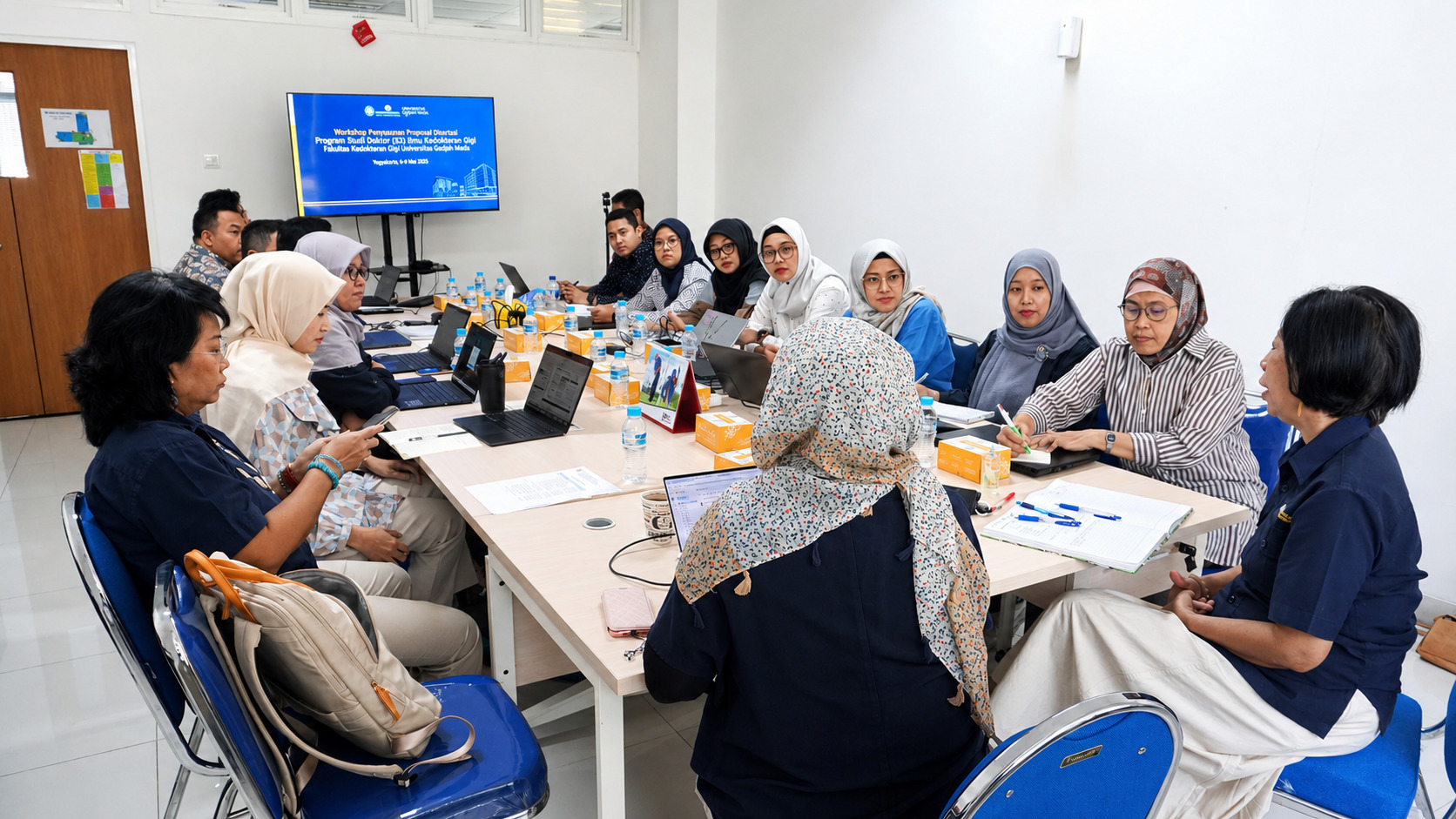
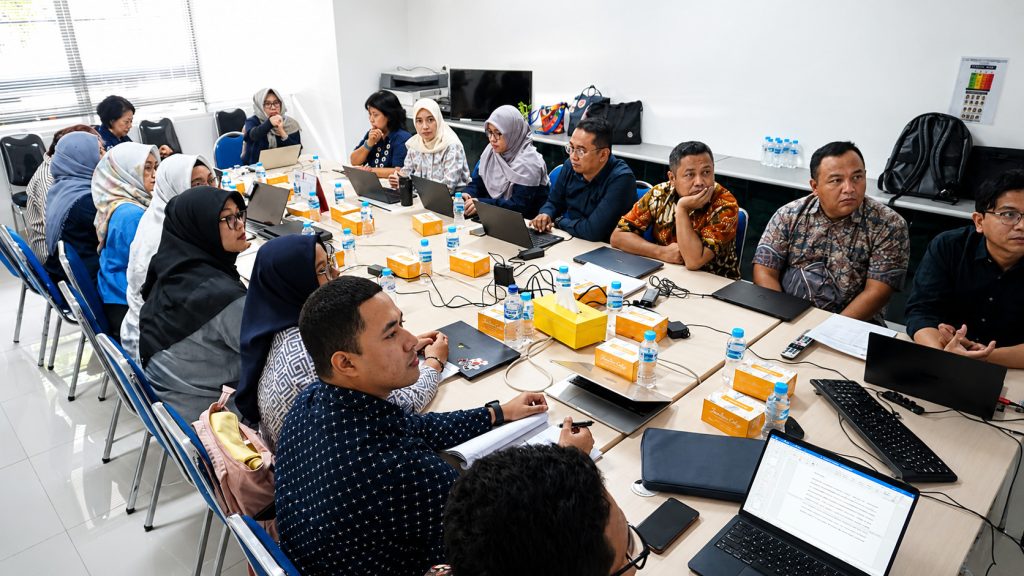
The Dissertation Proposal Development Workshop was designed as an intensive learning ecosystem integrating scientific novelty, research methodology, research ethics, research translation, and innovation commercialization to ensure that research delivers tangible benefits to society.
Head of the Doctoral Program in Dental Medicine at the Faculty of Dentistry, Universitas Gadjah Mada (FKG UGM), Prof. drg. Ika Dewi Ana, M.Kes., Ph.D., accompanied by home-base faculty member Dr. drg. Alma Linggar Jonarta, M.Kes., emphasized that doctoral education should not stop at the attainment of an academic degree.
“A doctoral graduate should not merely produce a dissertation. They should generate meaningful solutions. Doctoral research must have a clear direction, address the nation’s challenges, and contribute to both scientific advancement and society.”
This statement is in line with the workshop’s objective of emphasizing the importance of developing sustainable research with significant impact that meets ethical standards and can generate innovations applicable to society.
Changing the Way Researchers Think
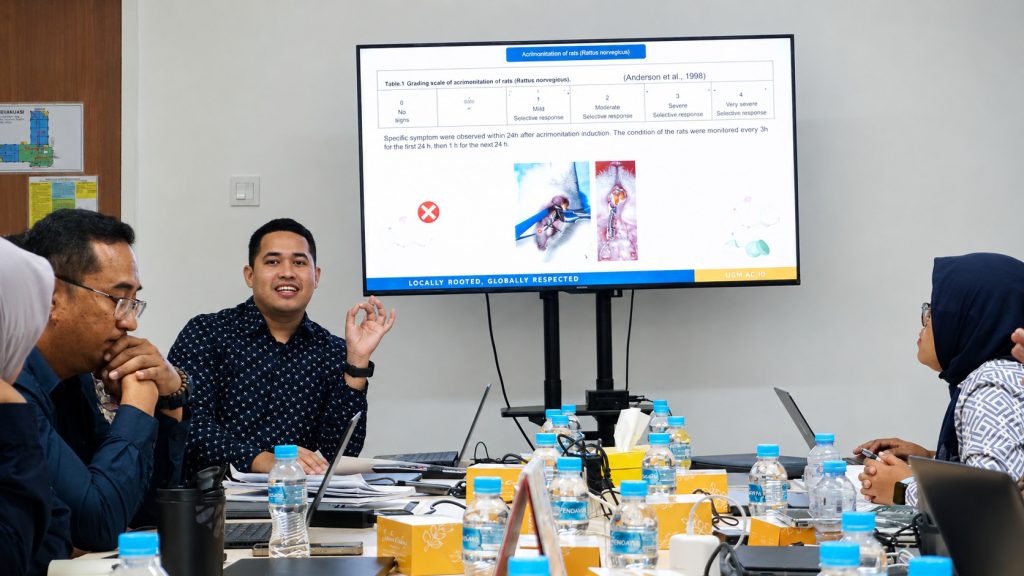
One of the strongest messages throughout the workshop was the need for a paradigm shift in research. Students were encouraged to no longer begin their research simply out of curiosity, but rather from real societal needs, adopting the concept of “starting from the end”—first considering the ultimate impact they want to achieve before designing the research.
This approach teaches that every stage of research should have a clear thread leading toward a defined outcome, whether in the form of a new theory, invention, healthcare technology, or policy recommendation.
In this context, the workshop served as a learning space that not only taught students how to develop research proposals, but also trained them to build a vision as scientists of the future.
A Research Roadmap as a Compass
The workshop materials also emphasized the importance of having a research roadmap to guide a doctoral student’s scientific journey.
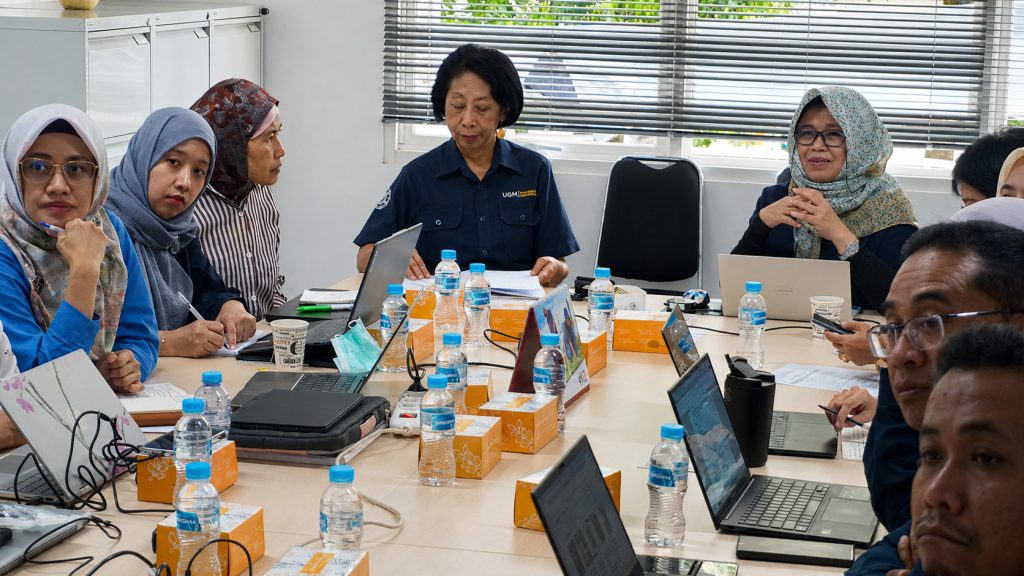
During a discussion session, Prof. Dr. drg. Widowati Siswomihardjo, M.S., one of the speakers, reminded participants that many students fail to understand the “spirit” of their research because they lack a broader picture of where their research fits.
“If you do not have a roadmap, you will not understand the spirit of the research you are conducting. A roadmap is a compass that ensures every step of your research remains directed toward its ultimate goal.”
A roadmap is viewed not merely as an administrative document, but as a strategic thinking tool that helps students understand the relationship between their current research and the long-term development of scientific knowledge.
Logbooks: Small Records That Determine Credibility
In addition to conceptual skills, the workshop placed considerable emphasis on cultivating a culture of research documentation through the use of laboratory logbooks.
Supervisors noted that many students still regard record-keeping as a mere formality, even though a logbook serves as a fundamental pillar of research integrity.
Students were reminded to document every laboratory activity in detail, from the names and concentrations of chemicals and experimental conditions to observations and the location where digital data are stored.
“A logbook is extremely helpful when we need to curate research findings. A publication should never be delayed simply because we have forgotten where the data were stored or how an experiment was conducted.”
Furthermore, logbooks also serve as a means of communication among supervisors.
“If you do not report your research activities, you are the one who loses out. Supervisors may develop different perceptions because they do not have access to the same information. Research records are a bridge for scientific communication.”
The message highlights that academic integrity is built through simple habits practiced consistently.
From Proposals to Innovation
The workshop went beyond theory. Students were given opportunities to present their research ideas, receive feedback from home-base faculty members, refine their research frameworks, and gradually develop Chapter I of their proposals.
The entire series was designed so that, by the end of the program, students would have research proposals ready to proceed to the pre-comprehensive or comprehensive examination stage.
One research idea presented during the workshop demonstrated a strong translational focus: the development of a combination of nano chitosan and nano curcumin as a biological retainer to prevent relapse following orthodontic treatment. The research not only examines biological aspects through in vitro and in vivo studies, but is also directed toward developing an innovative material with potential clinical applications.
Building an Impact-Driven Doctoral Ecosystem
The S3 Dissertation Proposal Development Workshop Series reflects a paradigm shift in doctoral education in dental medicine in Indonesia. Whereas proposal development has often been viewed as an administrative step toward conducting research, FKG UGM has instead transformed it into a process for shaping the identity of a scientist.
Students are not merely taught how to write proposals. They are also trained to think systematically, maintain data integrity, communicate scientifically with their supervisors, develop research roadmaps, and design innovations that deliver meaningful benefits to society.
This model of academic development demonstrates that research quality does not emerge overnight at the publication stage. Rather, it is built through consistent mentoring from the earliest formulation of an idea.
Ultimately, the success of a doctoral graduate is measured not simply by the number of pages written in a dissertation, but by the extent to which the knowledge they generate makes a difference in people’s lives.
(Reporter & Photographer: Andri Wicaksono)