
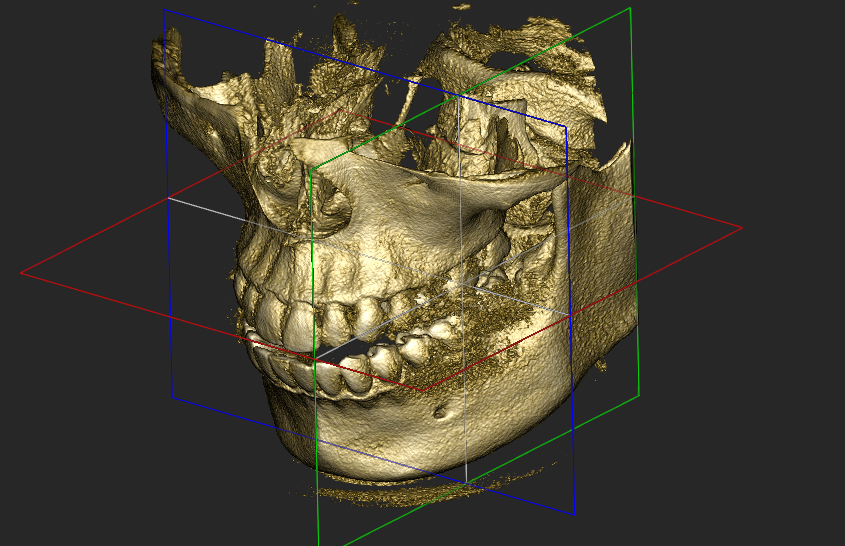
The maxillary sinus is the largest air-filled cavity among the paranasal sinuses and plays an important role in respiratory function, voice resonance, and the structural integrity of the face. In dentistry—particularly in radiology, oral surgery, and implantology—an in-depth understanding of the morphology and anatomical variations of the maxillary sinus is essential. One imaging technology that provides high accuracy in analyzing this structure is Cone-Beam Computed Tomography (CBCT).
Cone-Beam Computed Tomography (CBCT) enables three-dimensional visualization of facial bone structures and sinuses with a lower radiation dose compared to conventional CT, making it an ideal option for preoperative evaluation, implant planning, and the diagnosis of sinus disorders related to posterior maxillary teeth.
CBCT in Maxillary Sinus Evaluation
CBCT is used to assess sinus morphology, mucosal thickness, cavity volume, and the presence of abnormalities such as cysts, odontogenic sinusitis, and maxillary sinus pneumatisation.
CBCT features, including axial, coronal, and sagittal slices, assist dentists and oral surgeons in obtaining detailed images of the relationship between posterior maxillary tooth roots and the sinus floor, which is critical for preventing complications during tooth extraction or implant placement.
Advantages of CBCT include:
- High spatial resolution with minimal distortion
- Lower radiation dose compared to medical CT
- Volumetric analysis enabling accurate measurement of sinus distance, area, and volume
- Short scanning time, improving patient comfort
Related Research
An article in Jurnal Majalah Kedokteran Gigi Klinis FKG UGM by Shinta Amini Prativi entitled “Diagnosis pneumatisasi sinus maksilaris menggunakan cone-beam computed tomography (CBCT)” confirms that CBCT is a highly effective modality for identifying and measuring the degree of maxillary sinus pneumatisation. The study shows that sinus pneumatisation, defined as the expansion of the sinus cavity toward the alveolar region after posterior tooth loss, can be clearly detected using CBCT. This finding assists clinicians in planning prosthodontic and implant treatments more safely and precisely.
Clinical Implications of CBCT Use in the Maxillary Sinus
- Dental Implant Planning
CBCT enables accurate measurement of alveolar bone thickness in the posterior maxilla, helping determine optimal implant placement. - Evaluation of Odontogenic Sinus Disorders
CBCT aids in detecting sinusitis caused by periapical infections or tooth extraction procedures involving oroantral communication. - Assessment of Sinus Pneumatisation
CBCT provides three-dimensional imaging that allows clinicians to assess the degree of sinus invasion toward the alveolar crest, which is crucial in determining implant length or the need for sinus lift procedures. - Detection of Anatomical Variations
CBCT can identify anatomical variations such as sinus septa, Schneiderian membrane thickness, and root–sinus relationships that may cause complications during surgery.
***
CBCT is a superior diagnostic tool in maxillary sinus analysis because it provides accurate, efficient, and low-dose three-dimensional imaging. Based on studies on the diagnosis of maxillary sinus pneumatisation using CBCT, this technology has proven effective in evaluating anatomical variations and pathological changes that cannot be detected with conventional radiography. The use of CBCT not only improves diagnostic accuracy and patient safety but also serves as an important foundation in the sustainable development of digital dentistry in Indonesia.
References
MKGK, Shinta Amini Prativi, Diagnosis pneumatisasi sinus maksilaris menggunakan cone-beam computed tomography (CBCT), https://journal.ugm.ac.id/mkgk/article/view/49157
Author: Rizky B. Hendrawan | Photo: Freepik

