
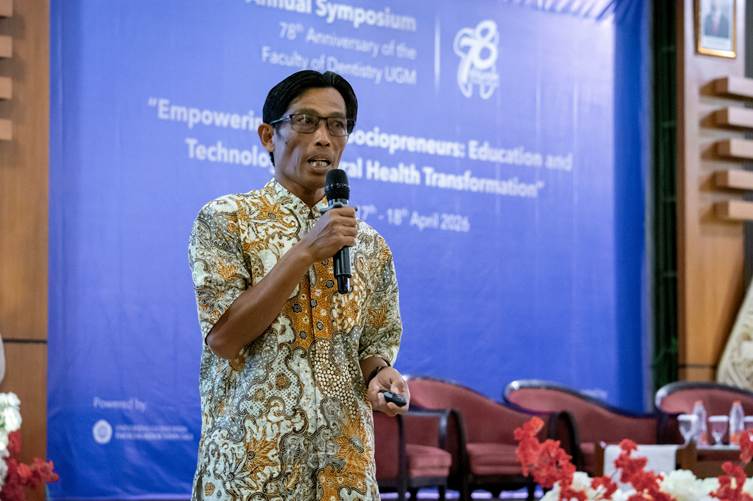
Amid the overwhelming dominance of imported cosmetic products on Indonesian retail shelves, an innovation from the Faculty of Dentistry, Universitas Gadjah Mada (FKG UGM), once again reminds us of a longstanding irony: a country rich in natural resources, yet weak in downstream industrialization. Research presented at the 78th Anniversary Symposium of FKG UGM recently became a concrete example—and a test case—for the ambition of university research commercialization.
The innovation is both simple and strategic: a lip balm made from coriander seed extract. An ingredient long associated with household kitchens has been transformed into a cosmetic product with antibacterial and anti-inflammatory claims. The presentation delivered by Asikin Nur revealed that key compounds such as linalool, found in high concentrations, provide scientific evidence that coriander is not merely a spice, but also a promising high-value active ingredient.
However, this is where Indonesia’s familiar problem reemerges: will this innovation truly reach society, or will it remain merely a laboratory prototype?
Dry lips may sound trivial, yet the global lip care market is worth billions of dollars. In Indonesia, most available products are foreign brands with prices that are not always affordable for all segments of society. In this context, the emergence of a local herbal alternative is not only a matter of health, but also of economic sovereignty.
The research demonstrated promising results. Laboratory tests showed that coriander extract could inhibit various microorganisms, including bacteria and fungi. Formulation testing indicated good product stability, while preliminary clinical trials reported no significant side effects and effectiveness in treating dry lips.
Nevertheless, this optimism should be tempered with critical caution. The clinical trials remain limited in scale and therefore are not yet strong enough to support broad commercial claims. In the pharmaceutical and cosmetic industries, the journey from “sufficiently effective” to “proven at the population level” is long, expensive, and heavily regulated.
More importantly, the greatest challenge lies not in the science itself, but in the innovation ecosystem. Indonesia possesses many outstanding research projects, yet only a few succeed in becoming mass-market products. Classic obstacles such as licensing, production standardization, raw material consistency, and marketing strategies often become the weakest links.
In the case of this coriander lip balm , the involvement of funding schemes such as Kedaireka and industrial partners offers hope that the research will not stand alone. However, such collaboration must continue through the stages of production and distribution, rather than stopping at the early development phase.
We also cannot ignore market realities. Consumers purchase not only functionality, but also brands, stories, and trust. Local herbal products often lose not because their quality is inferior, but because they fail to build strong public perception. This is where branding and communication strategies become crucial.
More broadly, this innovation should be viewed as part of Indonesia’s larger national agenda for research downstreaming and commercialization. Over the past several years, the government has actively promoted collaboration between universities and industry. Yet the true indicator of success is not the number of partnerships signed, but how many products actually reach the market and are used by society.
Coriander may seem like a small symbol. But if one spice can be elevated into a value-added cosmetic product, then the potential of Indonesia’s local plants is in fact far greater. From essential oils to phytopharmaceuticals, the opportunities are wide open.
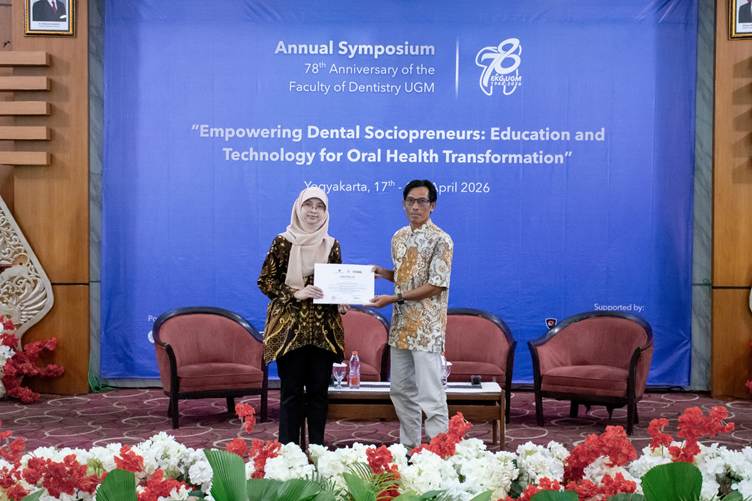
The question is: are we ready to transform that potential into real economic power?
Lipbalm the coriander lip balm from FKG UGM now stands at a critical crossroads. It could become a successful example of research commercialization—or merely add to the long list of innovations that end at seminars and scientific publications. That choice depends not only on researchers, but also on industrial courage, policy support, and consumer trust.
If it fails, Indonesia will once again repeat the old story: rich in raw materials, poor in finished products. But if it succeeds, perhaps this marks the beginning of a new era—one in which Indonesian spices provide not only flavor, but also become part of a cosmetic industry with real economic vitality.
Reporter: Andri Wicaksono, S.Sos., M.I.Kom.; Photography: Fajar Budi Harsakti, SE