
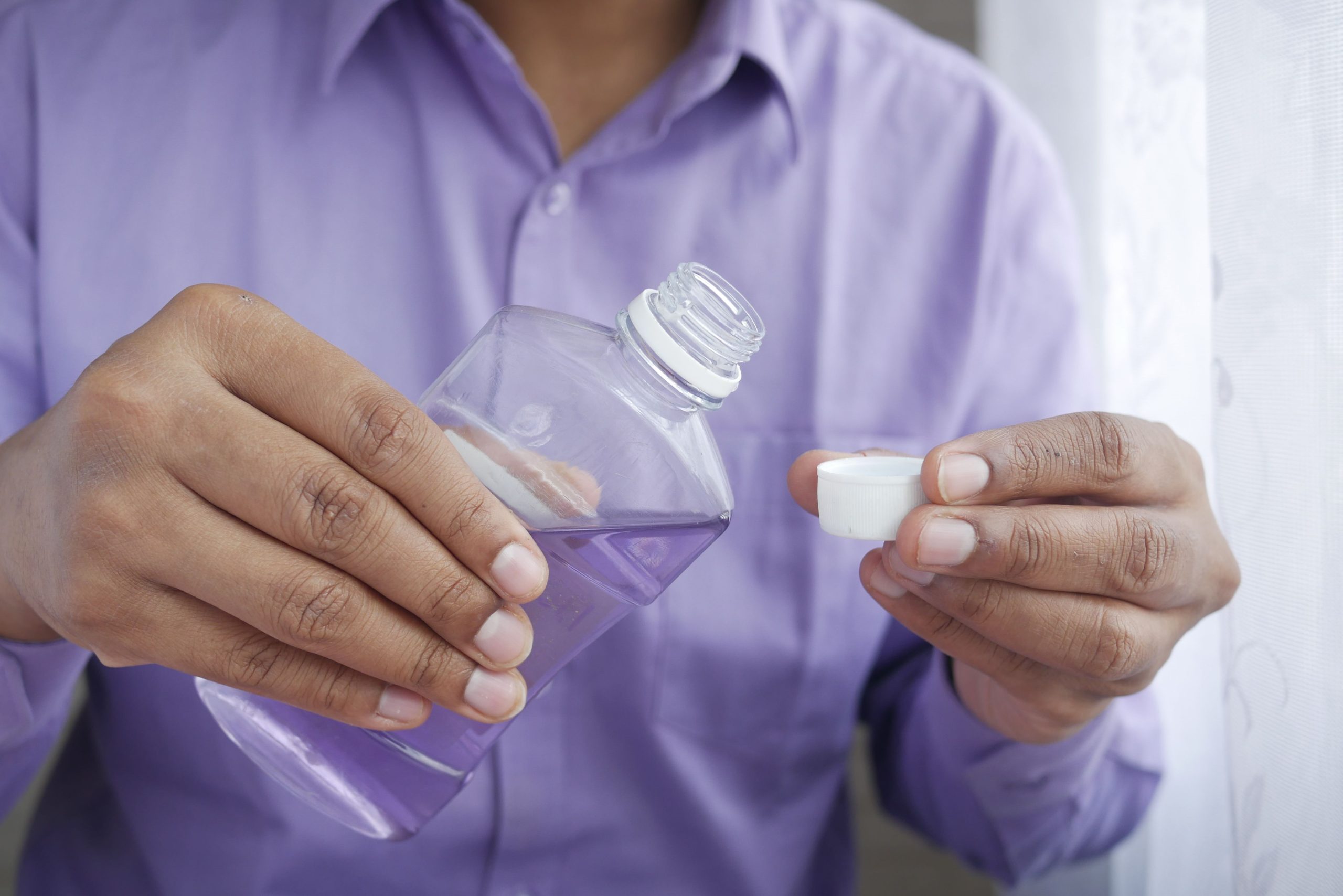
Many people have long assumed that dental calculus can only be removed in the dentist’s chair. However, a clinical study involving researchers from the Faculty of Dentistry (FKG), Universitas Gadjah Mada, has demonstrated something more surprising: an anticalculus mouthwash formulated with food-grade ingredients was shown to significantly reduce plaque, dental calculus, and gingival inflammation, even without any professional intervention.
The study was published in the May–June 2018 issue of the Journal of International Oral Health, with Prof. Dr. drg. Regina TC. Tandelilin, M.Sc., PBO, from the Department of Oral Biology, FKG UGM, as one of the principal authors.
When Gingivitis Becomes Inflamed Silently
Gingivitis, or inflammation of the gums, is often taken lightly. Yet this condition can serve as a gateway to more serious periodontal disease, which can affect up to 90 percent of the global population and is a major cause of tooth loss.
What makes gingivitis dangerous is that it often causes little noticeable discomfort. The gums may appear slightly red and occasionally bleed during toothbrushing, and the condition is then simply ignored. Meanwhile, bacterial biofilm continues to develop, hardening into calculus (dental tartar) and creating an ideal environment for the colonization of subgingival microorganisms that damage the tissues supporting the teeth.
Dental calculus itself is not merely an aesthetic problem. Its rough surface provides shelter for pathogenic bacteria. Studies have shown that calculus is found in 70 to 100 percent of periodontal disease cases.
Forty Volunteers, Two Groups, One Mouthwash
The study was conducted at the Department of Oral Biology and the Dental Hygiene Study Program, FKG UGM, after receiving ethical approval from the FKG UGM Research Ethics Committee (No. 00467/KKEP/FKG-UGM/EC/2015). A total of 40 volunteers with moderate gingivitis were carefully selected, ranging in age from 17 to 55 years, free from chronic systemic diseases, and not taking medications that could affect gingival conditions.
After a two-week washout period, the participants were divided into two groups. Group A underwent professional scaling before beginning to use the anticalculus mouthwash (Periogen, USA). Group B used the same mouthwash without undergoing scaling. Both groups rinsed twice a day for one minute over a full two-month period.
Three clinical indices were measured periodically: the gingival index (GI) based on the Loe and Silness method, the plaque index (PI) based on the Silness and Loe method, and the calculus index from the Oral Hygiene Index-Simplified. Measurements were taken at baseline, after one month, and at the end of the second month.
The results spoke for themselves.
Numbers That Cannot Be Ignored
In the group that underwent scaling followed by mouthwash use, the gingival index improved by 50 percent, the plaque index decreased by 52.72 percent, and the calculus index decreased by 100 percent from baseline to the end of the second month. The results were impressive and also logical, as scaling removed the initial deposits before the mouthwash worked to prevent new deposits from forming.
What was even more interesting occurred in the group without scaling. Although the improvements were more moderate, the gingival index still improved by 21.43 percent, the plaque index decreased by 25 percent, and the calculus index decreased by 36.58 percent simply through routine rinsing twice a day.
“Anticalculus oral rinse can play a major role to decrease plaque development by inhibiting crystal growth.”
Its mechanism of action lies in the tetrapotassium pyrophosphate and sodium tripolyphosphate contained in the Periogen formulation. These two compounds inhibit the growth of mineral crystals in plaque, thereby preventing plaque from hardening into calculus. What distinguishes Periogen from many other mouthwashes is that its formulation is based on food-grade ingredients, is alcohol-free, and is considered safe for long-term use without the risk of side effects commonly associated with alcohol-based mouthwashes.
Statistical analysis using the Kruskal-Wallis test showed highly significant reductions in all clinical parameters in both groups. The Mann-Whitney test in the first month revealed that plaque and gingival conditions between the two groups were no longer statistically significantly different, although the calculus index remained better in the scaling group. At the end of the second month, the differences between the two groups became significant again across all parameters, confirming that scaling still provided optimal results.
Relevance Beyond the Clinic
These findings have implications that extend beyond the dental practice. In many areas with limited access to professional dental healthcare services, anticalculus mouthwash could serve as a realistic and affordable first line of defense. The researchers explicitly described the mouthwash as having the potential to become a “natural food-based alternative for patients who wish to avoid alcohol, artificial preservatives, artificial flavors, and artificial coloring.”
Of course, certain limitations should be kept in mind. The study lasted only two months and involved 40 participants with moderate gingivitis. The researchers themselves acknowledged the need for multicenter studies with longer durations, as well as evaluations in other periodontal conditions such as aggressive periodontitis and peri-implantitis.
However, one thing is already clear: rinsing twice a day with the right mouthwash is not merely a cosmetic habit. Under certain conditions, it can provide a genuinely effective therapeutic benefit while patients wait for an opportunity to sit in the dentist’s chair.
Source DOI: DOI: 10.4103/jioh.jioh_106_18
Authors: Anny Anggraini; drg. Achmad Zam Zam Aghasy, M.Kes.
Photo: Pexels