
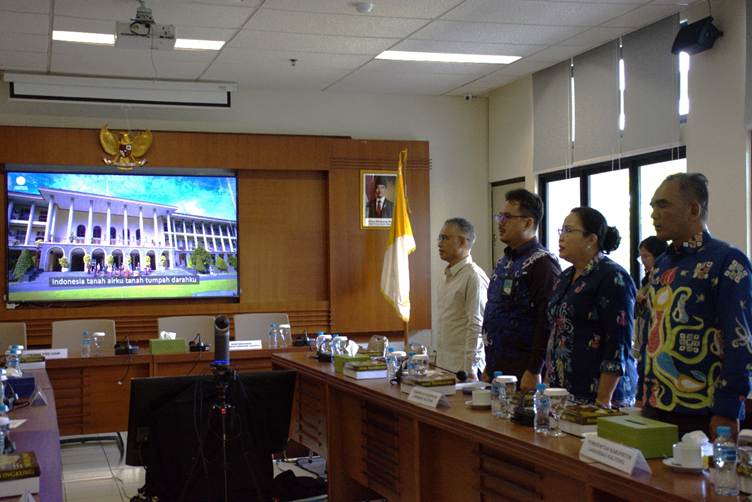
The Government of Lamandau Regency, Central Kalimantan, led by Regional Secretary Dr. M. Irwansyah, SP., MP, along with his staff and the Director of Gusti Abdul Gani Regional General Hospital (RSUD), dr. Mardoni Setiawan, Sp.B, FINACS, FICS, CHQP, CPPD, has undertaken a long journey—not merely geographical, but also structural—in an effort to provide more adequate dental and oral healthcare services for its community.
The meeting with FKG UGM, attended directly by the faculty leadership, the Head of the Cooperation Unit, lecturers, and educational staff in related fields, became an important momentum for formulating solutions to the many limitations that have long constrained healthcare services in the region. (April 9, 2026)
Real Needs from Indonesia’s 3T Regions
Lamandau is not merely an administrative region; it represents the classic challenges faced by Indonesia’s underdeveloped, frontier, and outermost (3T) regions: shortages of medical personnel, limited access, and regulations that often fail to align with realities in the field.
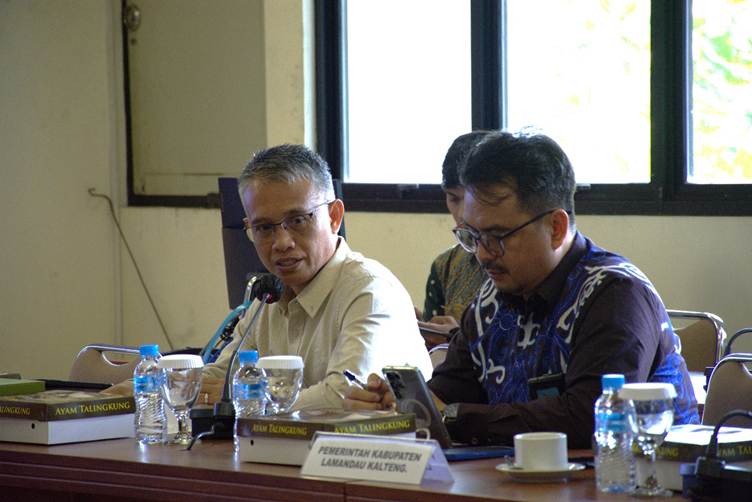
The Director of RSUD Gusti Abdul Gani, dr. Mardoni Setiawan, Sp.B, explained that the need for dental specialists—particularly in oral surgery, prosthodontics, and periodontics—is extremely urgent. However, efforts to bring in such specialists often encounter regulatory barriers, especially within the national healthcare financing system.
“Our main problem is not only the shortage of personnel, but also regulations that limit residents from participating in service practice,” stated the hospital director.
This condition is worsened by the fact that even general practitioners are often reluctant to be assigned to subdistrict areas. The unequal distribution of healthcare workers remains a structural issue that has yet to be resolved.
Regulations and Realities Are Not Always Aligned
During the discussion, regulations from Indonesia’s national health insurance system, BPJS Kesehatan, became a major point of concern. A nationally designed system often lacks flexibility in addressing region-specific conditions.
For example, regulations concerning the Physician in Charge of Patient Care (DPJP) have become barriers to allowing resident doctors to assist healthcare services in remote areas. In many cases, however, the presence of residents could provide an effective temporary solution.
The Vice Dean for Cooperation, Community Service, and Research at FKG UGM, drg. Trianna Wahyu Utami, MD.Sc., Ph.D., explained that collaboration is fundamentally possible as long as there is a clear supervision scheme and proper administrative legality.
The approach must be comprehensive—not only about sending personnel, but also ensuring system readiness, equipment availability, and regulatory support,” she explained.
Middle Ground: Collaboration and Partnership Schemes
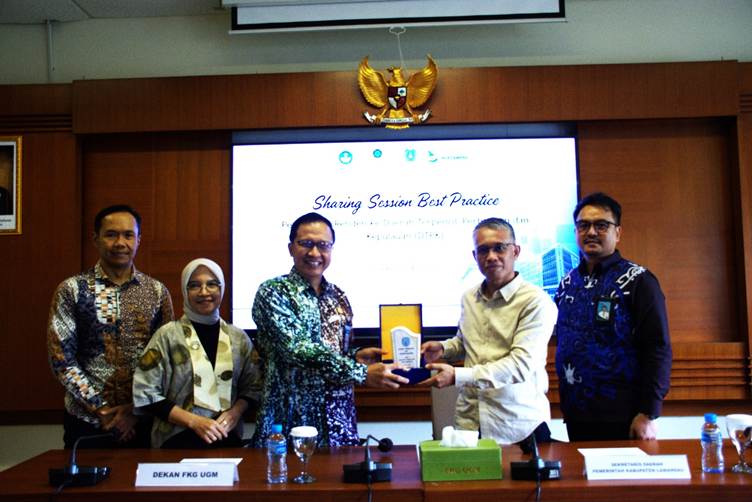
Amid these complexities, partnership schemes between universities and regional governments have emerged as a new source of hope. Independent resident deployment programs, region-based educational programs, and affirmative pathways for local students are among the strategies currently being developed.
FKG UGM representatives explained that they already have experience sending residents to various regions, though not without challenges.
“The classic issue is sustainability. Many have already been funded, but do not return to their home regions,” one FKG UGM lecturer remarked.
Therefore, new approaches are now focused on region-based commitment selection, including mandatory return service and strengthening local capacity.
Potential and Hope from the Border Region
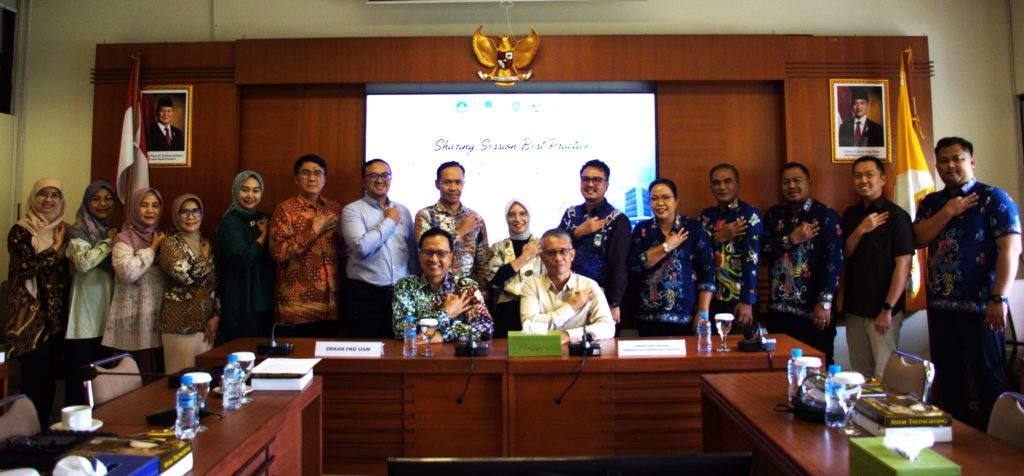
Interestingly, Lamandau possesses strategic potential as a cross-border area connected to routes toward Malaysia and Brunei. With high population mobility, the need for quality healthcare services becomes increasingly important, as the prestige of a nation is reflected through such services.
Innovative ideas have also begun to emerge, including the development of “one-day service” denture care, which is considered capable of becoming a regional flagship service.
However, without support in infrastructure, human resources, and adaptive policies, such potential will remain difficult to realize.
(Editorial Team: Andri Wicaksono, S.Sos., M.I.Kom)