
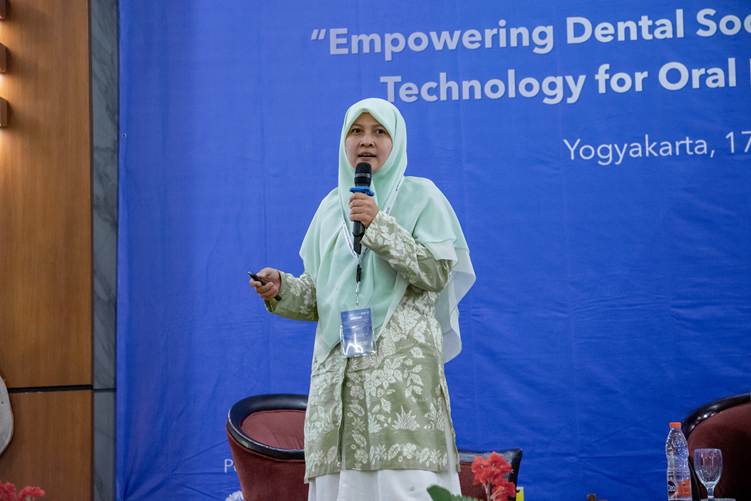
A voice concerning Indonesia’s future emerged from an issue often considered trivial: children’s teeth. The theme “Saving Children’s Smiles: Are We Treating Disease or Preventing It?”presented by Indra Bramanti, Dr., DDS, M.Sc., Sp.KGA(K), sounded simple, yet reflected deep concern regarding health policies that have not fully prioritized prevention.
Behind the academic presentation and epidemiological data lay an undeniable reality: most Indonesian children grow up with oral health problems. A caries prevalence exceeding 80 percent is not merely a number, but a reflection of a system that has yet to function comprehensively.
In a nation currently benefiting from a demographic bonus, children’s health quality is an irreplaceable foundation. Yet oral health, as an integral part of growth and development, is frequently marginalized. In fact, the oral cavity serves as an entry point to broader health issues.
“Many systemic diseases originate from poor oral conditions,” Dr. Bramanti emphasized during the symposium.
Untreated caries causes more than pain. It develops into eating difficulties, reduced sleep quality, and impaired concentration in learning. Over time, this condition creates a difficult cycle to break: children with poor nutrition are more vulnerable to caries, while caries further worsen nutritional status.
At this point, oral health issues extend beyond the medical realm. They become social, educational, and even human development concerns.
Government efforts through various programs have indeed been implemented. However, their effectiveness still raises questions. The low rate of children’s visits to oral healthcare providers indicates that access is not yet fully available—or perhaps not sufficiently understood by the public.
Meanwhile, daily habits remain an even more dominant factor. The fact that nearly the entire population still brushes their teeth incorrectly demonstrates that basic education has not yet been firmly established. In this context, oral health is not only about healthcare services, but also about culture.
Changing times have also introduced new challenges. Children now live in digital environments that shape different habits and lifestyles. Excessive gadget use, for example, has been associated with changes in posture and breathing patterns, which ultimately affect facial and dental structural development.
At the same time, psychological factors such as stress are receiving increasing attention. Teeth grinding (bruxism) in children is no longer viewed as a minor disorder, but rather as part of a response to emotional pressure.
Amid this complexity, children’s oral health appears to be a convergence point for various dynamics of modern life.
Reporter: Andri Wicaksono, S.Sos., M.I.Kom.; Photography: Fajar Budi Harsakti, SE