
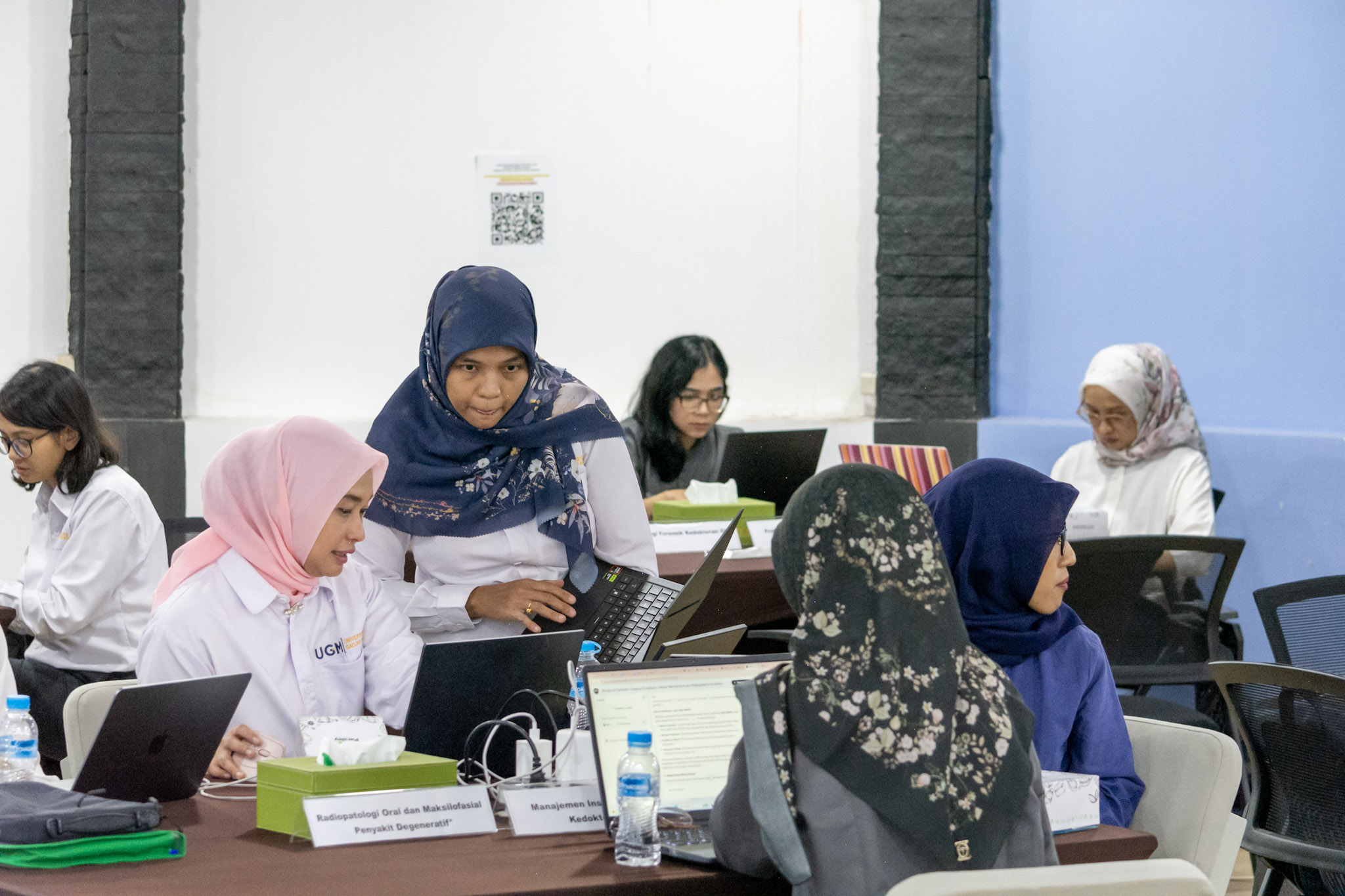
Specialist dental education curricula must remain dynamic and proactive in responding to the challenges posed by future medical technologies. Drg. Isti Rahayu Suryani, M.Biotech., Sp.Rad.O.M.(K)., Ph.D., Head of the Oral and Maxillofacial Radiology Specialist Program (PPDGS RKG) at UGM, stated that the curriculum revision is designed to produce specialist graduates who are highly competent in detecting manifestations of degenerative diseases in the oral and maxillofacial region. One of its key innovations is the introduction of interdisciplinary, technology-based courses.
"Digital Dental Radiography and Automated Detection is one of the flagship courses offered by the UGM Oral and Maxillofacial Radiology Specialist Program," said Drg. Isti during the Dental Radiology Curriculum Workshop on Monday (29 June).
She further explained that the course integrates theoretical instruction with practical skills laboratory sessions involving experts from various disciplines within UGM, including the Faculty of Mathematics and Natural Sciences and the Department of Electrical Engineering. Students will also receive training in machine learning and 3D printing technologies delivered by external experts from partner institutions.
Competency development also extends to forensic dentistry and inclusive clinical practice. Through the Forensic Dental Radiology course, the program has invited an Adjunct Professor from Chulalongkorn University, Thailand, and collaborates with radiologists from the Indonesian National Police Headquarters (Mabes Polri) and forensic specialists from the Yogyakarta Regional Police (Polda DIY) to conduct hands-on training in 3D CBCT-based bone reconstruction. In addition, students are required to perform radiographic examinations for children with special needs during their clinical placements.
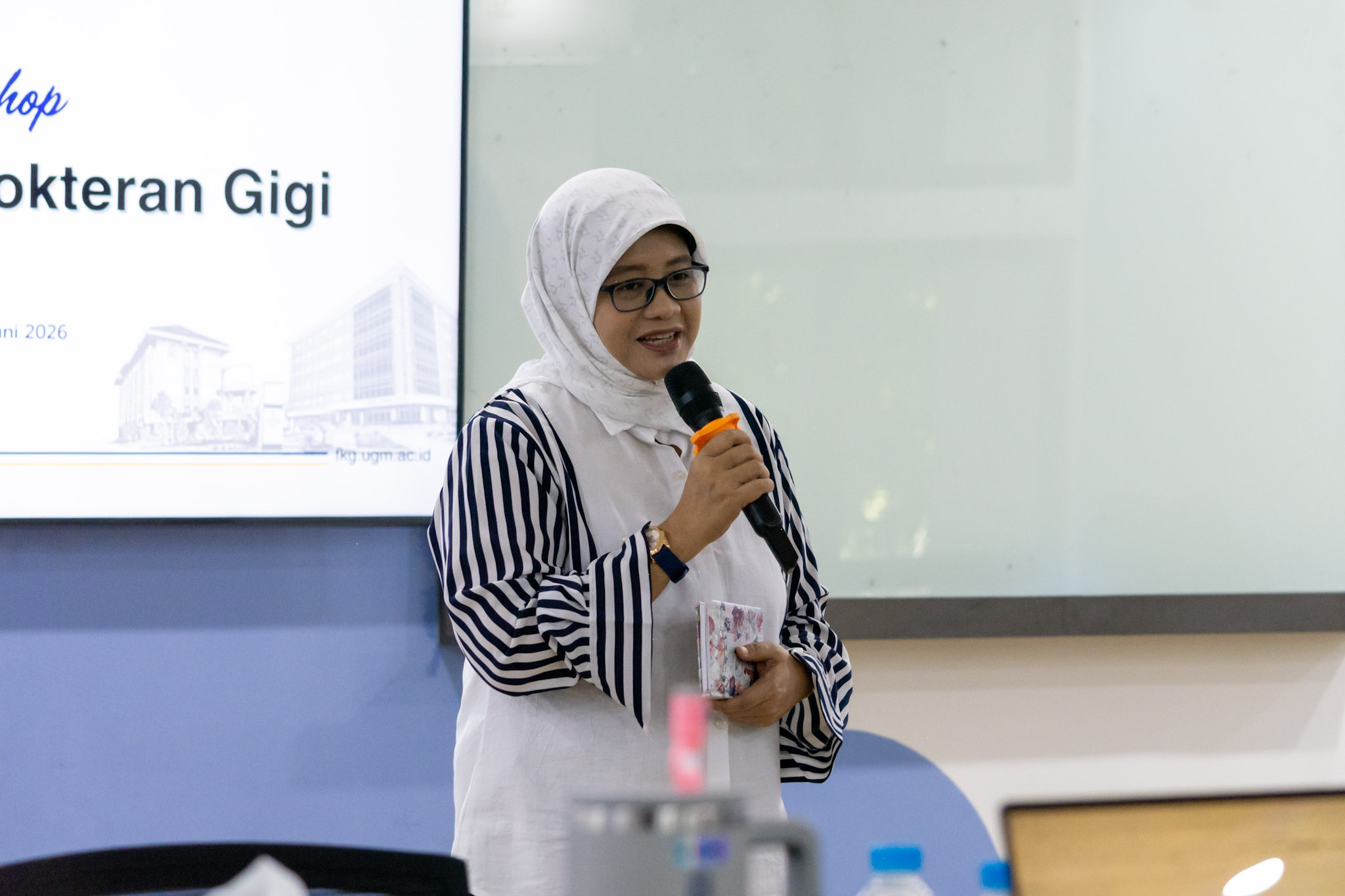
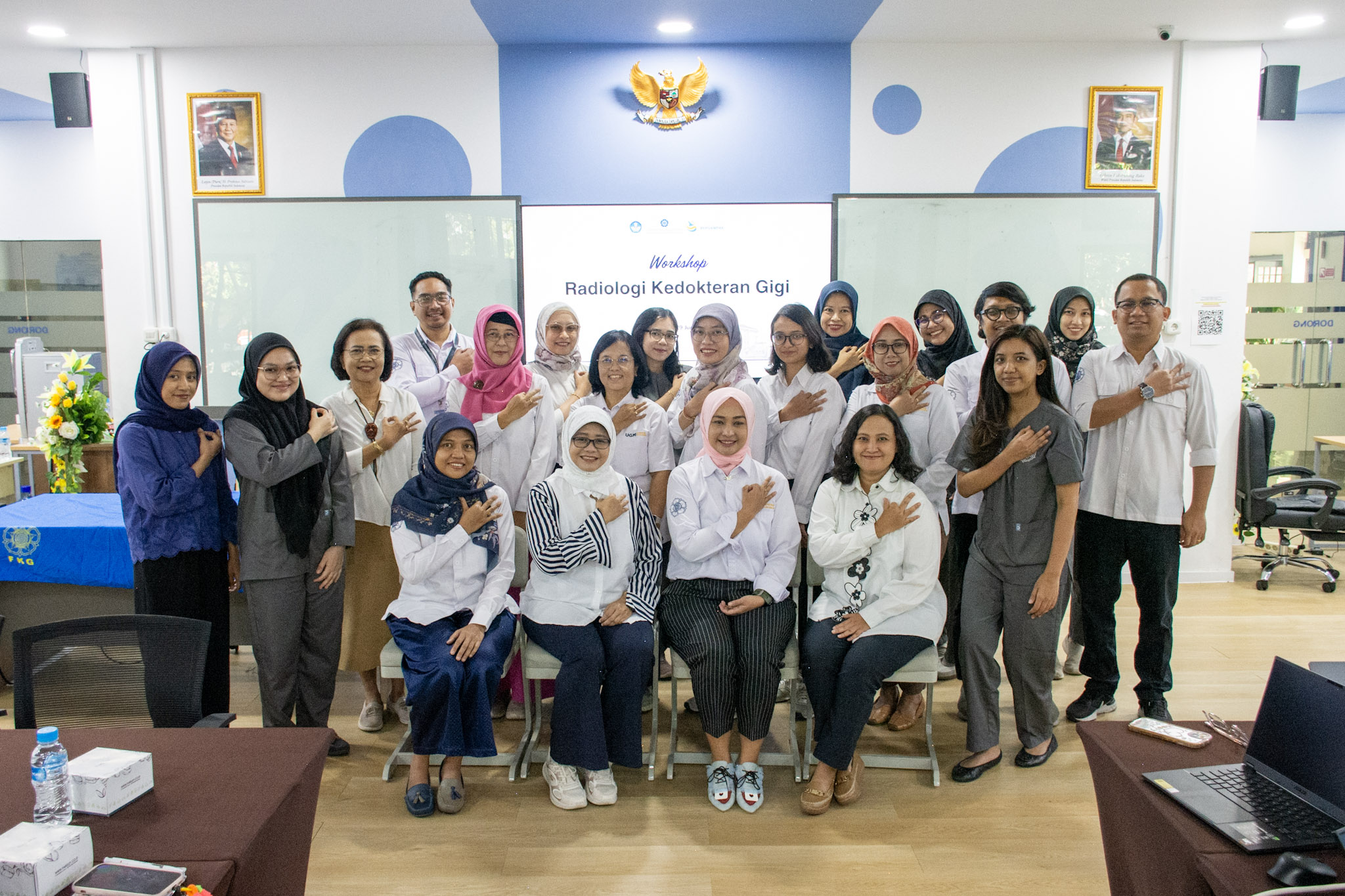
The faculty has fully supported the ongoing curriculum development within the Oral and Maxillofacial Radiology Specialist Program. Prof. drg. Rosa Amalisa, M.Kes., Ph.D., Vice Dean for Academic and Student Affairs of FKG UGM, commended the program for its swift response to the Ministry of Health's digital healthcare service reforms under Health Law No. 17 of 2023.
Although the curriculum now incorporates artificial intelligence (AI) and big data, Prof. Rosa emphasized that these technologies are intended to complement—not replace—the central role of healthcare professionals.
"There is a narrative suggesting that doctors are becoming dependent on AI. However, this is not a weakness, because clinical decisions ultimately remain in the hands of physicians," Prof. Rosa stressed. ultimately remain in the hands of physicians," Prof. Rosa stressed. She also expressed her hope that ethics and effective communication would continue to serve as the foundation of professional education.
Contributors: Annisa Dwi Noviyanti, Hazra Alifia Muharam
Photo: Fajar Budi Harsakti
Editor: Fajar Budi Harsakti