
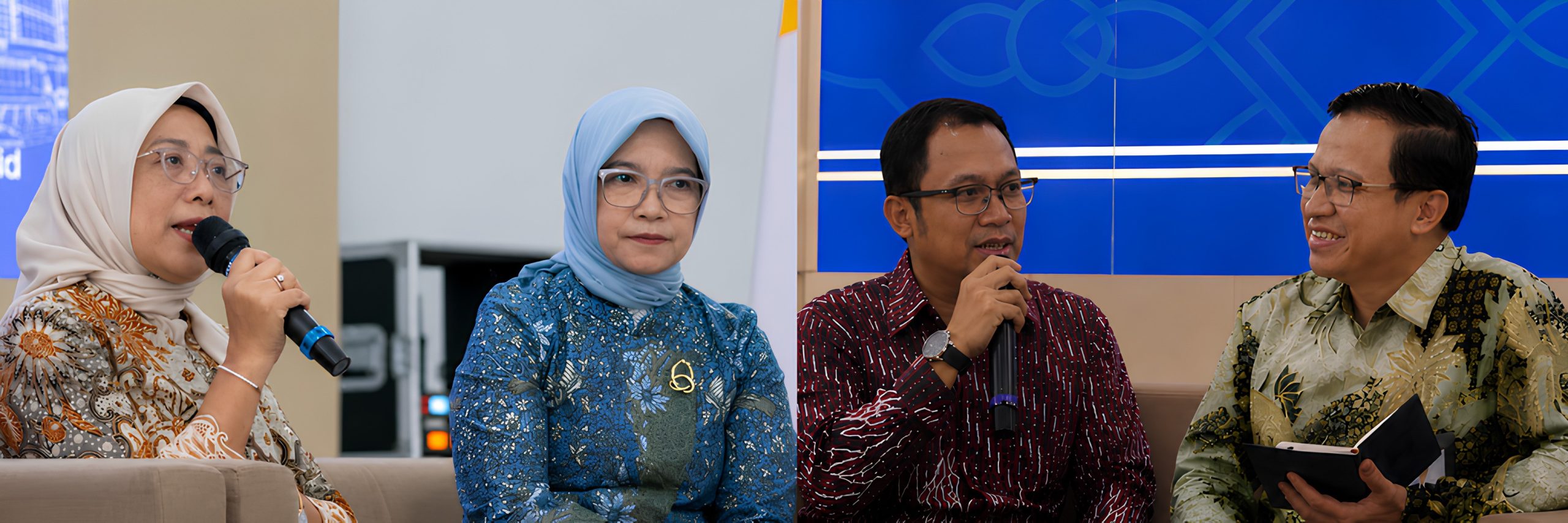
The Faculty of Dentistry, Universitas Gadjah Mada (FKG UGM), held a public consultation and aspiration forum as part of the selection process for the Dean of FKG UGM for the 2026–2031 term. The event served as a strategic platform for all members of the academic community, including faculty members, educational support staff, and students, to share their suggestions, concerns, and expectations directly with the prospective dean candidates.
The forum was organized by the Selection Committee, chaired by Prof. Dr. drg. Regina Titi Christinawati Tandelilin, M.Sc., together with the committee members. According to the Chair of the Selection Committee, the attendance, questions, constructive feedback, and ideas shared by participants reflected the collective commitment of the FKG UGM community to the faculty's future. These valuable inputs will help the dean candidates refine and strengthen the programs they have proposed. She emphasized that the forum was a meaningful stage in the dean selection process, representing FKG UGM's academic culture that upholds openness, dialogue, and respect for diverse perspectives.
Chair of the FKG UGM Senate, Prof. Dr. drg. Ahmad Syaify, Sp.Perio(K), stated that, as part of the Universitas Gadjah Mada community, everyone is expected to uphold UGM's core values, including integrity, professionalism, patriotism, dedication to community service, and prioritizing institutional interests above personal or group interests. Echoing the Selection Committee Chair, he noted that these values would serve as the foundation for determining the direction of FKG UGM's leadership over the next five years.
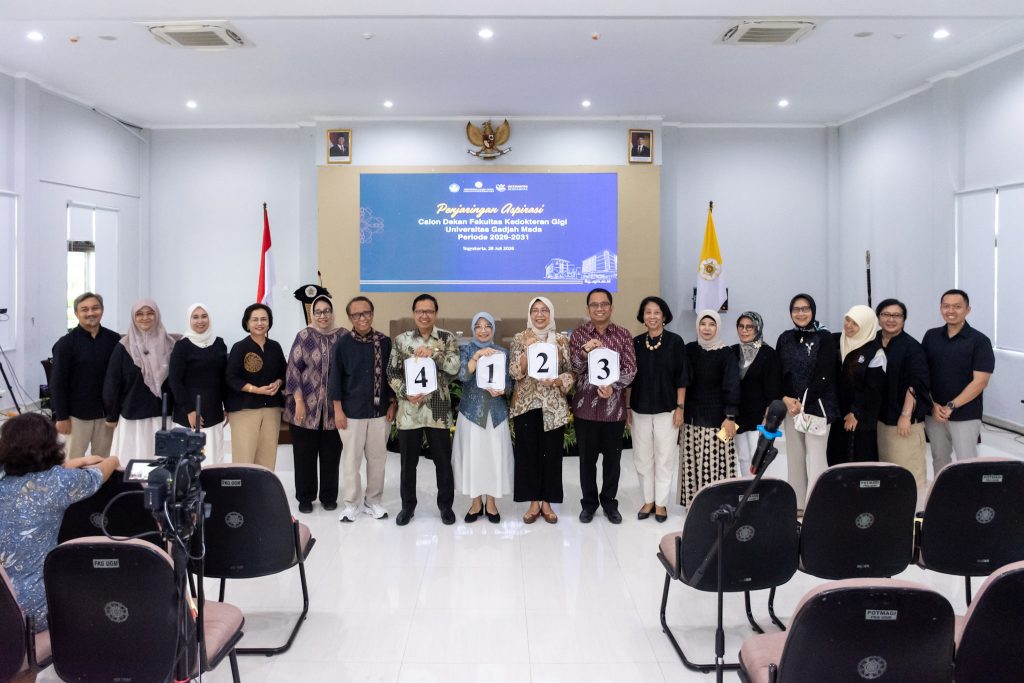
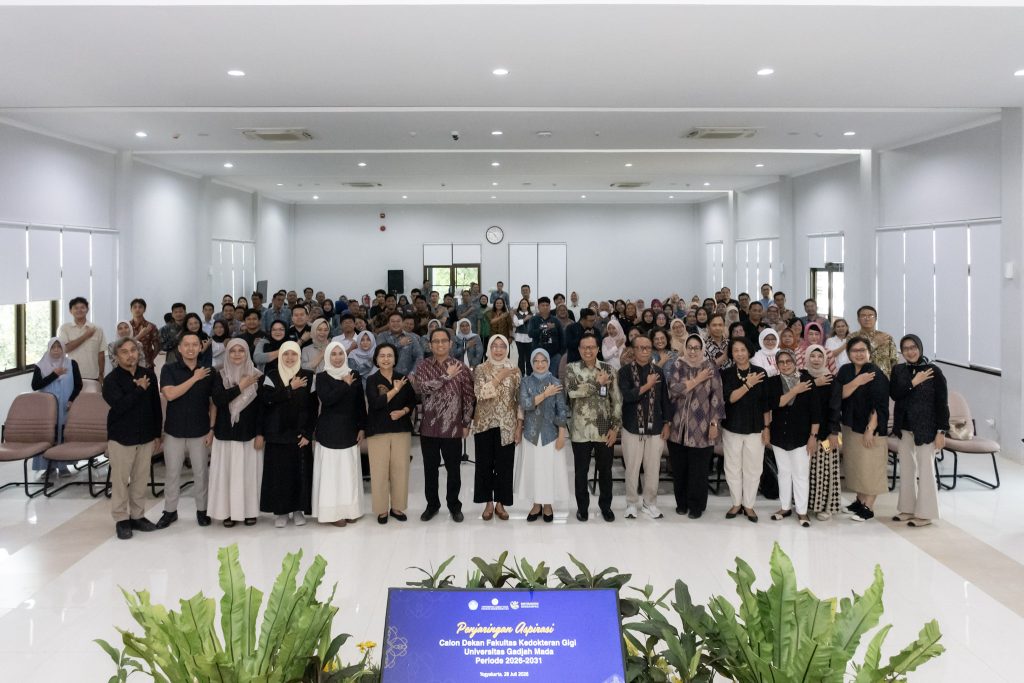
During the two-hour discussion, participants engaged in a lively and productive exchange of ideas. Key issues raised included strengthening educational quality, improving access to laboratory facilities, enhancing staff welfare, expanding career development opportunities for educational support staff, and accelerating students' scientific publication achievements.
Reducing Faculty Administrative Workload Through Digitalization
One of the major issues raised came from faculty representative Prof. drg. Heni Susilowati, M.Kes., Ph.D., who highlighted the heavy administrative burden borne by academic staff. Lecturers often spend significant amounts of time completing administrative data entry, reducing the time available for research and academic development.
In response, the dean candidates proposed several innovative solutions. One proposal focused on developing an integrated digital system based on the Internet of Things (IoT) and strengthening a one-click database. This system would automatically document faculty activities, for example, through event photographs, and directly convert them into academic credit records without requiring repeated manual data entry. Internet of Things (IoT) dan penguatan sistem one-click database. Sistem ini memungkinkan aktivitas dosen terdokumentasi otomatis (misalnya melalui foto kegiatan) yang langsung terkonversi menjadi kredit poin tanpa perlu pengisian berulang.
Another candidate emphasized the importance of application interoperability by developing an internal faculty system directly integrated with the university's digital platforms, such as Simaster. Through this integration, teaching attendance and laboratory activities could be recorded automatically, simplifying the preparation of faculty workload reports.
Improving Laboratory Accessibility and Strengthening the Role of Laboratory Staff
Laboratory readiness and the optimization of Educational Laboratory Personnel (PLP/Laboratory Staff) also received considerable attention. Faculty members expressed hopes that research facilities within the faculty would become more accessible and user-friendly.
Laboratory staff representatives highlighted the need for clearer recognition of their technical roles in faculty and student research, as well as greater opportunities for professional development and career advancement. The dean candidates committed to improving laboratory accessibility by reviewing existing access mechanisms and ensuring laboratory staff are actively and formally involved in research teams.
From the student perspective, participants proposed providing specialized training in systematic review and meta-analysis. Such training was considered essential for helping postgraduate students meet the requirements for timely publication in reputable international journals. The proposal received positive responses from all dean candidates, who pledged to facilitate advanced research methodology training.
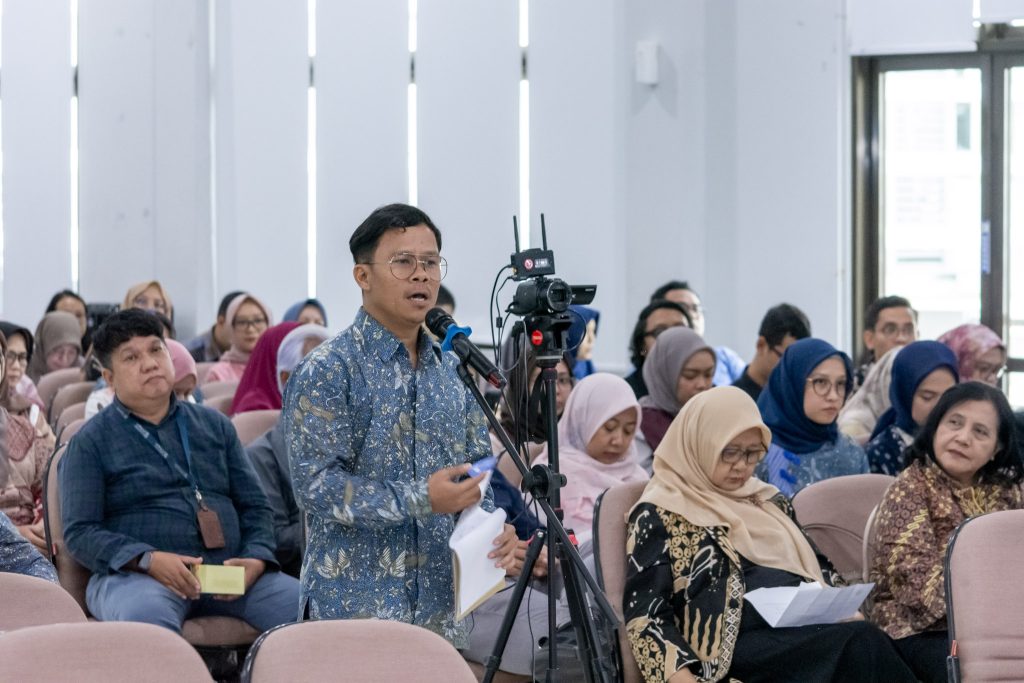
Beyond technical programs, the forum also underscored the importance of fostering a harmonious and supportive working environment. The candidates agreed that whoever is elected Dean should uphold transparency, collective and collegial decision-making, and inclusive leadership to advance FKG UGM together.
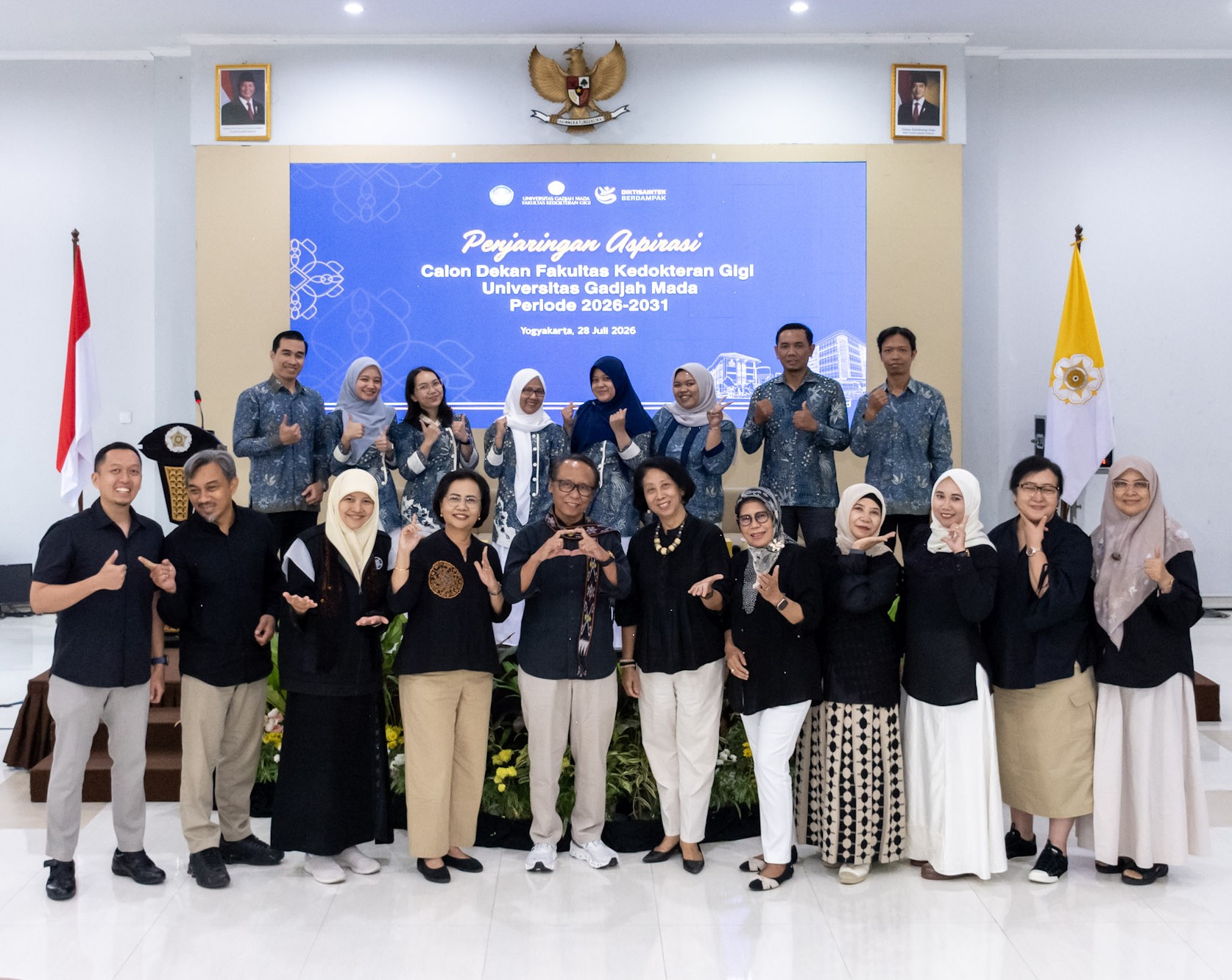
In her closing remarks, the Chair of the Selection Committee stated: "Ultimately, whoever is entrusted to serve as Dean of FKG UGM must understand that we are all one UGM family with the same mission: to uphold the dignity of our institution, advance knowledge, and provide the best possible service to society, the nation, and humanity. Together, we can demonstrate that FKG UGM is truly an impactful campus."
Reporter: Andri Wicaksono, Nanda | Photo: Fajar Budi Harsakti