
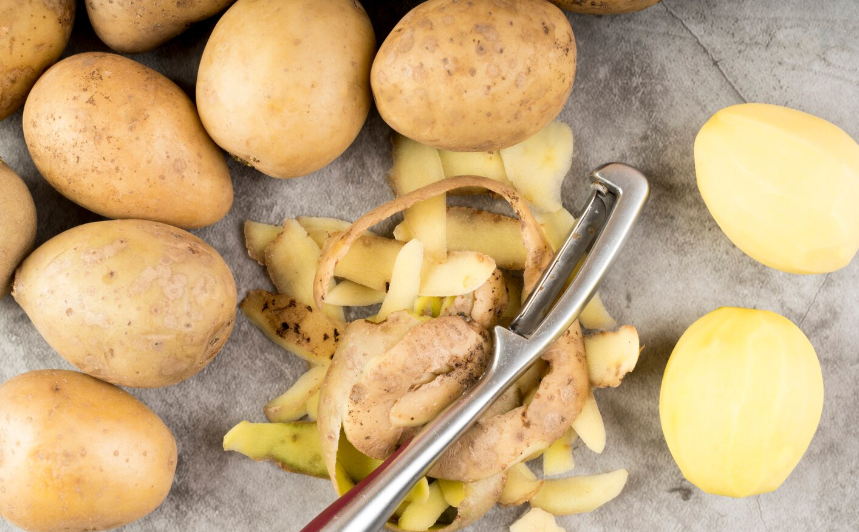
Potato peels almost always end up in the trash. But research from the Faculty of Dentistry, Universitas Gadjah Mada, has demonstrated that this kitchen waste, long considered useless, may contain surprising medical potential: it can alleviate pain, reduce inflammation, and inhibit the formation of biofilms produced by bacteria that cause tooth decay.
The study, published in the Indonesian Journal of Cancer Chemoprevention in February 2020, was led by drg. Ivan Arie Wahyudi, M.Kes., Ph.D., from the Department of Biomedical Dentistry, Faculty of Dentistry, UGM. Together with his research team, he tested potato peel extract (Solanum tuberosum L.) in experimental animals and laboratory bacteria to measure three activities simultaneously: analgesic, anti-inflammatory, and anti-biofilm activity.
From the Trash to the Laboratory
Potatoes are among the most widely consumed foods in the world, yet their peels are rarely utilized. Previous studies, however, have reported that potato peels contain significant amounts of phenolic compounds and flavonoids. Flavonoids are a group of naturally occurring chemical compounds that have long been recognized for their analgesic and anti-inflammatory effects.
Their mechanisms involve biochemical pathways similar to those targeted by common medications such as paracetamol and diclofenac: inhibition of cyclooxygenase (COX) and lipoxygenase (LOX) enzymes, two key enzymes involved in the production of prostaglandins and leukotrienes, compounds responsible for pain and inflammatory responses in the body.
In addition to flavonoids, potato peels also contain chlorogenic acid and gallic acid. These two phenolic compounds are known to possess antibacterial properties. Chlorogenic acid damages bacterial cell membranes, causing intracellular contents to leak out, while gallic acid has a broader spectrum of activity, including antibacterial, antiviral, antifungal, and anti-inflammatory effects.
Three Tests, One Promising Finding
The research team designed three different series of experiments. To measure analgesic effects, 25 male Wistar rats were placed on a hot plate heated to 60°C. The time required for the rats to react—either by licking their paws or jumping—was recorded as the latency time. The longer the rats remained on the plate before reacting, the stronger the analgesic effect was considered to be.
The results showed that rats given potato peel extract at doses of 100 mg/kg and 200 mg/kg had longer latency times than the negative control group, which received only distilled water. This indicated that the extract significantly delayed the pain response (p < 0.05).
For the anti-inflammatory test, 30 rats were injected with carrageenan into their left hind paws to induce swelling. Groups receiving potato peel extract at doses of 100 mg/kg, 200 mg/kg, and 400 mg/kg all showed lower increases in edema volume than the negative control group, with the differences also reaching statistical significance.
One important point emerged from both tests: although the potato peel extract produced measurable effects, its performance had not yet matched that of the comparator drugs. Paracetamol remained more effective at relieving pain, while sodium diclofenac was more effective at reducing swelling.
The third test targeted Streptococcus mutans, the primary bacterium associated with dental caries. Using a crystal violet assay, the researchers measured how effectively potato peel extract could inhibit biofilm formation—the protective layer produced by bacteria that makes them more difficult to eliminate. The results were positive: all tested concentrations (5%, 10%, and 20%) demonstrated significant inhibition of biofilm formation compared with the negative control (p < 0.05).
“Potato peel extract has analgesic, anti-inflammatory, and anti-biofilm-forming activities, as demonstrated in this study.”
drg. Ivan Arie Wahyudi, M.Kes., Ph.D., and research team, Indonesian Journal of Cancer Chemoprevention, 2020
A Promise That Still Needs Further Evidence
These findings open up an intriguing possibility. If potato peel extract is proven to be safe and effective, it could potentially be developed into dental health products, whether in the form of mouthwash, gel, or herbal supplements, offering a more affordable option based on a readily available natural material.
However, the researchers themselves emphasized that this is only an initial step. Toxicity testing to establish the safety of long-term use has not yet been conducted. More detailed identification of the active compounds in the extract is also necessary before clinical applications in humans can be considered.
The world of herbal medicine is full of promising laboratory discoveries, but not all of them successfully make it through the lengthy clinical testing process. Potato peels have demonstrated that they deserve more serious investigation. Whether they can also prove their value in clinical settings, however, is a question that remains to be answered.
Authors: Achmad Zam Zam Aghasy, DDS, M.Kes.; Hazra Alifia Muharam
Photo: Freepik