
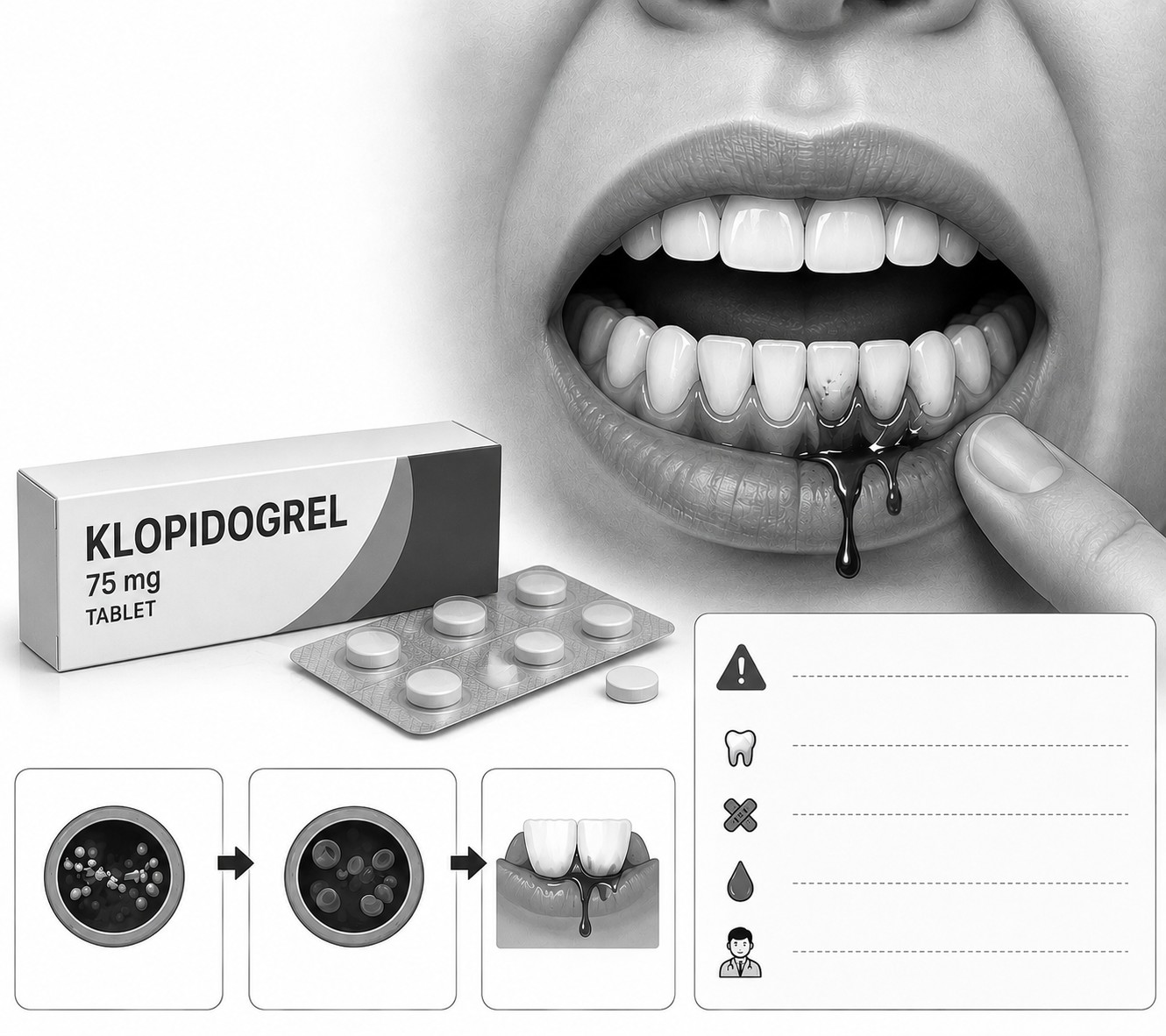
Imagine a cardiac patient who needs to undergo a tooth extraction. The patient regularly takes clopidogrel, a first-line antiplatelet medication for cardiovascular disease. What follows is more than ordinary bleeding: the blood continues to flow, briefly clots, and then starts bleeding again. Ordinary sterile gauze is not enough. Epinephrine, a commonly used hemostatic agent, may instead pose a risk to patients with a history of heart disease because it can sharply increase systolic blood pressure and accelerate the heart rate. This is where the dilemma begins—and it was this dilemma that inspired research by the Oral and Maxillofacial Surgery team at FKG UGM.
Bismuth from the Pharmacy Shelf, Tested in the Operating Room
A team led by drg. Poerwati Soetji Rahajoe, together with drg. Amelia Elizabeth Pranoto and drg. Cahya Yustisia Hasan, investigated bismuth subgallate, a compound better known as an ingredient in periodontal pastes and a hemostatic agent used after tonsillectomy, as an alternative for controlling bleeding when platelet aggregation is impaired by clopidogrel.
Twenty-eight male Wistar rats were divided into four groups: a normal group treated with saline, a normal group treated with bismuth subgallate, a clopidogrel group treated with saline, and a clopidogrel group treated with bismuth subgallate. The tail of each rat was amputated 10 mm from the distal tip. Bleeding was then controlled using gauze soaked in a 1 g/mL bismuth subgallate solution for 60 seconds. Three parameters were measured: bleeding time, bleeding volume, and secondary bleeding.
The results were striking. The clopidogrel group without bismuth subgallate had a mean bleeding time of 1,116 seconds and a bleeding volume of 160 milligrams. All animals in this group—100%—experienced secondary bleeding. In contrast, the clopidogrel group treated with bismuth subgallate had a mean bleeding time of only 213 seconds and a bleeding volume of 37 milligrams, and none experienced recurrent bleeding.
An Artificial Clot That Mimics the Work of Platelets
The mechanism behind this success is not simply the physical pressure exerted by gauze on the wound. Bismuth subgallate works at a deeper level: bismuth ions bind to metallothionein receptors on the surface of tissue factor-bearing cells and erythrocytes. This interaction triggers eryptosis, or programmed cell death in red blood cells, which subsequently forms an artificial clot that substitutes for the initial hemostatic plug. At the same time, the production of reactive oxygen species increases tissue factor expression, accelerating thrombin and fibrin formation.
In other words, bismuth subgallate creates an “emergency bridge” for blood clotting, even when clopidogrel has blocked the normal platelet aggregation pathway.
The researchers acknowledged the limitations of the study. A rat-tail model does not fully replicate conditions in the oral cavity, where saliva contains plasminogen activators and chewing movements can prolong bleeding. Further clinical trials are therefore needed.
Nevertheless, the findings open a door that has long remained difficult to approach: patients with cardiovascular disease who require oral surgery may eventually have another option besides choosing between cardiovascular risk and uncontrolled bleeding.
Reporter: Nanda Ayu – Andri Wicaksono