
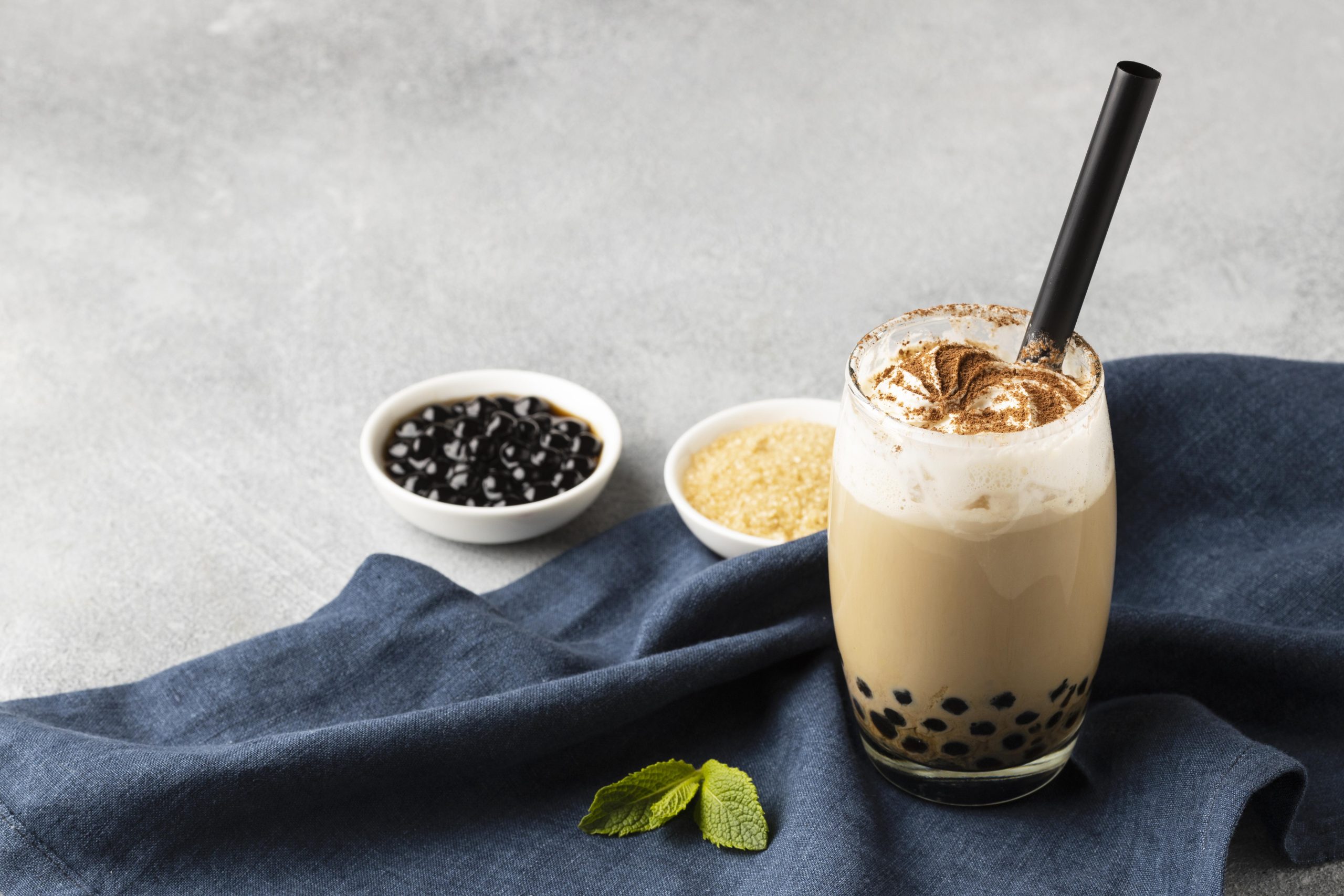
The popular drink that often draws long queues at shopping malls has inspired a scientific question that goes beyond taste. At the Korpagama Clinic, Universitas Gadjah Mada, fifteen young students sat in an orderly row, sipping bubble tea from Chatime in front of researchers, while their saliva samples waited in a freezer at minus 20 degrees Celsius.
This was part of a randomized experimental trial conducted by Prof. Dr. drg. Juni Handajani, M.Kes., Ph.D., PBO, from the Department of Oral Biology, Faculty of Dentistry (FKG), Universitas Gadjah Mada. Published in the international journal F1000Research in 2022, the study addressed a seemingly simple but rarely considered question: can chewing tapioca pearls in bubble tea improve saliva quality?
Saliva: The Often-Underestimated First Line of Defense
Before discussing bubble tea, it is important to understand why saliva matters. Produced by the salivary glands, this fluid is more than just a lubricant for the mouth. Saliva contains antibacterial and antiviral proteins such as histatin, defensin, mucin, and C-reactive protein (CRP), as well as inorganic components such as calcium (Ca) and phosphate, which play important roles in tooth remineralization. Salivary CRP serves as a marker of inflammation. Low levels reflect a healthy oral environment, while elevated
CRP levels may indicate an inflammatory process. Salivary calcium, meanwhile, helps maintain the mineral integrity of hard dental tissues. CRP and calcium were therefore selected by the research team as the primary indicators of “saliva quality” in this study.
The mechanism underlying the study is biologically plausible. Chewing provides mechanical stimulation to the salivary glands, increasing the rate of saliva secretion from approximately 0.32 mL/min under unstimulated conditions to as much as 3–4 mL/min when stimulated. More saliva means greater availability of protective proteins, greater antimicrobial capacity, and a healthier oral environment.
The Protocol Behind the Sealed Plastic Cup
The study used a pre-posttest design with a crossover approach. Fifteen FKG UGM students aged 21–22 years, all with good Oral Hygiene Index-Simplified (OHI-S) scores, were selected through convenience sampling and randomized into intervention and control groups.
During the first week, the intervention group consumed 100 mL of bubble tea containing tapioca pearls for five minutes per day on three consecutive days. In the following week, the same subjects switched to tea without tapioca pearls as the control. Saliva was collected on the first day before consumption (pretest) and on the third day after consumption (posttest), between 9:00 a.m. and 12:00 p.m. Western Indonesian Time. Each participant was asked to spit into a saliva collection container for one minute.
CRP levels were measured using a commercial ELISA kit (Salimetrics), while calcium levels were measured using semiquantitative test strips (QUANTOFIX Calcium) at the Laboratory of Parasitology, Faculty of Medicine, Public Health, and Nursing (FK-KMK) UGM. All statistical analyses used the Kruskal-Wallis and Mann-Whitney tests because the data were not normally distributed.
One important detail is that the study took place during the COVID-19 pandemic. Before participating, every subject was required to undergo a rapid antigen test with a negative result, have their body temperature measured, and complete a travel-history and clinical-symptom questionnaire through Google Forms.
Pearls That Bring Good News
The findings were intriguing. In the intervention group, salivary CRP levels decreased significantly, from an average of 247.06 pg/mL on the first day to 90.97 pg/mL on the third day. The decrease was statistically significant (p < 0.05). In the control group, which consumed tea without tapioca pearls, CRP also decreased, from 395.66 pg/mL to 361.91 pg/mL, but the change did not reach statistical significance.
Salivary calcium levels, meanwhile, increased in both groups. The intervention group showed an increase from 15.33 mg/L to 28.67 mg/L, while the control group increased from 33.00 mg/L to 45.67 mg/L. Both increases were statistically significant.
“Bubble tea drinks could improve the quality of saliva by decreasing salivary CRP and increasing Ca levels.” — Prof. Dr. drg. Juni Handajani, M.Kes., Ph.D., PBO, and the research team, in the conclusion of the 2022 F1000Research publication
The researchers suggest that the reduction in CRP in the intervention group may be associated with two mechanisms: mechanical stimulation from chewing the tapioca pearls, which promotes greater saliva secretion, and chemical stimulation from tea polyphenols, particularly epigallocatechin gallate (EGCG), which has antibacterial and antiviral properties. The increase in calcium in both groups, meanwhile, is consistent with previous findings that a higher salivary flow rate is directly associated with higher salivary calcium concentrations.
Science Continues to Be Questioned
Not all peer reviewers accepted the findings without reservations. Paulo H. Braz-Silva from the University of São Paulo questioned whether the study's conclusions were fully supported by the available data and raised concerns about the depth of the discussion section. Meanwhile, Muhammad Sohail Zafar from Taibah University, Saudi Arabia, considered the manuscript well presented and consistent with scientific standards.
The research team responded to the criticism by revising the manuscript, adding explanations of the randomization and blinding methods, including saliva-volume data in the results table, and completing the CONSORT checklist as a reporting standard for randomized clinical trials. This open-review process became a strength of the F1000Research platform, where comments, responses, and revisions are publicly documented.
Funded by Universitas Gadjah Mada, this research opens a new avenue for exploring oral biology through everyday foods and beverages. The fact that a trendy beverage can become the subject of a rigorous clinical study—with an ethical protocol, ClinicalTrials.gov registration, and standardized laboratory analysis—is a reminder that science is never far removed from everyday life. The only question is: who will be curious enough to ask?
Source DOI: https://doi.org/10.12688/f1000research.28028.1
Authors: Anny Anggraini; drg. Achmad Zam Zam Aghasy, M.Kes.
Photo: Freepik