
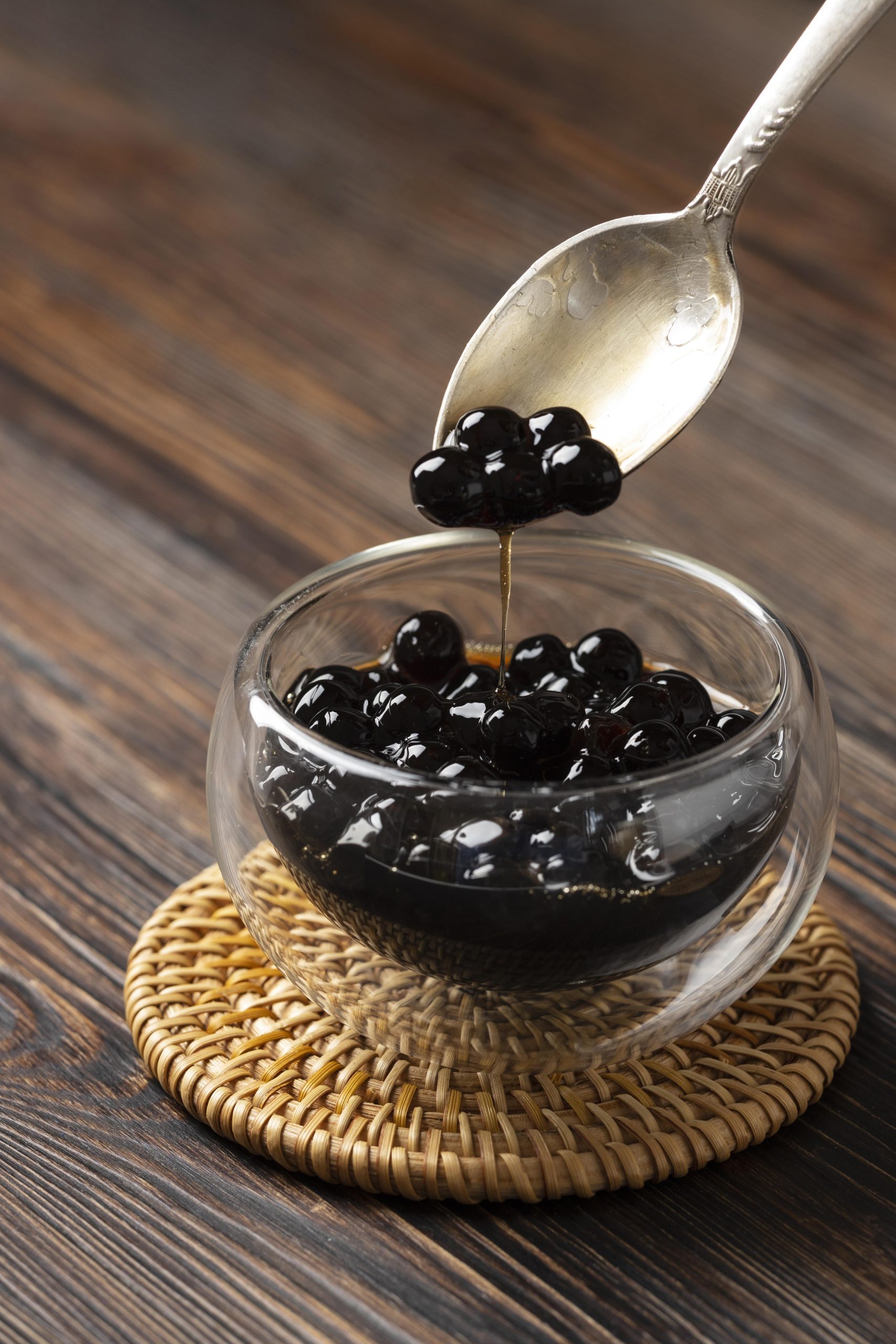
That long line at the mall’s bubble tea shop actually raises a serious scientific question: what happens to the bacteria that cause tooth decay when they come into contact with bubble tea?
Prof. Dr. drg. Juni Handajani, M.Kes., Ph.D., PBO, from the Department of Oral Biology, Faculty of Dentistry, Universitas Gadjah Mada, was not satisfied with assumptions. Together with two dental students, Britney Amadea Christianty and Annisa Fadiya Rahmawati, she designed an experimental study published in the Journal of International Dental and Medical Research (Volume 15, Issue 2, 2022). The findings were surprising, at least for those who have always viewed boba simply as an enemy of dental health.
An Old Enemy, A New Question
Streptococcus mutans ATCC 25175 is a familiar name in dentistry. This bacterium is a major contributor to dental caries and can produce glucosyltransferase (GTF), an enzyme that converts sucrose into fructose and glucan. Glucan forms the biofilm matrix, a sticky layer that firmly adheres to tooth surfaces and creates an acidic environment that erodes enamel.
According to the 2018 Riskesdas data, the prevalence of dental caries in Indonesia reached 45.3 percent. This figure is more than just a statistic. It represents millions of decayed teeth, millions of people experiencing pain, and a healthcare system that continues to bear the burden.
Meanwhile, bubble tea has exploded into a global consumption phenomenon. A 472-ml serving contains 317.5 calories, 56 grams of carbohydrates, and 36 grams of sugar. Logically, that sugar content should provide an ideal fuel source for S. mutans. But Juni Handajani and her team wanted to look deeper: could tapioca pearls, the physical component that has largely been overlooked, play a role of their own?
Four Cups, One Laboratory
The researchers divided the test materials into four groups: sugar-free bubble tea, sugar-free bubble tea without pearls, sweetened bubble tea without pearls, and sweetened bubble tea with pearls. Each group was exposed to S. mutans ATCC 25175, which was cultured at the Integrated Research Laboratory of the Faculty of Dentistry, Universitas Gadjah Mada, and then incubated for 24, 48, and 72 hours.
Five parameters were carefully measured: biomass index, biostability, pH changes, GTF enzyme activity, and bacterial fructose release. All measurements were performed using an ELISA reader at wavelengths of 560 nm and 590 nm.
The results were striking. Bubble tea containing tapioca pearls significantly reduced the biomass index and biostability compared with groups without pearls (p < 0.05). Although pH decreased after incubation in all groups, indicating that S. mutans continued to ferment carbohydrates, the smallest pH change occurred in the sugar-free, pearl-free group.
The most interesting finding emerged from the measurement of GTF activity. After 24 hours of incubation, the presence of tapioca pearls significantly suppressed S. mutans GTF enzyme activity. After 72 hours of incubation, observations on Mitis Salivarius Bacitracin agar no longer showed bacterial growth in the sugar-containing group.
“The metabolism of S. mutans ATCC 25175 was inhibited after interacting with bubble tea.”
This was the conclusion stated in the scientific article—brief, yet highly meaningful for our understanding of the relationship between this popular beverage and oral health.
Tea Polyphenols and the Secret of the Pearls
The mechanism behind these findings does not stand alone. The researchers linked the results to two main pathways: the polyphenol content of tea, particularly epigallocatechin gallate (EGCG), which is known to suppress gtf gene expression in S. mutans, and the physical effects of the tapioca pearls themselves.
An earlier study by the same research group, published in F1000Research in 2021, showed that chewing tapioca pearls can mechanically stimulate salivary secretion, increase salivary alpha-amylase and phosphate levels, and improve salivary buffering capacity. Healthy saliva is a natural defense mechanism for the teeth that is often underestimated.
Thus, tapioca pearls may be more than just a pleasant texture in the mouth. They could potentially act as an agent that indirectly creates an environment less favorable to S. mutans, particularly when consumed without added sugar.
One Important Caveat
This study is not promoting bubble tea as a health beverage. The high sugar content of sweetened varieties remains a clear risk factor for dental caries. S. mutans in the sugar-containing groups was shown to ferment carbohydrates and significantly lower the pH.
However, there is a subtler and perhaps more important message here: basic research like this opens the door to insights that have long remained unexplored. A seemingly insignificant component of a beverage, such as chewy tapioca pearls at the bottom of a plastic cup, could provide an entry point for more innovative approaches to caries prevention.
For dentistry, the question is no longer simply, “Is bubble tea harmful?” but rather, “Which components are protective, which are harmful, and how can we make use of both?”
The answers are still unfolding. And the laboratory in Sekip Utara, Yogyakarta, appears unlikely to stop asking questions anytime soon.
Source DOI: https://doi.org/10.5281/zenodo.20719795
Authors: Anny Anggraini; drg. Achmad Zam Zam Aghasy, M.Kes.
Photo: Freepik