
Composite resin fillings have long been considered an excellent aesthetic solution for restoring damaged teeth. But there is an often-overlooked problem: the surface of these restorations can readily become colonized by bacteria. Research published in the Dentika Dental Journal in December 2014 revealed an intriguing finding—extract of mahkota dewa fruit (Phaleria macrocarpa) can modify the surface properties of composite resin, making it more difficult for colonies of Streptococcus mutans, the primary bacterium responsible for dental caries, to adhere. The research was conducted by drg. Heribertus Dedy Kusuma Yulianto, M.Biotech., Ph.D., from the Biomedical Dentistry Unit, Faculty of Dentistry, Universitas Gadjah Mada, Yogyakarta. The findings open a new avenue for exploring Indonesia's native herbal resources in preventive dentistry.
Why Can Dental Fillings Become a Haven for Bacteria?
Composite resin is a popular restorative material because its color closely resembles natural teeth and it has good adhesive properties. Chemically, however, the surface of composite resin is hydrophobic—it tends to repel water but is also favorable for bacterial adhesion. This property makes it easier for S. mutans to attach, form a thin layer known as a biofilm, and subsequently trigger secondary caries around the margins of the restoration.
Secondary caries refers to new tooth decay that develops around an existing restoration. It is one of the main reasons dental fillings need to be replaced repeatedly. Clinically, this is not merely a matter of cost; it also involves the loss of healthy tooth structure each time the restoration is drilled out and replaced.
One approach that has been used to address this problem is modifying the size of filler particles in composite resin down to the nanoscale. Although the results are better than those achieved with older formulations, bacteria can still adhere to the material. The research by drg. Dedy and his team offers a different approach: rather than changing the composition of the material, they coated its surface with a herbal substance containing active compounds.
Saponins: A Chemical Weapon from a Tropical Red Fruit
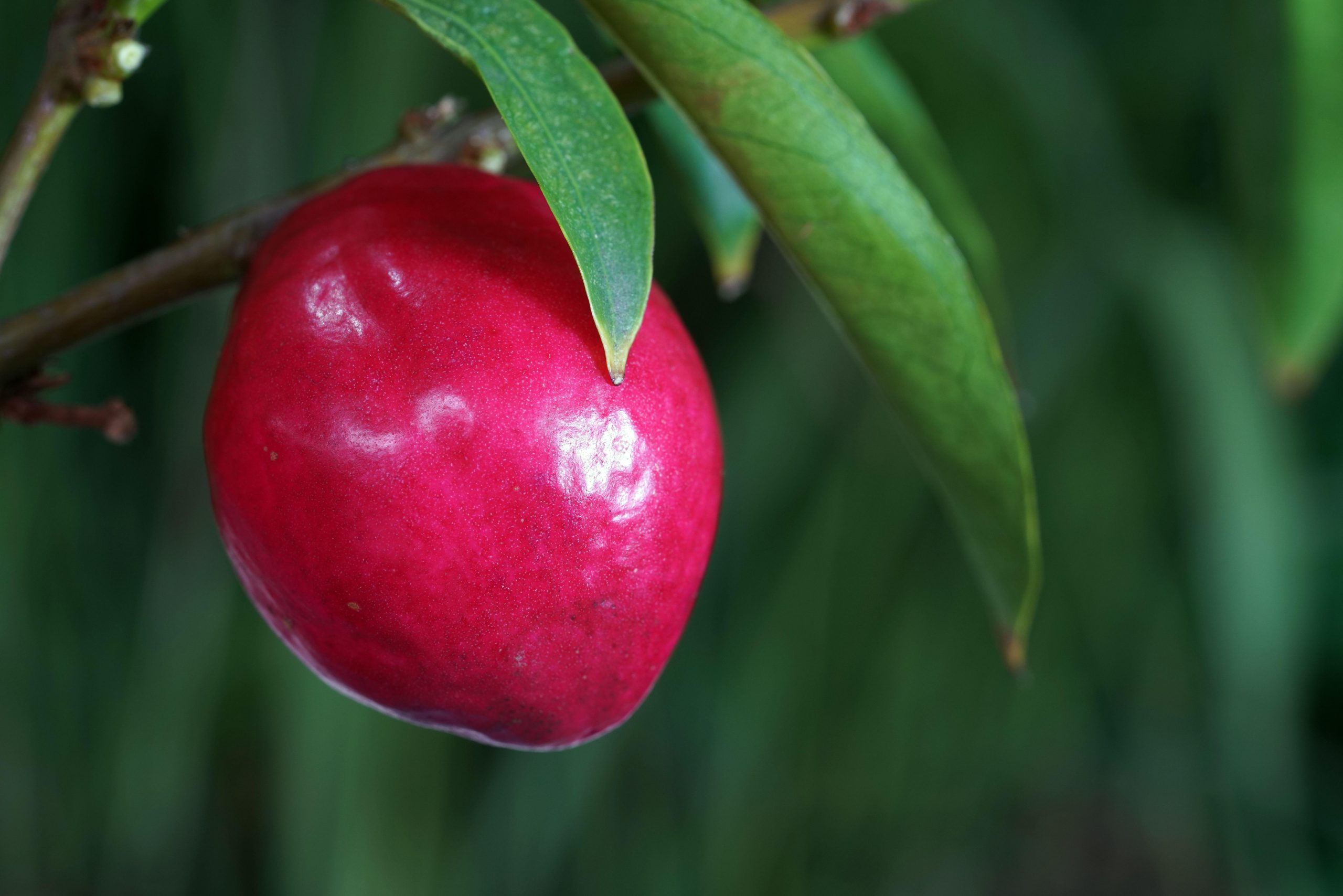
Mahkota dewa is a plant native to Papua that thrives in tropical climates. Its glossy red fruit has long been used in traditional medicine for conditions ranging from heart disease and diabetes to high cholesterol. This study, however, explored its potential from a different perspective—as an antibacterial coating for dental materials.
The key lies in the saponin content of mahkota dewa fruit. Saponins are amphipathic compounds, meaning that each molecule has two ends with opposing properties: one is attracted to water (hydrophilic), while the other repels water (hydrophobic). This property allows saponins to act much like natural detergents.
In the study, mahkota dewa fruit extract was prepared at three concentrations—12.5%, 25%, and 50%—and applied to the surface of small tablet-shaped composite resin specimens measuring 5 mm in diameter. After coating, the researchers measured changes in surface properties using a parameter known as the contact angle: the smaller the angle, the more hydrophilic the surface and the less likely bacteria are to adhere.
The results were striking. The untreated composite resin surface had an average contact angle of 67.31 degrees. After being coated with the 50% extract, the contact angle dropped dramatically to just 28.91 degrees. The difference was statistically significant according to the Kruskal-Wallis test (p < 0.05).
“Inhibiting bacterial adhesion in the oral environment is more beneficial than killing bacteria, because inhibiting adhesion preserves the balance of the normal oral flora.” — drg. Heribertus Dedy Kusuma Yulianto, M.Biotech., Ph.D., in the research paper
Visual Evidence Under an Electron Microscope
Changes in contact-angle measurements alone may seem abstract. The research team therefore went a step further by directly testing whether the altered surface properties actually affected S. mutans adhesion.
Coated and uncoated composite resin specimens were incubated with S. mutans bacterial suspensions for 72 hours at 37°C, under conditions designed to approximate the temperature of the oral cavity. The specimen surfaces were then examined using Scanning Electron Microscopy (SEM), an imaging technique capable of revealing surface details at magnifications of thousands of times.
The results were clear. On the uncoated surfaces, S. mutans colonies appeared denser, with long bacterial chains—a sign of actively developing biofilm. On surfaces coated with the 12.5% extract, meanwhile, the bacterial chains appeared considerably shorter and less numerous. This indicates that mahkota dewa extract coating successfully inhibited biofilm formation, although it did not directly kill the bacteria.
This is precisely where the approach offers an additional advantage. Eliminating all bacteria from the oral cavity is not a sensible goal, because many oral bacteria are part of the normal microbiota and help protect against the entry of pathogenic bacteria from outside. By inhibiting adhesion rather than killing bacteria outright, the balance of the normal oral flora can be maintained.
From Medicinal Plant to Dental Clinic: A Long Road Ahead
This study has several limitations that should be noted. Bacterial adhesion was evaluated qualitatively rather than quantitatively, meaning that differences observed in SEM images were not converted into numerical measurements that could be statistically compared. In addition, the study was conducted only under laboratory (in vitro) conditions and therefore cannot yet be directly applied to patients.
Nevertheless, as an initial study, the findings are promising. Mahkota dewa fruit extract significantly modified the surface properties of composite resin and demonstrated an inhibitory effect on S. mutans biofilm formation. The next steps should include clinical trials, development of a stable formulation suitable for use in dental practice, and long-term safety assessments.
Indonesia is rich in herbal resources that have yet to be fully explored for medical applications. Mahkota dewa fruit, traditionally known as a medicinal remedy, is now showing potential as an environmentally friendly, natural-based coating for dental materials. If further studies confirm its clinical effectiveness, dentists may one day complement restorative treatment with a thin coating derived from the red fruit native to Papua.
Authors: Achmad Zam Zam Aghasy, DDS, M.Kes.; Hazra Alifia Muharam
Photo: Pixabay