
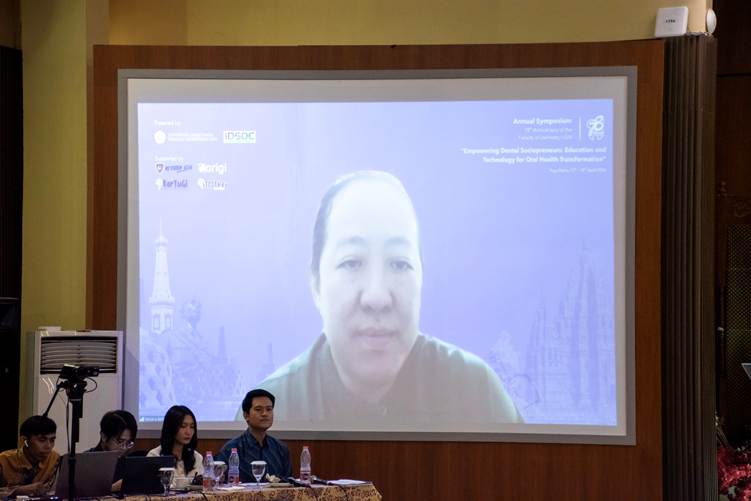
The demographic shift toward an aging society is no longer a future issue, but a reality already unfolding before us. During The 78th Annual Symposium of the Faculty of Dentistry Universitas Gadjah Mada, experts emphasized that dental practice in Indonesia must immediately undergo transformation not only clinically, but also systematically, structurally, and philosophically.
In the main session entitled “Preparing Your Dental Practice for the Demographic Shift and the Longevity Trend”, Dr. Matana Kettratad Pruksapong from Thammasat University, Thailand, reminded participants that changes in patient demographics will become one of the greatest challenges in the coming decades. The session, moderated by drg. Elastria Widita, M.Sc., Ph.D., offered a distinct perspective by highlighting the dynamics of oral and dental health among older adults.
“We will increasingly encounter patients with complex medical conditions, frailty, disabilities, and cognitive impairments. This is no longer an exception, but will become the new norm in dental practice,” Matana explained during his presentation.
Shrinking Demographic Bonus, Growing Burden
Indonesia is currently still benefiting from a demographic bonus, where the productive-age population outnumbers the non-productive population. However, data indicate that this phase will end around 2036.
The old-age dependency ratio continues to rise, currently reaching approximately 17 elderly individuals for every 100 working-age people. Meanwhile, the fertility rate remains stagnant at around 2.1 and is projected to decline further to 1.97 by 2045.
As a consequence, the burden on healthcare services including oral and dental healthcare is expected to increase sharply.
Furthermore, older adults in Indonesia spend an average of approximately 4.5 years living with disabilities, making long-term care increasingly crucial.
Geriatric Patients: Complex, Vulnerable, and Multidimensional
The symposium highlighted dramatic changes in patient profiles. Patients no longer present solely with simple caries or periodontal issues, but with interconnected conditions such as: Multiple chronic diseases, Polypharmacy Risks of aspiration and falls Dysphagia (swallowing disorders), and Cognitive decline and dementia.
“Future dentists must understand patients as complex biological and social systems, not merely as oral cavities,” Matana emphasized.
Patients will also increasingly come from various healthcare settings,
ranging from outpatient and inpatient care to rehabilitation, long-term care facilities, and hospice services.
Dental Clinics Must Change: From Aesthetics to Inclusivity
One of the major criticisms raised during the symposium concerned dental clinic designs that remain oriented toward “ideal” patients who are healthy, independent, and mobile.
In reality, many elderly patients experience mobility limitations. Therefore, an inclusive philosophy was emphasized as the key to transformation, including: Universal design principles (wheelchair access, open pathways), Adaptive dental chairs for patients with paresis, Elderly-friendly waiting and reception areas, and Digital communication systems facilitating risk monitoring .
“Even something as simple as a footrest can become a major obstacle for frail patients. Clinic design must be empathetic, not merely functional,” he noted.
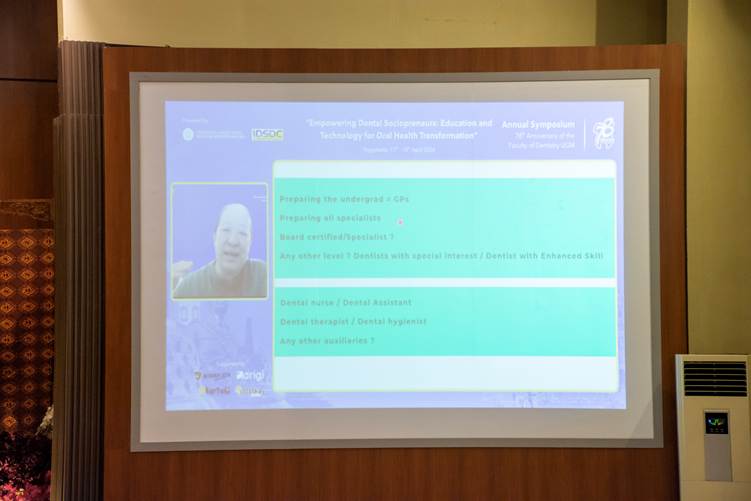
The Era of Multidisciplinary Collaboration
Transformation does not stop at infrastructure. The greatest challenge lies in human resources.
The symposium stressed that geriatric oral healthcare can no longer operate in isolation.
Cross-disciplinary collaboration is essential, involving: Geriatric physicians, Geriatric nurses Occupational therapists, Speech therapists and speech pathologists, ICU and rehabilitation personnel, and Geriatric psychiatrists.
“Dentistry must become part of the holistic elderly care ecosystem. Without that, we are only treating a small fraction of the problem,” Matana stated.
Indonesia’s Readiness: Between Strategy and Reality
The Indonesian government has launched a national strategy toward creating an elderly population that is “empowered, independent, and dignified” by 2045.
However, the symposium implicitly criticized the preparedness of the dental health sector, which is considered to lag behind in several aspects: Educational curricula not yet fully adaptive to geriatrics, Unequal distribution of healthcare personnel, Elderly-unfriendly clinical infrastructure, and Low public literacy regarding elderly oral health.
A Visible Crisis Yet to Be Adequately Addressed
What was presented at this scientific forum essentially served as a serious warning.
Indonesia is moving toward an aging society, yet the healthcare system—particularly dentistry—continues to operate under outdated paradigms.
A major concern lies in the gap between demographic trends and systemic readiness. The data are clear, but transformation remains slow. Curative approaches still dominate, , despite the fact that elderly patients require preventive, promotive, and palliative approaches.
At the same time, the growing complexity of patients demands stronger interdisciplinary integration and collaboration.
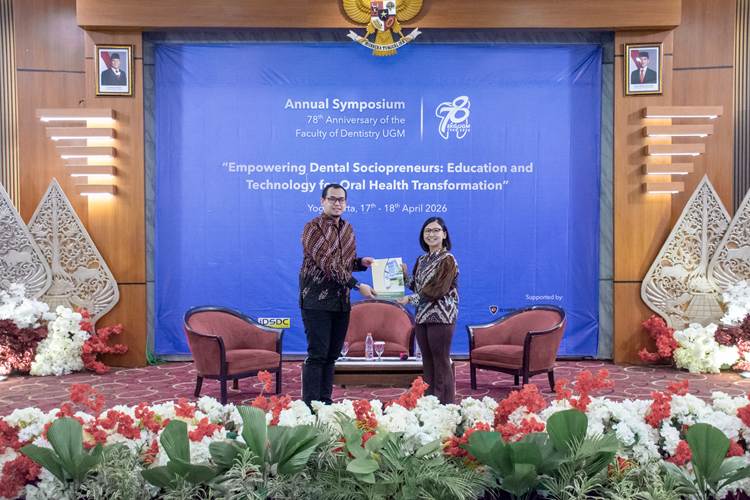
The Future of Geriatric Oral Healthcare Begins Now
The 78th Symposium of the Faculty of Dentistry UGM was not merely an academic forum, but a call for change.
Without rapid and systematic action, dental practice risks falling behind the demographic realities that continue to evolve.
“The question is no longer whether this change will happen, but whether we are prepared to face it,” Matana concluded.
Reporter: Andri Wicaksono, S.Sos., M.I.Kom.; Photography: Fajar Budi Harsakti, SE