
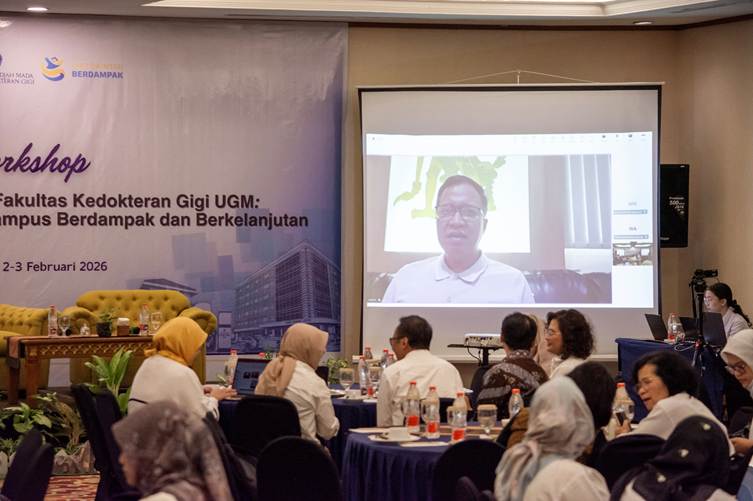
Rapid global changes—ranging from technological disruption and tightening regulations in health education to disparities in dental care services across regions—are compelling dental schools to reassess how they survive and grow. At the Faculty of Dentistry, Universitas Gadjah Mada (FKG UGM), this reflection emerged during a Faculty Capacity Building Workshop for lecturers themed Amid Disruption, FKG UGM Seeks a New Path for Sustainable Dental Education.
The event provided a shared forum for faculty leaders, lecturers, and cross-disciplinary speakers to discuss academic leadership, governance, and adaptive strategies for dental education in the face of unavoidable change.
FROM QUALITY ASSURANCE TO SUSTAINABILITY
In his opening remarks, the Dean of FKG UGM, Suryono, emphasized that quality assurance alone is no longer sufficient. “Quality does not automatically guarantee sustainability if an institution cannot adapt to external changes,” he stated.
He reminded participants that many major institutions have collapsed not because of poor quality, but because they failed to anticipate changing times. The examples of Kodak and Fujifilm—which were left behind by digital technology—serve as reminders that reputation and high standards are not immune to disruption. In dental education, such challenges manifest in the form of information technology advancements, new regulations, and growing public demands for equitable healthcare services.
SERVICE DISPARITIES AS A STARTING POINT
Particular attention was given to disparities in dental healthcare services in rural areas. Prof. Suryono cited Lamandau Regency in Central Kalimantan, which has 11 community health centers and one hospital but only one dentist. According to him, such conditions cannot be resolved through conventional approaches.
FKG UGM is beginning to explore a sociopreneur approach—collaborating with educational institutions, local governments, youth groups, and the philanthropic sector—to ensure service sustainability without compromising education. “This is not merely short-term community service, but a mutually reinforcing symbiosis,” Suryono explained, mentioning the possibility of deploying residents, recent graduates, or implementing distance education schemes for regional healthcare workers.
DISTANCE EDUCATION AND REGULATORY CHALLENGES
The idea of distance learning (PJJ) for postgraduate programs also emerged. A partnership with Universitas Terbuka is being initiated to enable healthcare professionals in remote areas to enhance their competencies without leaving their service posts. According to Suryono, the flexibility of distance education may provide a solution to the limited ratio of healthcare human resources in underserved regions.
However, he also acknowledged regulatory challenges. Current faculty performance assessments, which heavily emphasize costly international publications, are considered in need of evaluation. “Our research is funded by the state, we write the papers, yet to publish and even to read them again we must pay third parties,” he remarked, reflecting concerns about a global academic ecosystem that is not yet fully equitable for universities in developing countries.
ACADEMIC LEADERSHIP AND CORE VALUES
As the keynote speaker, Wawan Mas'udi, a lecturer from the Faculty of Social and Political Sciences at Universitas Gadjah Mada (UGM), shared reflections on experience-based academic leadership. According to him, higher education institutions require consistent core values across leadership transitions.
At FISIPOL UGM, the principle committed to science for a better society serves as an anchor. Research and education are directed toward generating tangible social impact, particularly in areas such as environmental sustainability, digital transformation, and social inclusion. “Science does not stop at publication; it must be present to address societal problems,” Wawan stated.
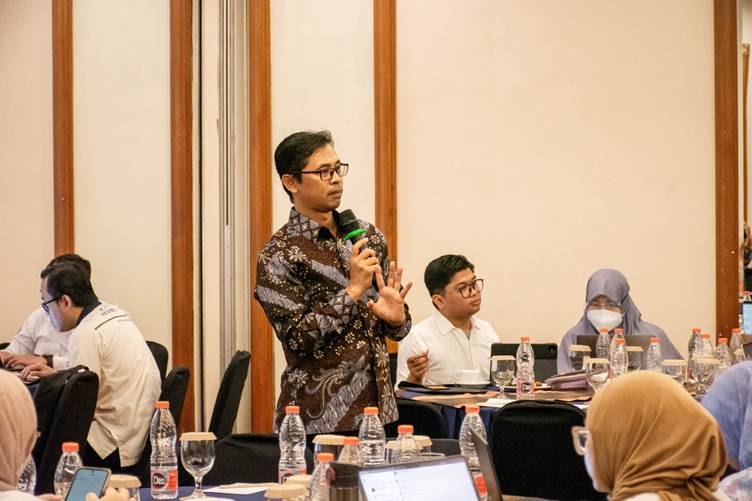
GOVERNANCE IN A FRAGMENTED ORGANIZATION
Wawan also highlighted the complexity of governance in polycentric faculties—institutions with multiple centers of interest. In such contexts, academic leadership must build consensus rather than merely issue directives.
“Academic institutions cannot be homogenized. What can be done is to establish clear corridors, foster dialogue, and maintain a balance between order and dialogue,” he explained. This experience is considered relevant for FKG UGM, which simultaneously manages professional education, research, and clinical services.
NETWORKS AS UNLIMITED RESOURCES
According to Wawan, the limitations of internal campus resources must be offset by building external networks. Local governments, philanthropic institutions, and the private sector can serve as strategic partners. In the context of dentistry, he emphasized that developing a regional dental healthcare service roadmap could serve as a concrete and impactful entry point for collaboration.
“Resources within the campus are limited, but outside the campus they are almost limitless. The key lies in trust and relevance,” he concluded.
This workshop underscored one key message: dental education can no longer operate under traditional paradigms. Public health challenges, service disparities, and global pressures demand innovation that extends beyond classrooms and laboratories. At FKG UGM, the search for a new direction now converges on a single keyword—sustainability—grounded in adaptation, collaboration, and a strong commitment to addressing community needs.
The event provided a shared forum for faculty leaders, lecturers, and cross-disciplinary speakers to discuss academic leadership, governance, and adaptive strategies for dental education in the face of unavoidable change.
FROM QUALITY ASSURANCE TO SUSTAINABILITY
In his opening remarks, the Dean of FKG UGM, Suryono, emphasized that quality assurance alone is no longer sufficient. “Quality does not automatically guarantee sustainability if an institution cannot adapt to external changes,” he stated.
He reminded participants that many major institutions have collapsed not because of poor quality, but because they failed to anticipate changing times. The examples of Kodak and Fujifilm—which were left behind by digital technology—serve as reminders that reputation and high standards are not immune to disruption. In dental education, such challenges manifest in the form of information technology advancements, new regulations, and growing public demands for equitable healthcare services.
SERVICE DISPARITIES AS A STARTING POINT
Particular attention was given to disparities in dental healthcare services in rural areas. Prof. Suryono cited Lamandau Regency in Central Kalimantan, which has 11 community health centers and one hospital but only one dentist. According to him, such conditions cannot be resolved through conventional approaches.
FKG UGM mulai melirik pendekatan sociopreneur—kolaborasi antara pendidikan, pemerintah daerah, pemuda, dan sektor filantropi—untuk memastikan keberlanjutan layanan tanpa mengorbankan pendidikan. “Bukan sekadar pengabdian masyarakat sesaat, tetapi simbiosis yang saling menguatkan,” kata Suryono, seraya menyebut kemungkinan pengiriman residen, lulusan baru, atau skema pendidikan jarak jauh bagi tenaga kesehatan daerah.
DISTANCE EDUCATION AND REGULATORY CHALLENGES
The idea of distance learning (PJJ) for postgraduate programs also emerged. A partnership with Universitas Terbuka is being initiated to enable healthcare professionals in remote areas to enhance their competencies without leaving their service posts. According to Suryono, the flexibility of distance education may provide a solution to the limited ratio of healthcare human resources in underserved regions.
Namun, ia tak menutup mata pada tantangan regulasi. Penilaian kinerja dosen yang masih menitikberatkan pada publikasi internasional berbiaya tinggi dinilai perlu dievaluasi. “Kita riset dibiayai negara, kita menulis, tapi untuk publikasi dan membaca kembali harus membayar ke pihak ketiga,” ujarnya, menyiratkan kegelisahan atas ekosistem akademik global yang belum sepenuhnya adil bagi perguruan tinggi di negara berkembang .
ACADEMIC LEADERSHIP AND CORE VALUES
As the keynote speaker, Wawan Mas'udi, a lecturer from the Faculty of Social and Political Sciences at Universitas Gadjah Mada (UGM), shared reflections on experience-based academic leadership. According to him, higher education institutions require consistent core values across leadership transitions.
At FISIPOL UGM, the principle committed to science for a better society serves as an anchor. Research and education are directed toward generating tangible social impact, particularly in areas such as environmental sustainability, digital transformation, and social inclusion. “Science does not stop at publication; it must be present to address societal problems,” Wawan stated.
GOVERNANCE IN A FRAGMENTED ORGANIZATION
Wawan also highlighted the complexity of governance in polycentric faculties—institutions with multiple centers of interest. In such contexts, academic leadership must build consensus rather than merely issue directives.
“Academic institutions cannot be homogenized. What can be done is to establish clear corridors, foster dialogue, and maintain a balance between order and dialogue,” he explained. This experience is considered relevant for FKG UGM, which simultaneously manages professional education, research, and clinical services.
NETWORKS AS UNLIMITED RESOURCES
According to Wawan, the limitations of internal campus resources must be offset by building external networks. Local governments, philanthropic institutions, and the private sector can serve as strategic partners. In the context of dentistry, he emphasized that developing a regional dental healthcare service roadmap could serve as a concrete and impactful entry point for collaboration.
“Resources within the campus are limited, but outside the campus they are almost limitless. The key lies in trust and relevance,” he concluded.
SEEKING A NEW DIRECTION
This workshop underscored one key message: dental education can no longer operate under traditional paradigms. Public health challenges, service disparities, and global pressures demand innovation that extends beyond classrooms and laboratories. At FKG UGM, the search for a new direction now converges on a single keyword—sustainability—grounded in adaptation, collaboration, and a strong commitment to addressing community needs.
Reporter: Andri Wicaksono, Photographer: Fajar Budi Harsakti