
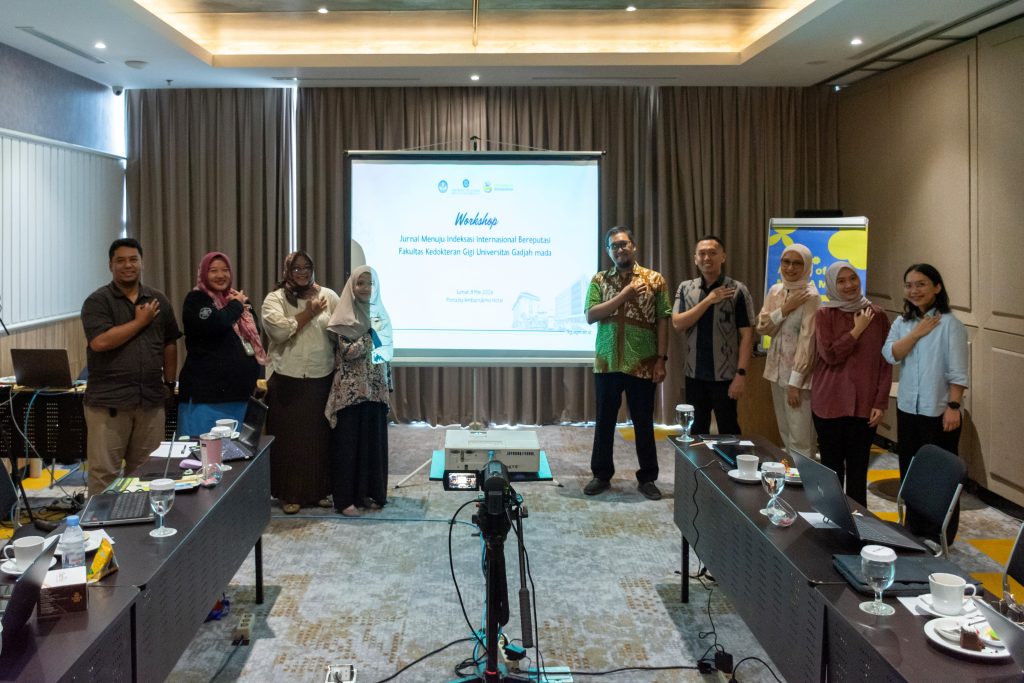
The efforts of Indonesian scientific journals to gain inclusion in internationally reputable indexing databases such as Scopus are not determined solely by article quality. Behind the process lies a long struggle involving journal identity, scientific specialization, editorial management quality, and even academic geopolitical strategies. These issues emerged during the “Workshop Toward International Reputable Indexation” organized by the Faculty of Dentistry at Universitas Gadjah Mada (FKG UGM), opened by the Head of the Research & Publication Unit of FKG UGM, drg. Silviana Farrah Diba, Sp.RKG., Sub.Sp.RP(K), together with the faculty’s scientific journal management team.
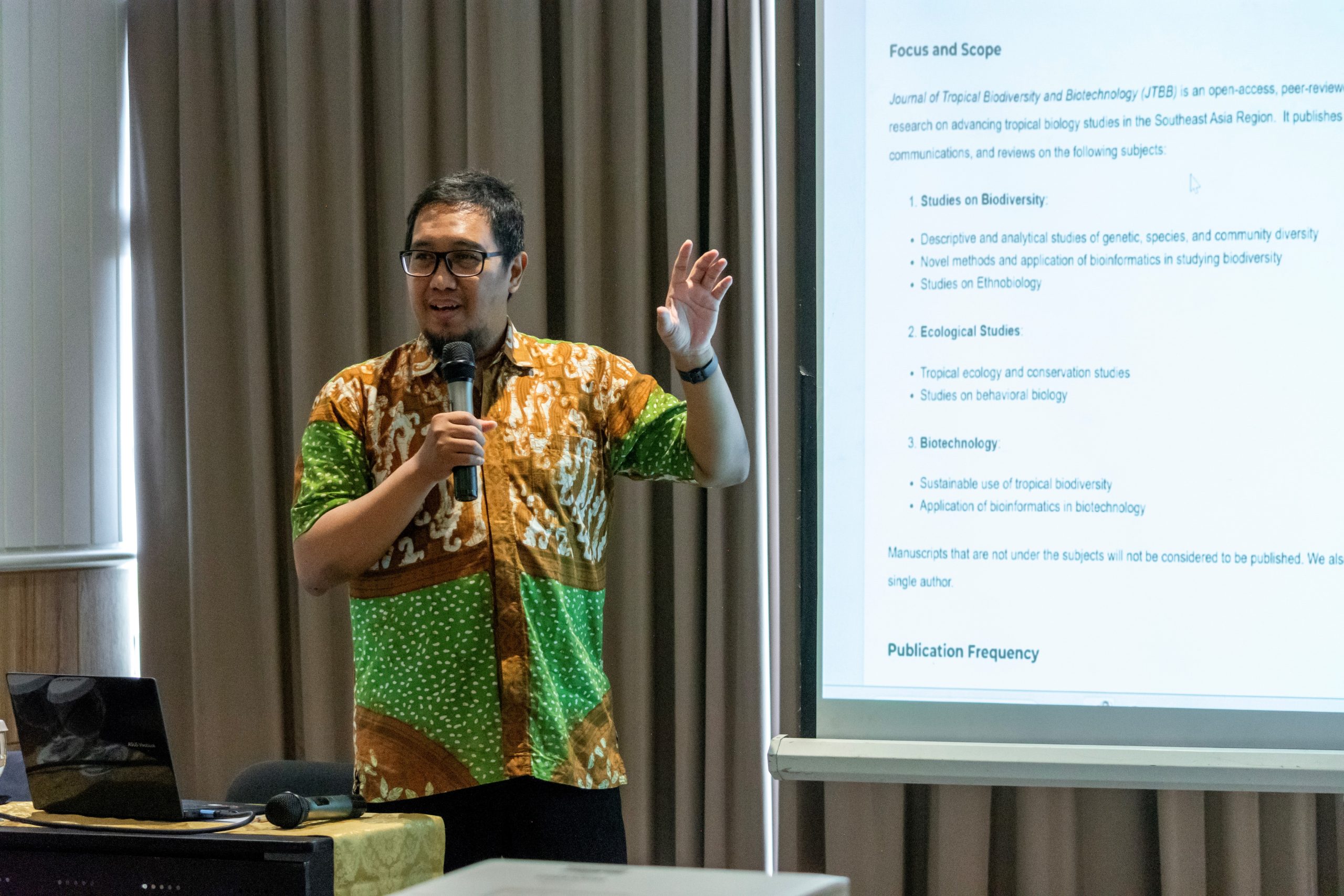
In the workshop, which featured open discussions and critical evaluations, the Editor -in-Chief of the Journal of Tropical Biodiversity and Biotechnology (JTBB), Dr. Miftahul Ilmi, S.Si., M.Si., shared his experience in successfully bringing the journal into Scopus despite limited resources and fierce competition among international journals.
“Scopus likes something unique. If our journal is too general, they will question why it should exist when many similar journals already do,” Ilmi explained during his presentation.
The statement became a direct critique of many Indonesian journals that still maintain overly broad scopes without a clear academic distinction. According to Ilmi, the era of “mega journals” is over. New journals must identify a specific niche to gain value in the eyes of international indexing institutions.
He cited JTBB as an example, explaining that from the beginning the journal deliberately limited its focus solely to tropical biodiversity in Southeast Asia. This policy even influenced the selection of editors, reviewers, and manuscript origins. “If I say the focus is ASEAN, then the editors, authors, and research themes must reflect ASEAN,” he emphasized.
MKGI’s Challenges: Name, Scope, and Identity
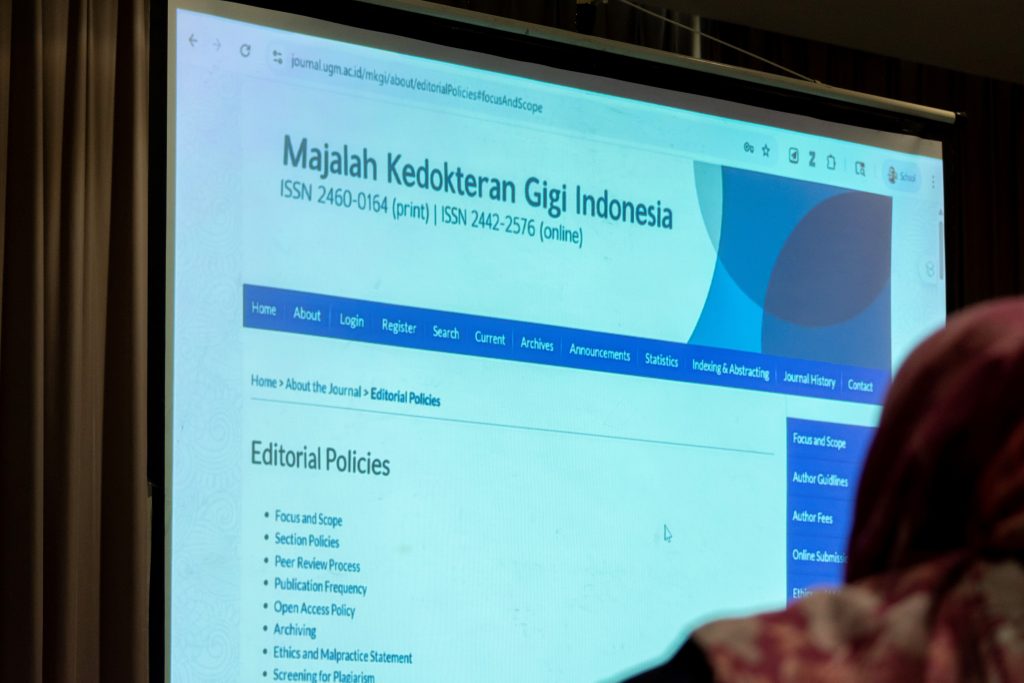
Much of the workshop discussion focused on the journey of the Indonesian Dentistry Magazine (MKGI). One evaluator’s note highlighted that the journal’s scope was considered too broad and lacked differentiation compared to other dental journals that had already been indexed.
The MKGI management team revealed that Scopus reviewers had previously considered the journal’s objectives “still confusing,” particularly regarding its focus on natural material regeneration, which was seen as insufficiently defined.
“We eventually started considering being more specific about the journal’s theme because it turned out to be a major issue during thereviewprocess,” said one of the MKGI managers.
Ilmi viewed this step positively. According to him, changing the journal’s name is not the main solution, as it could damage the administrative and citation track record built over many years.
He also argued that the biodiversity richness and public health characteristics of Southeast Asia could become a distinctive strength for Indonesian dental journals.
“Our eating habits are different from Europe’s, our microbiota are different, and our oral health culture is different. Those factors can actually become our scientific uniqueness,” he said.
Criticism of Journal Management in Indonesia
Beyond discussing scientific substance, the workshop also highlighted the complex problems surrounding journal management in Indonesia. Ilmi openly criticized the practice of some national journals that are overly business-oriented and accept articles merely for article processing charge (APC) revenue. article processing charge (APC).
According to Ilmi, JTBB maintains a rejection rate of up to 70 percent in order to preserve quality. However, this decision also results in an extremely high editorial workload.
“The most important role is the technical editor. They chase reviewers, remind authors, and ensure the layout and language are correct. It’s the behind-the-scenes work that often goes unnoticed,” he explained.
He also pointed out the lack of institutional support for scientific journal managers. Many universities, he said, still assign journal management responsibilities to librarians or administrative staff without forming dedicated teams.
“A journal is a full-time job. It cannot simply be handled as a side task,” he stated.
Regional Competition and ASEAN Strategy
The workshop also revealed that competition among scientific journals has increasingly shifted toward the regional level. Countries such as Malaysia and Thailand were said to already possess internationally reputable dental journals with more mature ecosystems.
Therefore, Ilmi encouraged FKG UGM to first establish ASEAN networks before targeting Europe or America.
“There’s no need to aim too far at first. Start with Malaysia, Thailand, and the Philippines. That’s more realistic and more closely aligned in terms of research themes,” he said.
According to him, regional international conferences could become strategic sources for obtaining overseas manuscripts while also expanding reviewer and editorial board networks.
Between Academic Idealism and Financial Pressure
Amid the push for internationalization, the workshop also highlighted a major dilemma faced by Indonesian journal managers: maintaining academic idealism while remaining financially sustainable.
Ilmi admitted that he initially rejected the implementation of APCs because he believed scientific knowledge should be freely accessible. However, the need for economic independence eventually led JTBB to charge a publication fee of 250 US dollars.
“At first I was idealistic—scientific knowledge should be free. But the faculty encouraged us to become self-sufficient,” he explained.
Now, after achieving financial independence and entering Scopus, JTBB is aiming even higher by targeting Q1 quartile status through collaborations with international scientific associations.
For FKG UGM, the workshop served as a reflection that the path toward international indexation is not merely an administrative issue, but rather a transformation in journal governance and substance. Amid increasingly specific and competitive global scientific journal competition, Indonesian journals are required not only to exist, but also to possess a distinctive and truly strong scientific identity.
(Reporter: Andri Wicaksono, Photo: Fajar Budi Harsakti)