
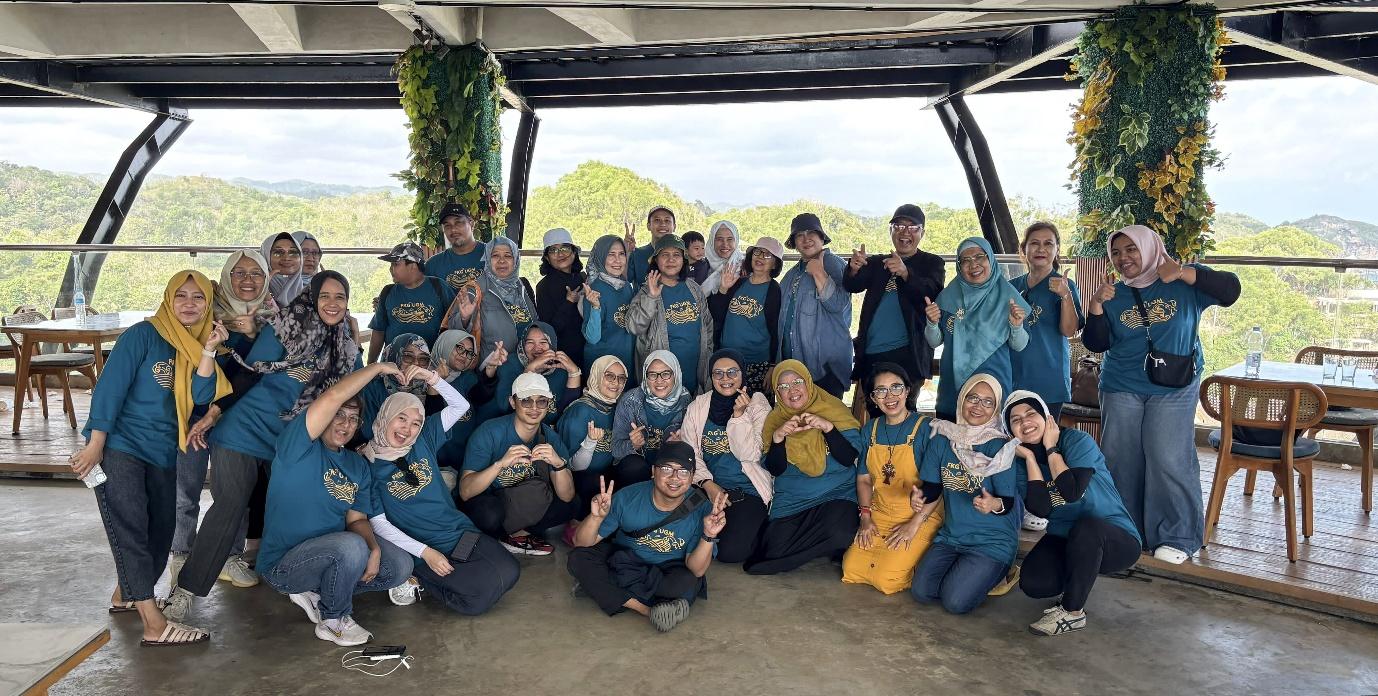
Within the academic environment of the Faculty of Dentistry, Universitas Gadjah Mada (FKG UGM), daily life is often characterized by dense and high-intensity activities: clinical teaching schedules, research, patient care, and administrative duties. All of these demand sustained focus, precision, and empathy. Amid this nearly uninterrupted rhythm, simple activities such as shared recreation hold a deeper value beyond mere entertainment. Such activities represent a form of collective rejuvenation grounded in psychology, sociology, and organizational management.
A Space for Psychological Recovery for Academic Staff
Non-formal activities such as recreation enable psychological detachment—a temporary release from work-related burdens. For lecturers and administrative staff, these moments serve as a means of emotional regulation and stress recovery.
Strengthening Social Cohesion in the Academic Environment
FKG as a scholarly community is built not only on intellectual competence but also on healthy social relationships among its members. Shared recreation creates an egalitarian space for interaction among the FKG UGM academic community. Interactions free from formal hierarchy foster trust and social capital, two essential components in strengthening academic collaboration. Research by Nahapiet and Ghoshal (1998) emphasizes that organizational social capital plays a major role in enhancing innovation and collective performance. Thus, recreation is not merely a leisure agenda, but also a cultural strategy for building an inclusive and cohesive faculty.
Rejuvenation of Academic Creativity and Productivity
From a neuropsychological perspective, exposure to natural settings and social relaxation positively influences mood, cognitive flexibility, and creative problem-solving ability. For an academic environment such as FKG, this translates into increased capacity for reflective thinking, generating new research ideas, and discovering more humanistic pedagogical approaches. In other words, recreation becomes a creative pause where fresh ideas emerge from laughter, casual conversations, or simple games outside the work setting.
Building a Humanistic Academic Culture
In an era of increasingly outcome-based higher education, it is important to remember that the people behind the academic system remain social beings who need warmth and togetherness. Shared recreation revives humanistic values—such as empathy, collaboration, and care—that form the foundation of the dental profession itself. These activities can be viewed as a concrete form of well-being management in academic settings, where emotional well-being is integrated into human resource development strategies.
Wulansari, S.S., Head of the Administrative Office of FKG UGM, stated: “Shared recreation within FKG UGM is not a secondary activity, but a social and psychological intervention with scientific value. Activities like these can strengthen mental balance, reinforce social networks, and nurture academic creativity. When the FKG UGM community laughs together in open spaces, what is restored is not only physical energy, but also the collective spirit to continue learning, teaching, and serving with a refreshed heart.”
Author: Andri Wicaksono | Photo: Fajar Budi Harsakti

