
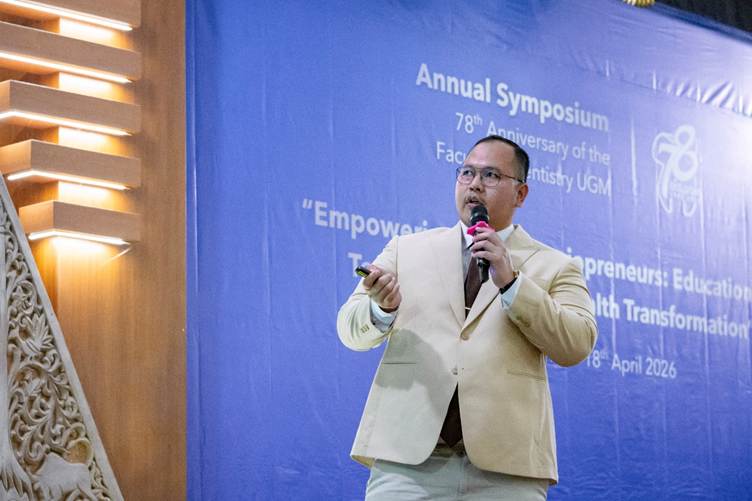
Digital technological transformation continues to reshape the world of dentistry, particularly in the field of implant surgery. During a scientific presentation in the series of events commemorating the 78th Anniversary of FKG UGM, Ryant Ganda Santoso highlighted how the guided implant surgery approach delivers a level of precision that was previously difficult to achieve through conventional methods.
"Guided surgery consistently demonstrates superior accuracy compared to freehand techniques,” said Drg. Ryant during his presentation. According to him, the integration of digital technology allows clinicians not only to plan procedures in detail, but also to minimize the risk of errors during surgery.
A Paradigm Shift
Conventional implantology has traditionally depended heavily on clinical experience and the operator’s visual estimation. However, with the emergence of 3D Digital Surgical Planning, the process has shifted toward a data-driven and virtual simulation approach.
Drg. Ryant explained that the concept of a virtual patient has become the main foundation of digital implantology. Patient data are collected through Cone Beam Computed Tomography (CBCT) scans and intraoral scanning to generate accurate three-dimensional models.
“From these data, we can carry out comprehensive digital implant planning before the procedure takes place. This is not merely planning, but a real simulation,” he explained.
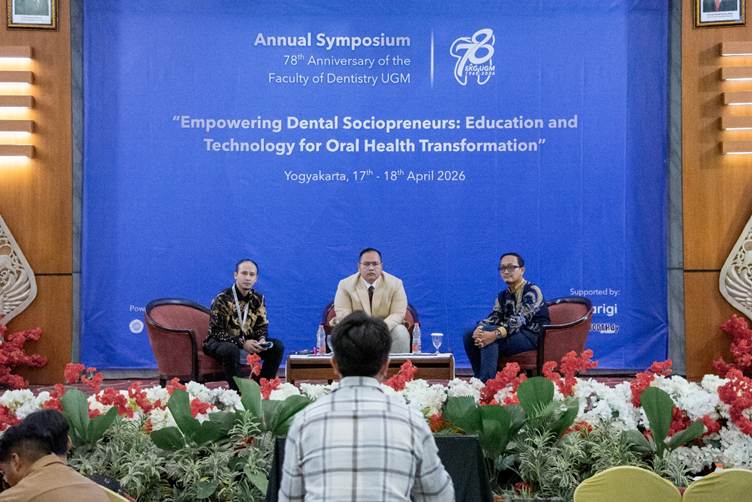
An Integrated Digital Workflow
The digital implantology process begins with data acquisition, followed bydata alignmentbetween radiographic images and intraoral scan results. This stage is crucial because it determines the accuracy of the virtual model used.
In certain cases, such asedentulouspatients or those with multiple metallic restorations, a dual scan protocol is used to improve precision. This technique involves additional scanning with specialized supporting devices.
Afterward, clinicians design a surgical guide, a digitally fabricated surgical template that ensures implant placement matches the original treatment plan.
“With a surgical guide, we can achieve maximum control, especially in fully guided surgeryprocedures,” said Drg. Ryant.
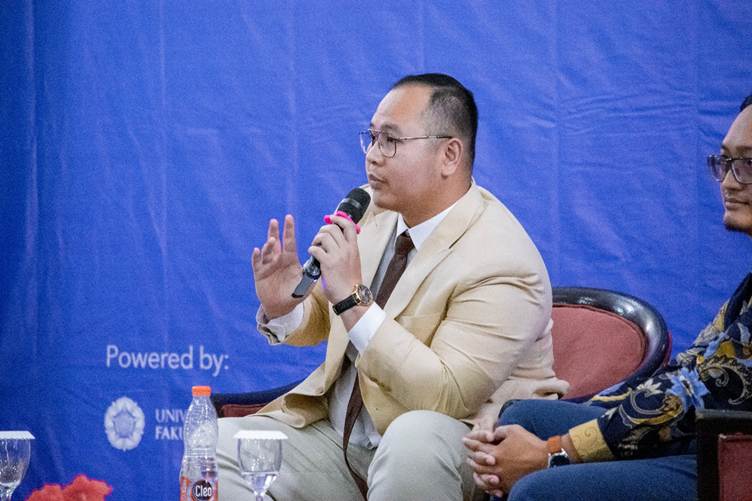
Efficiency and Predictability
Another advantage of this approach is improved efficiency and greater predictability of outcomes. In some cases, temporary prostheses can even be installed immediately after implant placement (immediate loading).
Ryant emphasized that this technology is relevant not only for implantology, but also for orthognathic surgery, trauma management, and tumor surgery.
“3D digital surgical planning has changed the paradigm. We are no longer simply reacting in the operating room—we prepare everything thoroughly beforehand,” he stated.
Challenges in Implementation
Despite its promise, adoption of this technology still faces several obstacles, particularly regarding equipment costs and the need for specialized human resource training. In addition, not all clinical cases can directly apply digital approaches without adjustments.
Nevertheless, Ryant remains optimistic that technological advancements will make these methods more affordable and eventually establish them as the new standard in dental practice.
“This is no longer the future—this is already a necessity,” he remarked.
With its combination of accuracy, efficiency, and predictive capability, digital implantology appears poised to continue developing as the backbone of modern surgical practice, increasingly connecting the virtual world with clinical reality in highly precise ways.
Reporter: Andri Wicaksono, S.Sos., M.I.Kom.; Photography: Fajar Budi Harsakti, SE