
Among the 152 patients recorded at the dental clinic of Pundong Community Health Centre throughout 2016, one finding was difficult to ignore: residents living in the highland areas of Seloharjo Village, Pundong District, Bantul Regency, had an almost 55-fold higher risk of developing severe periodontal disease compared with those living in lowland areas. The figure was not merely a statistic. Behind it was a story about well water, toothbrushing habits, and socioeconomic disparities captured through digital mapping. Published in the Journal of Information Systems for Public Health in December 2018, this study was conducted by Prayudha Benni Setiawan, S.Kp.G., M.P.H., together with Prof. Dr. Hartono, D.E.A., D.E.S.S., from the Faculty of Geography, Universitas Gadjah Mada. The researchers used Geographic Information System (GIS) technology to map the distribution of periodontal disease—a condition involving damage to the tissues supporting teeth—in an area known for its diverse geographical landscape and socioeconomic conditions.
Gum Disease Is Not Simply a Matter of Poor Toothbrushing
Periodontal disease is a condition in which the supporting tissues of the teeth—including the gums, periodontal ligaments, and alveolar bone—experience inflammation and damage caused by bacterial infection. In simple terms, it is a gum disease that, if left untreated, can eventually cause teeth to become loose and fall out.
Many people assume that periodontal disease is merely caused by inadequate toothbrushing habits. However, this study demonstrated that the issue is far more complex. The research team collected primary data directly from patients’ homes, recorded the GPS coordinates of each patient, and integrated the information into digital maps using ArcGIS and SatScan software.
The findings revealed that among the 152 analysed cases, the majority—82 cases or 53.95%—were diagnosed with localized gingivitis accompanied by calculus deposits, referring to gum inflammation with tartar accumulation affecting certain groups of teeth. Another 48 cases had progressed into generalized periodontitis, a more severe condition involving extensive damage across the entire dentition.
Limestone Mountain Well Water and the Hidden Risk
The most surprising findings from this study were not related to smoking habits or educational level—two variables that were not statistically associated with disease severity. Instead, the strongest influences came from two factors that are rarely considered by the public: residential elevation and the pH level of daily water sources.
Residents living in highland areas, particularly the limestone mountainous region of Seloharjo Village, had a 54.93-fold higher risk of developing generalized periodontitis compared with those living in lowland areas. This odds ratio is considered remarkably high in epidemiological research.
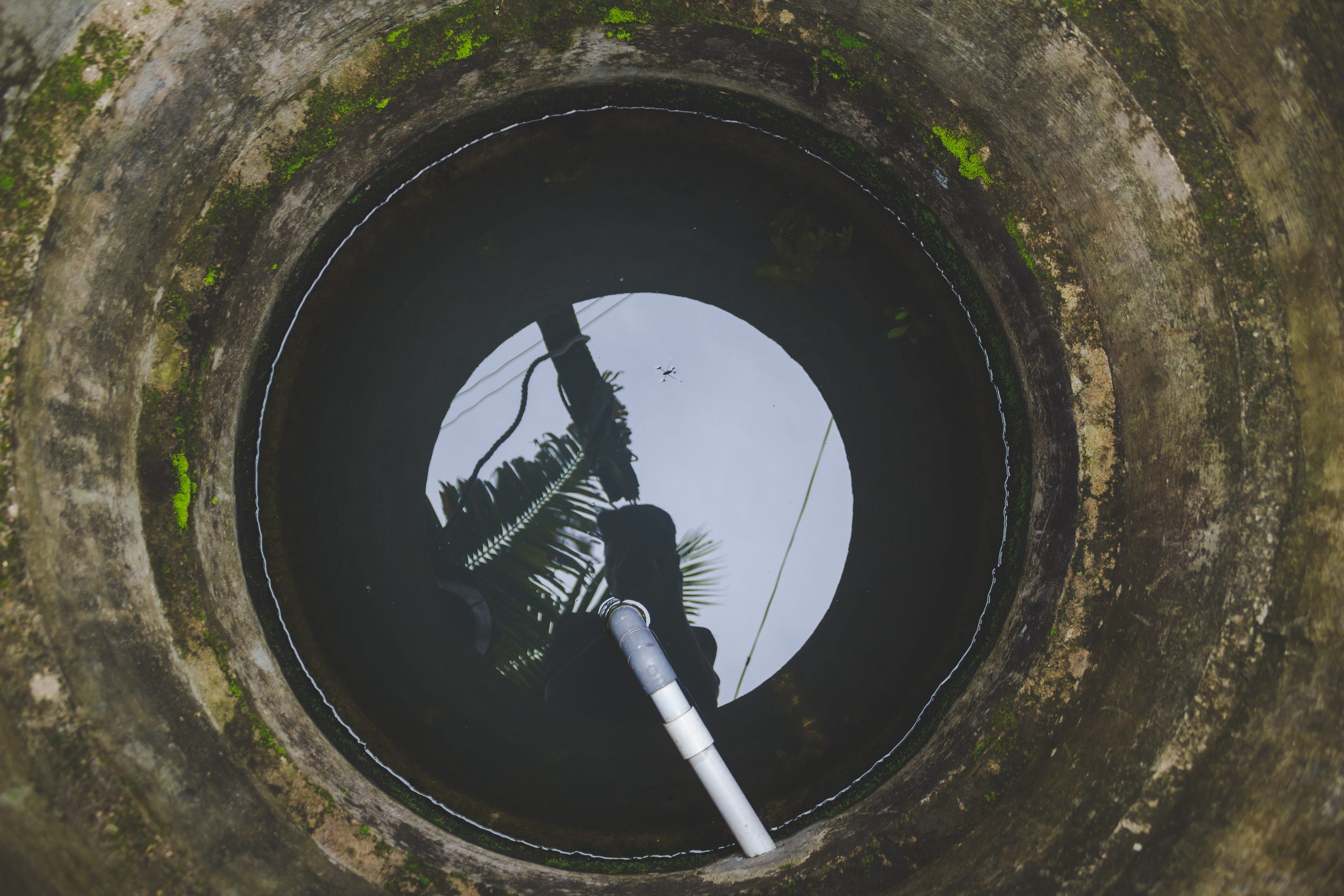
The key factor was water. Limestone mountainous regions contain high mineral content in their water sources, particularly calcium. Water with alkaline pH and high calcium levels, when consumed continuously, accelerates the formation of calculus on teeth. Calculus is hardened plaque deposits that, when not professionally removed, become a major trigger for inflammation and progressive destruction of periodontal tissues.
The data reinforced this relationship: individuals using alkaline water sources had a 41.14-fold higher risk of developing generalized periodontitis compared with those using water with normal pH levels.
“The increase in calcium and other mineral concentrations in saliva and dental plaque is partly caused by the consumption of water with high calcium content, which accelerates calcification and the transformation of plaque into calculus.”
This means that even individuals who regularly brush their teeth may still face a high risk if their primary water source contains excessive minerals—an environmental factor beyond individual control.
Poverty and Toothbrushing Frequency: Two Modifiable Factors
Beyond environmental factors, the study also identified two statistically significant variables that can be addressed through intervention. The first was economic status. Residents with lower socioeconomic status had a 2.29-fold higher risk of developing severe periodontal disease compared with those with better economic conditions. Among all respondents, 69.74% were classified as economically disadvantaged, reflecting the socioeconomic reality of Pundong District.
The second factor was toothbrushing frequency. Residents who brushed their teeth fewer than twice a day had a 4.2-fold higher risk of developing generalized periodontitis. This finding aligns with global research showing that brushing frequency and timing—including brushing before bedtime—are strongly associated with periodontal disease severity.
Spatial analysis using the Purely Spatial Poisson Model also identified a disease cluster in Seloharjo Village, with a 2.24-kilometre radius covering 49 patients. Although this cluster was not statistically significant (p-value = 1.00), Google Earth satellite imagery confirmed that the cluster centre was indeed located in a highland area with alkaline water sources, further supporting the geographical relationship identified in the study.
Interestingly, buffer analysis showed that most patients (58.87%) lived within one kilometre of healthcare facilities. However, physical proximity to a community health centre did not automatically protect residents from periodontal disease—indicating that other structural factors played a more important role.
When Maps Become a Public Health Tool
This study provides a new perspective: maps are not merely tools for navigation, but also instruments for diagnosing public health conditions. By visualising periodontal disease distribution according to elevation, water pH, and socioeconomic conditions, policymakers can design more targeted interventions rather than relying solely on uniform mass toothbrushing campaigns.
For residents living in the limestone mountains of Pundong, the solution may not only involve oral hygiene education but also improving the quality of the water they consume every day. Meanwhile, for economically disadvantaged communities, access to regular professional calculus removal may become a far more impactful intervention than simple reminders to brush their teeth.
Ultimately, periodontal disease reflects broader inequalities—between those living in valleys and those living on limestone hills, between those who can afford dental care and those who cannot.
Authors: Achmad Zam Zam Aghasy, DDS, M.Kes.; Hazra Alifia Muharam
Photo: Freepik
Source DOI: https://doi.org/10.1046/j..2003.com122.x