
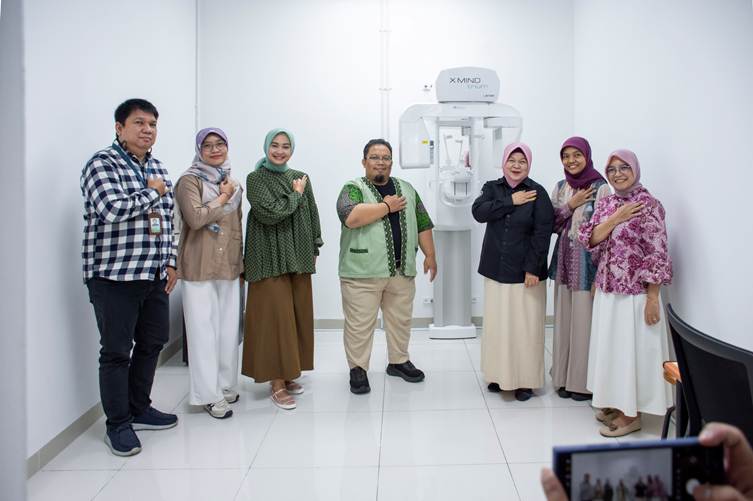
In a radiology laboratory at FKG UGM, the conversation began on a practical note—equipment, utilities, and growing healthcare demands. Yet beneath the technical discussion lay a broader idea: how UGM’s resources can be integrated into a unified system serving not just institutions, but people.
Prof. apt. Ika Puspita Sari, M.Si., Ph.D., Director of HR & Academic Affairs at UGM Academic Hospital (RSA UGM), stated: “RSA UGM is preparing to operate an additional 100 VIP beds. This expansion marks a new phase of growth. As capacity increases, the need for supporting medical services, including radiology, also rises.”
At the same time, several radiology facilities within FKG UGM were identified as having broader utilization potential—leading to exploratory collaboration discussions.
Beyond Equipment
The discussion between RSA and FKG’s radiology department began with a simple question: can existing equipment be used more efficiently for shared benefit?
As a teaching hospital, RSA requires strong diagnostic support for both patient care and clinical education. Increasing case complexity demands responsive and integrated support systems.
The idea is not merely equipment transfer, but a collaborative model that respects university asset governance. All possibilities will be coordinated with asset management units to ensure institutional compliance.
Expansion with Accountability
The addition of 100 beds is a significant step, funded internally—reflecting institutional responsibility in service expansion.
However, growth brings consequences: increased patient load, higher service demand, and greater diagnostic needs. This is where collaboration becomes strategic—not optional.
RSA aims to function not only as a referral hospital but also as a living laboratory for medical education. Integrating radiology facilities could enhance student exposure, improve patient services, and optimize existing investments.
Serving the Wider Community
Beyond efficiency, there is another key dimension: serving the entire UGM community.
RSA plans to open a special outpatient clinic in the Serikandi 1 Building for faculty members, staff, and retirees. Services will be integrated with primary care facilities such as GMC and Korpagama, ensuring better coordination.
This marks a shift—from a teaching hospital to an integrated internal healthcare hub for the university ecosystem.
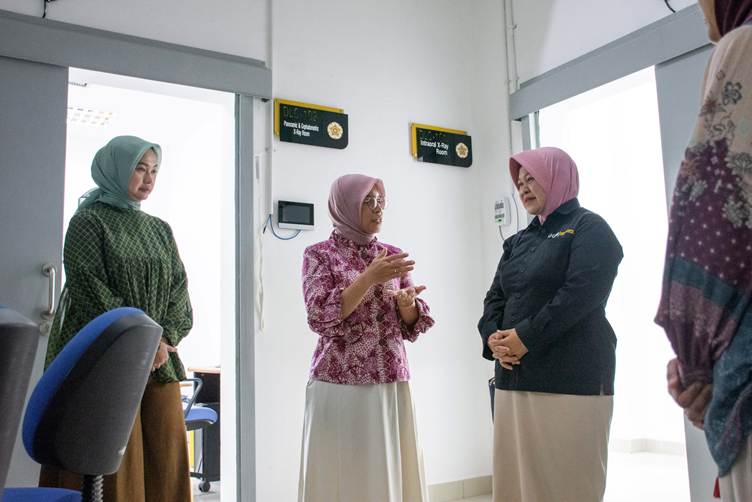
Strengthening Institutional Synergy
Although still in discussion, the collaboration reflects a broader direction in modern university management: maximizing resources, integrating systems, and avoiding duplication.
Internal synergy is not merely technical—it requires trust, openness, and shared purpose.
In the increasingly complex management of teaching hospitals, the discussion about radiology equipment may seem simple. Yet it is in such conversations that institutional foundations are built.
For UGM, growth is not just about more beds or new buildings—it is about moving in harmony: serving, educating, and caring.
(Reporter: Andri Wicaksono, Photo: Fajar Budi Harsakti)