
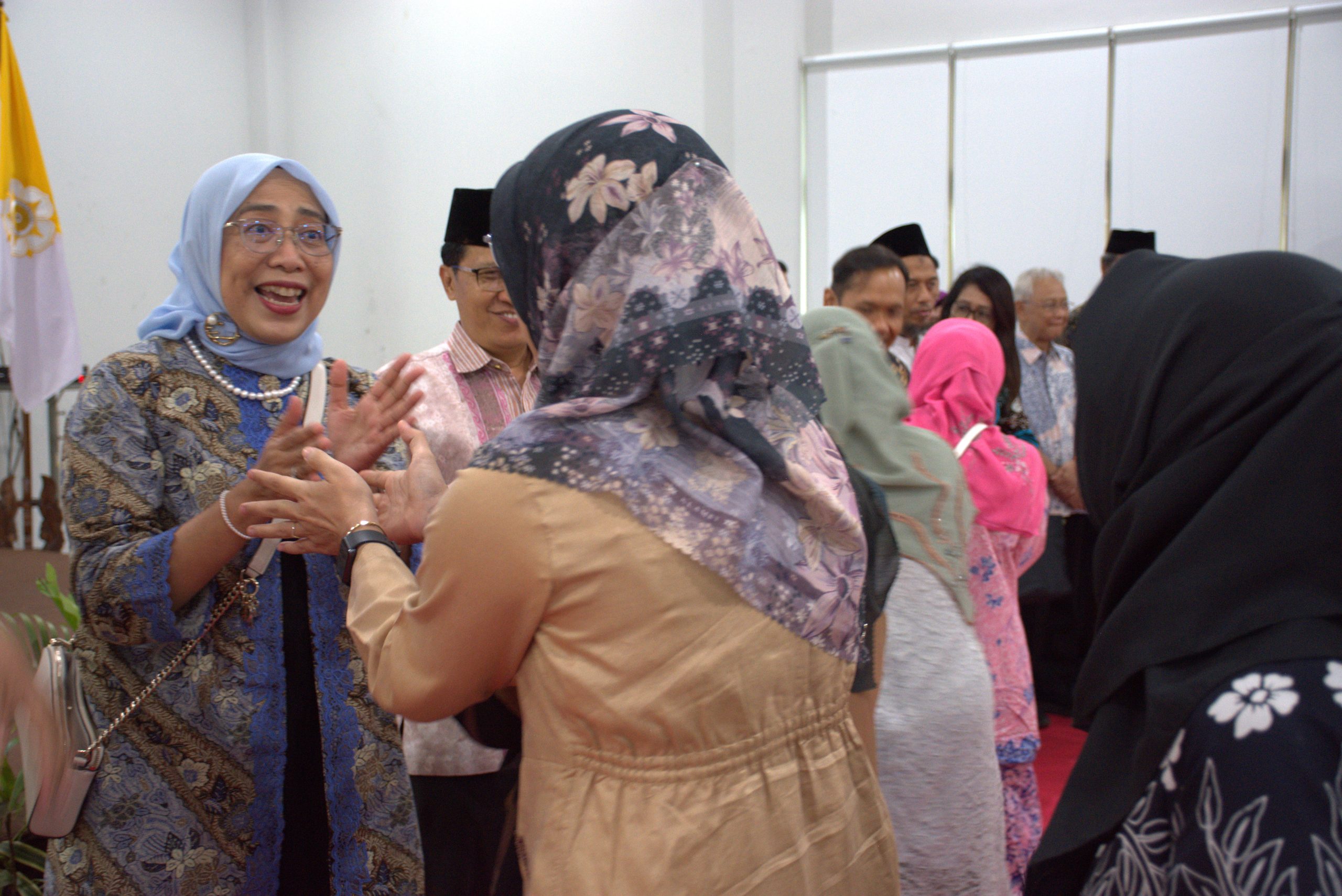
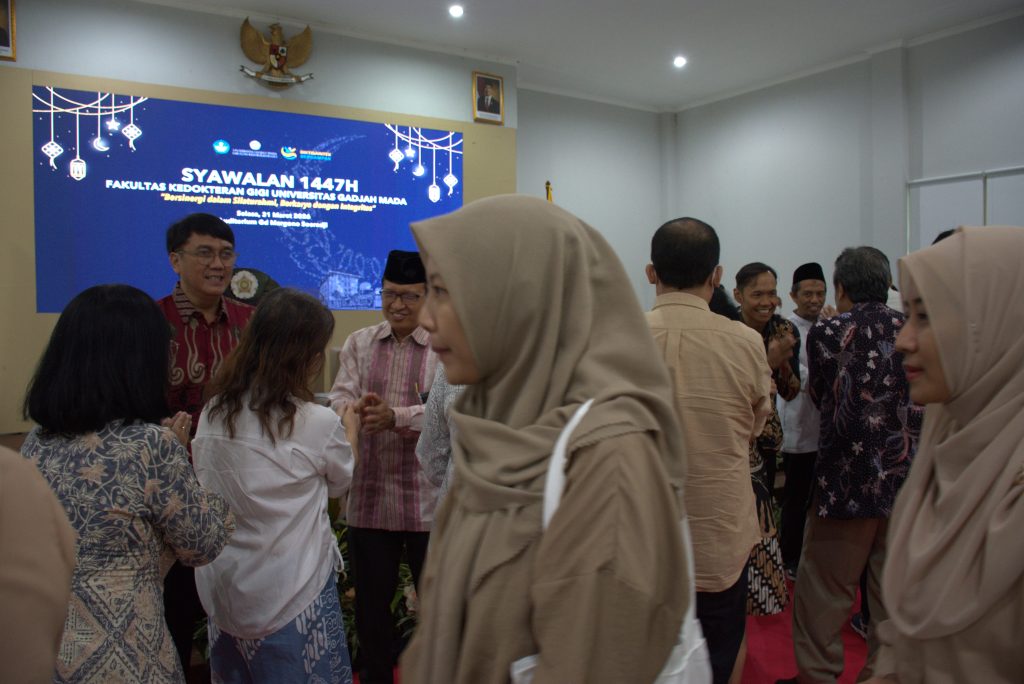
The 2026 Syawalan gathering of the extended family of the Faculty of Dentistry, Universitas Gadjah Mada, became more than just an annual tradition. Held on March 31, 2026, the FKG UGM Syawalan transformed into a shared space for reflection on knowledge, morality, and the future direction of academia.
Nothing in the room felt rushed. Greetings were exchanged one by one, hands were shaken, and the familiar phrase “mohon maaf lahir dan batin” (“please forgive my physical and emotional wrongdoings”) found its simplest yet deepest meaning: acknowledging human limitations.
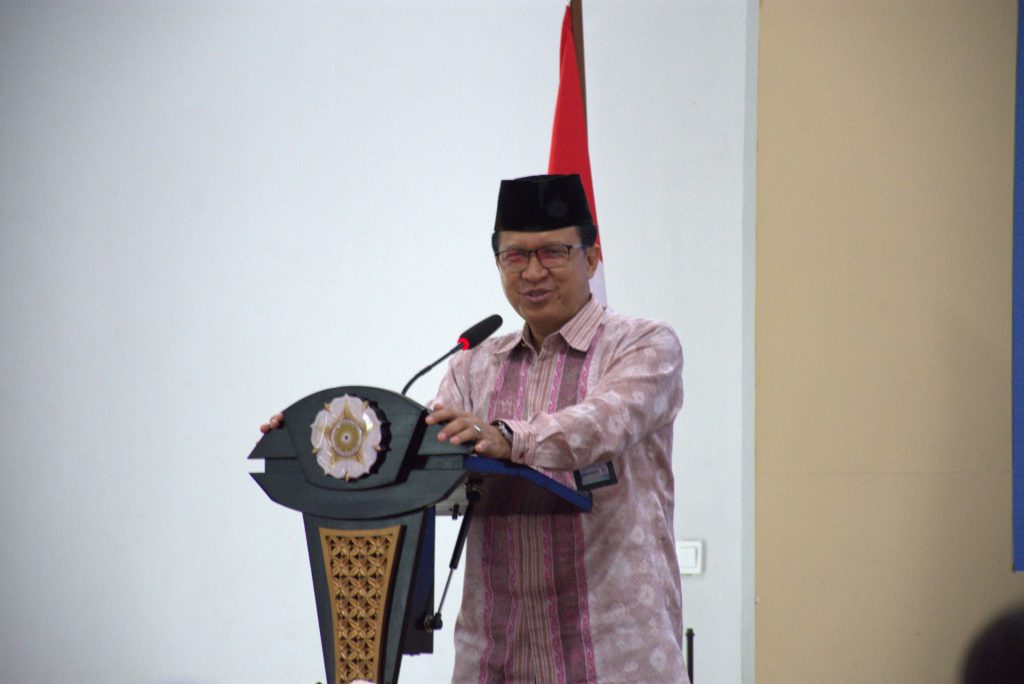
Behind the warmth of the gathering, however, lay a sense of concern expressed by the Dean of FKG UGM, Prof. drg. Suryono, SH, MM., Ph.D. Rather than merely delivering a ceremonial speech, he invited attendees to delve into the most fundamental layer of academic life: the ability to read, understand, and practice life’s values. He highlighted a troubling irony—the low level of literacy and how easily society falls into misleading information.
“Read,” he emphasized, referring to one of civilization’s most foundational principles. But reading, he reminded everyone, is not merely recitation. There is a higher level: understanding, and ultimately, practicing what is understood. It is within this context that Syawalan finds its relevance in academic life.
Between Tradition and the Challenges of the Times
Syawalan, often understood simply as a post-Eid tradition, became a medium of collective reflection within the academic community. It was not merely about asking forgiveness, but about renewing commitment to personal values aligned with institutional ideals.
Amid the rapid flow of digital information, universities are no longer merely centers of knowledge production, but also fortresses of critical reasoning. As conveyed during the forum, FKG UGM is expected not only to produce technically intelligent graduates, but also individuals who are intellectually resilient and ethically grounded.
One concern was delivered in a half-joking tone, yet carried serious meaning: how easily people believe information without verification. In this context, literacy is no longer an additional skill—it is an urgent and evolving necessity.
“Do not stop at merely knowing,” became one of the central messages. “Values must live in practice.”
Campus as a Space to Humanize Humanity
Amid the reflections, a classic idea resurfaced: humans as social beings. A quote from Aristotle was referenced, emphasizing that humans are fundamentally creatures who live within society.
Yet the reflection did not stop at theory. It was directed toward everyday reality: have people truly humanized one another?
The question lingered in the air, inviting silent contemplation from each individual.
In an academic world often dominated by competition, achievements, and numbers, Syawalan served as a reminder of a frequently overlooked dimension: empathy. Institutional success, it suggested, should not only be measured by global rankings or publication counts, but also by the quality of human relationships within the institution itself. Syawalan became a balancing force. It reminded everyone that beyond all achievements, humans remain imperfect beings who need space to forgive and be forgiven.
Faith, Knowledge, and Cleanliness
In a more practical reflection, religious values were also connected to daily life—not as rigid doctrine, but through simple actions: maintaining cleanliness, building trust, and creating a healthy environment.
“Religion does not stop at knowledge,” became a recurring theme. It must manifest through real actions in classrooms, laboratories, and daily interactions.
Even something as simple as waste management was described as a reflection of values—a reminder that ethics are not always expressed through grand gestures, but often through small, consistent habits.
Prayer, Journey, and Sincerity
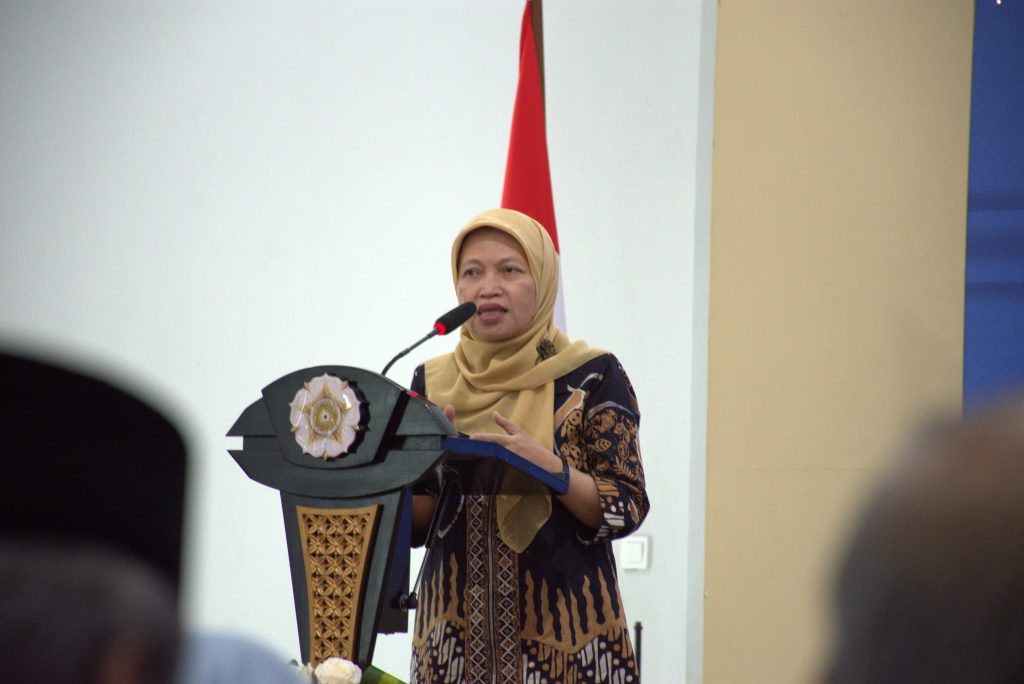
Among the collective reflections was the announcement of an upcoming journey to the Holy Land for the Hajj pilgrimage by drg. Nunuk Purwanti, M.Kes., Ph.D. and her family. Drg. Nunuk, as she is affectionately known, bid farewell before undertaking the pilgrimage and asked for prayers for a safe journey and her eventual return to continue contributing to FKG UGM.
Syawalan as a Starting Point
Syawalan is not the endpoint of Eid celebrations. Instead, it becomes a point of departure.
A departure toward greater honesty in thinking. Greater caution in receiving information. Greater wisdom in attitude. And greater sincerity in humanizing others.
Within an academic environment such as FKG UGM, that message finds its strongest relevance. Amid the demands to excel, there remains another equally important obligation: to remain human. And perhaps therein lies the deepest meaning of Syawalan—not merely forgiving one another, but reminding one another that knowledge without morality will ultimately lose its direction.
(Reporter & Photography: Andri Wicaksono)