
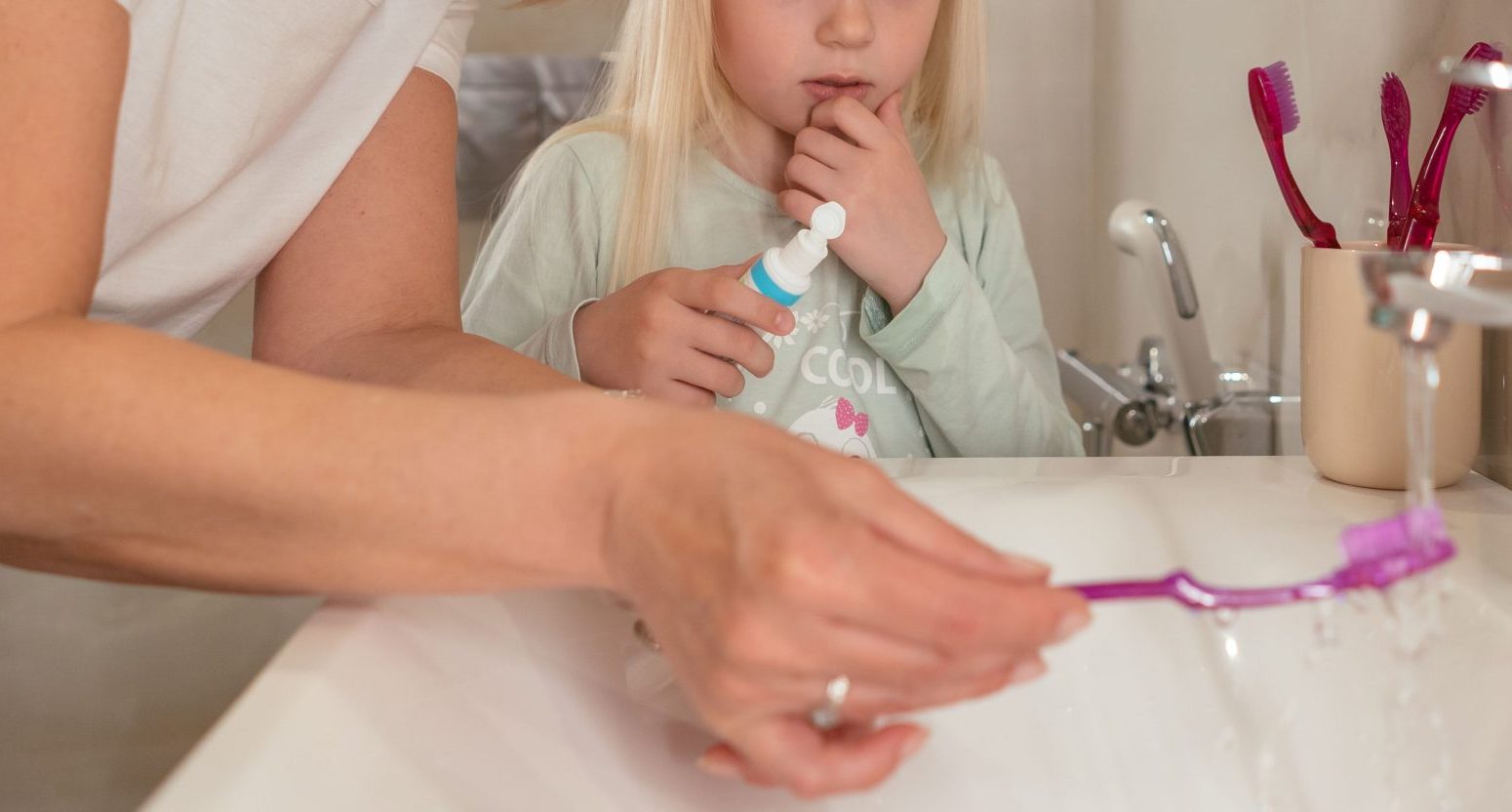
Thirty children with intellectual disabilities at SLB Pamardi Putra Banguntapan, Bantul, Yogyakarta became the subjects of a study with a surprising finding: regardless of how actively parents participated, these children’s toothbrushing skills did not necessarily improve. The findings were published by Leny Pratiwi Arie Sandy, S.Kp.G., MDSc., a lecturer from the Dental Hygiene Study Program, Faculty of Dentistry, Universitas Gadjah Mada (UGM), in the Teknosains UGM Journal December 2017 edition. Supported by the 2012 DAMAS Grant from the Faculty of Dentistry UGM, the study revealed that other, more fundamental factors play a greater role in determining the ability of children with intellectual disabilities to maintain their oral hygiene.
Children with Special Needs and Often Overlooked Dental Risks
Intellectual disability is a condition characterized by below-average intellectual functioning, generally with an IQ score of 70 or lower. Children with this condition face limitations in intellectual function, social adaptive skills, and hand motor coordination required for daily activities, including toothbrushing.
Data from various countries highlight the seriousness of this issue. A survey in India involving 117 children with similar conditions found that 67.6% had poor oral hygiene. In Brazil, among 93 children examined, 91% experienced gingivitis. In Semarang, Indonesia, a local study showed that 83.2% of children with intellectual disabilities had dental caries. Tooth decay and gum problems are not merely aesthetic concerns—they directly affect quality of life through pain, difficulty eating, and infections that may spread to other parts of the body.
Toothbrushing is one of the simplest and most affordable methods to prevent these problems. However, for children with intellectual disabilities, the seemingly simple movements involved in brushing teeth require hand motor coordination, which is often one of their primary challenges.
When Data Contradicts Expectations
Leny Pratiwi used two measurement tools in this study: a questionnaire to assess parental involvement and a checklist based on the Special Care Advocates in Dentistry (SAID) guidelines (1995) to evaluate children’s toothbrushing skills. The data were analyzed using the Spearman correlation test.
From the parental perspective, most parents (76%) were categorized as having a “moderate” level of involvement. Only 7% were categorized as having low involvement. Meanwhile, among the children, 52% demonstrated moderate toothbrushing skills, while 31% remained in the low category.
The question was whether these two factors were related. Statistical analysis provided the answer: no significant relationship was found. The significance value was p = 0.185, which is higher than the commonly used threshold of 0.05 for statistical significance. This means that higher or lower levels of parental involvement were not proven to be directly associated with children’s toothbrushing abilities.
“The patience of parents, who must repeatedly provide continuous training, contributes to improving self-care skills among children with intellectual disabilities.”
This statement comes from literature cited in the study. However, it also highlights the complexity of the issue: repeated practice is important, but improvement does not occur in a simple linear pattern. Neurological and motor limitations associated with intellectual disabilities may restrict how much progress can be achieved through training alone.
Beyond Parental Commitment
The study also highlights parenting patterns that may unintentionally become barriers. Some parents tend to be overprotective, assisting children with all activities even when they may be capable of performing certain tasks independently. Others may show less involvement or avoid interaction because they have not fully accepted their child’s condition.
Although these two parenting patterns appear different, both can hinder the development of independence. Children who are constantly assisted lose opportunities to practice, while children who receive insufficient support may lack the guidance they need.
The fundamental characteristics of children with intellectual disabilities—including slower motor development, communication limitations, and difficulty understanding instructions—are much stronger determinants of their toothbrushing abilities. This does not mean that parental involvement is unimportant. Instead, parental roles need to be redesigned: not merely “training” children, but providing appropriate support using methods tailored to each child’s specific condition.
Challenges Requiring Further Answers
Leny Pratiwi’s research opens a broader question: if parental involvement alone is insufficient, what interventions are truly effective in improving oral hygiene among children with intellectual disabilities? Should specialized approaches involve therapists, special education teachers, or dental professionals trained in managing patients with special needs?
These children are not lacking love and attention from those around them. What may still be missing is a more structured support system based on a deeper understanding of how their brains and bodies function. Healthy teeth are not a luxury. For these children, oral health is part of their right to a proper quality of life.
Authors: Achmad Zam Zam Aghasy, DDS, M.Kes.; Hazra Alifia Muharam
Photo: Pexels
Source DOI: https://doi.org/10.22146/teknosains.32343