
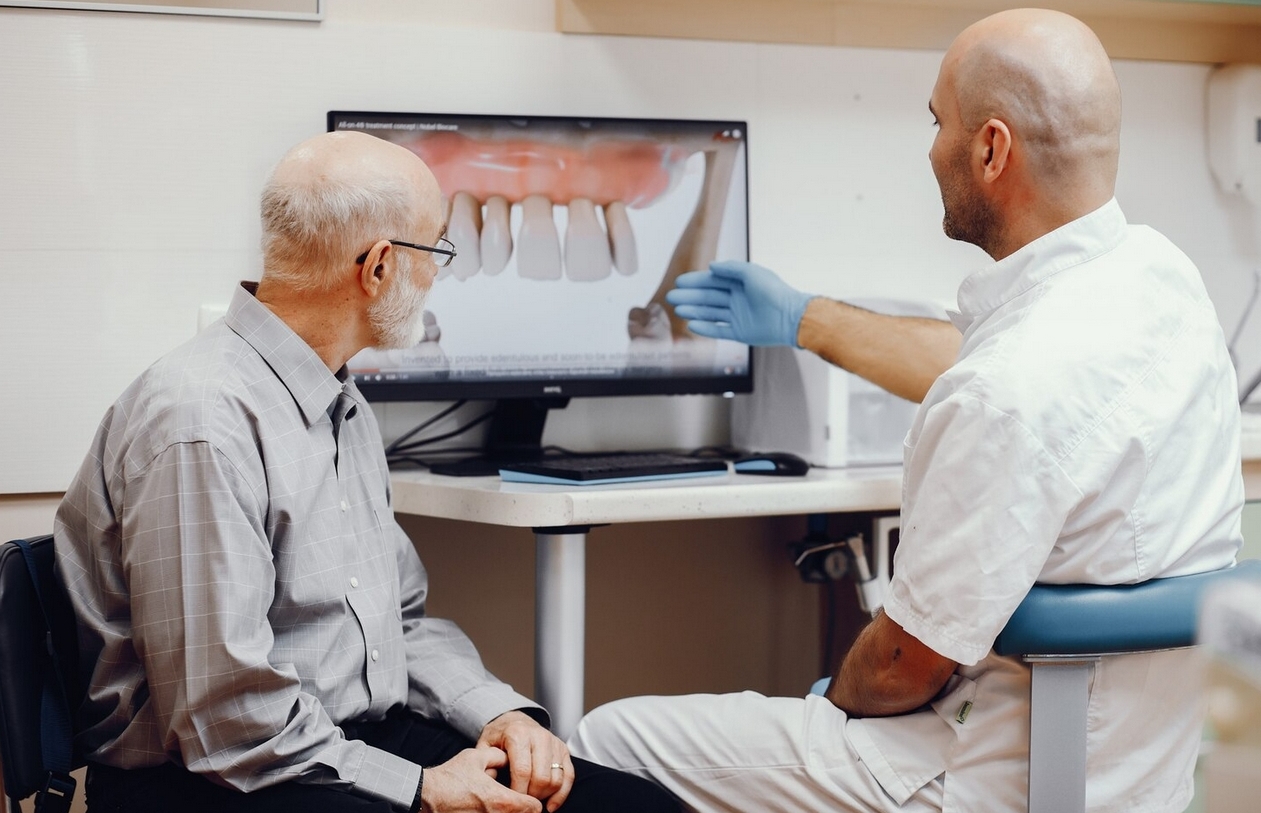
Type 2 diabetes mellitus (T2DM) is a systemic condition that often exacerbates periodontal disease. Hyperglycemia causes changes in immune response, increased oxidative stress, and cellular dysfunction, all of which can accelerate periodontal tissue breakdown. Therefore, periodontal treatment in T2DM patients requires a more aggressive and integrated approach combining glycemic control and local periodontal therapy.
The Role of Calprotectin Biomarker in Periodontitis and T2DM
Calprotectin is a protein primarily secreted by neutrophils, monocytes, and macrophages and is commonly used as a marker of inflammatory activity. In periodontitis, calprotectin levels in gingival crevicular fluid (GCF) increase in response to local inflammation.
A study conducted by FKG UGM student Muhammad Nabeel Wildan under the supervision of Prof. Dr. drg. Ahmad Syaify, Sp. Perio(K) and drg. Sri Pramestri Lastianny, MS., Sp. Perio(K), titled “Calprotectin Levels in Periodontitis Patients with Type 2 Diabetes after the Use of Chlorine Dioxide Gel with Tray Following Scaling and Root Planing”, found that the use of chlorine dioxide gel via tray after scaling and root planing (SRP) reduced calprotectin levels in T2DM patients with periodontitis.Detailed findings:
Detailed findings:
- Sample: 30 T2DM periodontitis patients, divided into three groups:
- SRP + chlorine dioxide gel tray (SRP+T)
- SRP + chlorine dioxide gel syringe (SRP+S)
- SRP only (control)
- Calprotectin levels before and after intervention:
- SRP+T group: from 6,721 ng/mL to 5,097 ng/mL
- SRP+S group: from 6,561 → 5,380 ng/mL
- SRP-only group: from 6,361 → 6,311 ng/mL
- Conclusion: The use of chlorine dioxide gel with a tray after SRP significantly reduced calprotectin levels in T2DM patients with periodontitis and was more effective than SRP alone.
These findings indicate that additional local interventions beyond mechanical therapy such as SRP can help suppress local inflammatory activity, which is particularly important in patients with systemic conditions like diabetes.
Periodontal Treatment Strategies for T2DM Patients
Here are some important approaches in periodontal care for type 2 DM patients:
- Systemic Blood Glucose Control
- Controlled HbA1c levels significantly influence periodontal inflammation.
- Without glycemic control, local therapy may be less effective due to persistent systemic inflammatory stimuli.
- Mechanical Therapy: Scaling and Root Planing (SRP)
- SRP remains the foundation of non-surgical periodontal therapy, aiming to remove plaque, calculus, and subgingival biofilm.
- Expected outcomes include reduced pocket depth, improved attachment, and decreased gingival inflammation.
- Local Adjuvant Therapy: Chlorine Dioxide Gel (Tray / Syringe)
- The cited study shows that tray application of chlorine dioxide gel reduces calprotectin levels more significantly than SRP alone.
- Local antiseptic gels help suppress pathogenic bacteria, reduce inflammatory stimuli, and support periodontal tissue healing
- Monitoring Local Inflammatory Biomarkers
- Measuring calprotectin in GCF can serve as an additional parameter to assess therapy effectiveness and residual inflammation.
- Reduced calprotectin levels suggest improved local inflammatory control.
- Nutritional Support and Oral Hygiene
- Adequate nutrition supports immune function and tissue regeneration.
- Patient education and motivation are essential: proper tooth brushing, flossing/interdental cleaning, and regular dental visits.
- Follow-up and Periodic Evaluation
- Clinical and biomarker reassessment (if available) should be performed after initial intervention to evaluate treatment response.
- Further therapy (e.g., flap surgery, regeneration) may be considered based on patient condition.
Challenges and Considerations
- Although local antibacterial/adjuvant interventions such as chlorine dioxide gel can reduce calprotectin, uncontrolled diabetes remains a major obstacle.
- Patient responses vary depending on glycemic control, treatment compliance, and genetic factors.
- Long-term monitoring is needed to determine whether reduced local biomarkers correlate with periodontal stability and prevention of tooth loss.
***
Periodontal treatment in T2DM patients should be comprehensive: blood glucose control, mechanical therapy (SRP), and, where possible, local adjuvant therapy such as chlorine dioxide gel via tray. The cited study shows that tray-applied chlorine dioxide gel after SRP significantly reduces calprotectin levels compared to SRP alone, indicating decreased local inflammatory activity. With this combination approach, periodontal treatment outcomes in T2DM patients are expected to be more optimal and long-term periodontal tissue preservation can be achieved.
References
Muhammad Nabeel Wildan, Prof. Dr. drg. Ahmad Syaify, Sp. Perio(K); drg. Sri Pramestri Lastianny, MS., Sp. Perio(K), Kadar Calprotectin Pasien Periodontitis DM Tipe 2 Setelah Pemakaian Gel Klorin Dioksida Menggunakan Tray Paska Scaling Root Planing, https://etd.repository.ugm.ac.id/penelitian/detail/248099
Author: Rizky B. Hendrawan | Photo: Freepik

