
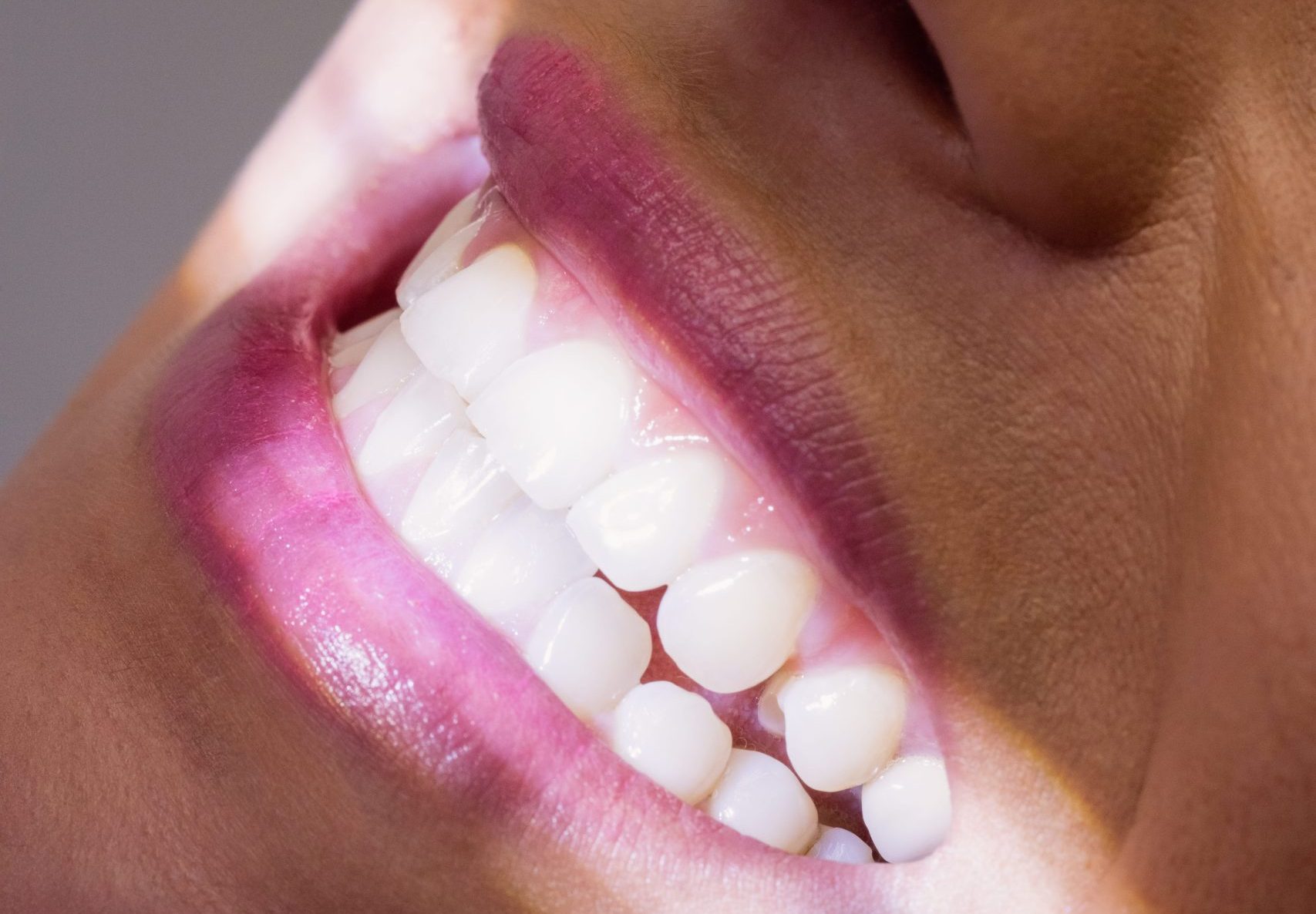
For many people, having white teeth is about more than just health—it is also about confidence. But behind the popular in-office bleaching procedure lies a risk that is rarely discussed: the loss of tooth minerals. Research published in Majalah Kedokteran Gigi (December 2014) by Dr. drg. Yulita Kristanti, M.Kes., and a team of researchers from Universitas Gadjah Mada found that the use of 40% hydrogen peroxide in in-office teeth whitening caused significant mineral loss. More importantly, the study identified a way to minimize this damage: using a fluoridated desensitizing agent applied before and after the bleaching procedure.
Who has not heard complaints about tooth sensitivity following a whitening treatment? This sensitivity can last anywhere from 4 to 39 days. So far, such complaints have commonly been managed with a desensitizing agent, a substance applied to the teeth to reduce sensitivity. However, there is a deeper issue beyond temporary discomfort.
The high concentration of hydrogen peroxide used in in-office bleaching does more than whiten teeth. It also alters the structure of hydroxyapatite, the primary mineral component of teeth, and reduces calcium and fluoride levels within dental hard tissues. As mineral content decreases, dentinal tubules—the tiny channels within the dentin layer—become wider. This makes teeth more prone to sensitivity and more vulnerable to bacteria and chemicals that can penetrate toward the pulp, the inner part of the tooth containing nerves and blood vessels. In short, the disappearance of sensitivity does not necessarily mean that the teeth have fully recovered.
The study by Dr. drg. Yulita Kristanti, M.Kes., and her team divided maxillary first premolar specimens into four treatment groups. Two groups received a fluoride-free desensitizing agent (CPP-ACP), while the other two received a fluoridated desensitizing agent (CPP-ACFP). For each type of material, one group received the application only after bleaching, while the other received applications both before and after bleaching.
Tooth mineral content was measured using X-Ray Diffraction (XRD) at the Geology Laboratory of the Faculty of Engineering, Universitas Gadjah Mada, before and after treatment. The results were striking. The group that received CPP-ACP only after bleaching experienced the most dramatic mineral reduction, from 72.95% to just 22.88%. In contrast, the group that received CPP-ACFP both before and after bleaching experienced the smallest mineral loss, declining from 69% to 64.4%. The difference was statistically significant.
“The use of a fluoridated desensitizing agent before and after in-office bleaching resulted in the smallest reduction in mineral content.”
The difference between CPP-ACP and CPP-ACFP lies in the presence of fluoride ions. When fluoride is present, the resulting mineral is no longer ordinary hydroxyapatite but fluorapatite, which is harder and more resistant to acid dissolution. Fluoride also helps limit demineralization while stimulating remineralization, supported by the calcium and phosphate ions already contained in the material.
These findings highlight something that is often overlooked in clinical practice: the sequence and timing of desensitizing agent application are just as important as the type of material selected. Applying CPP-ACFP only after bleaching is already better than using CPP-ACP alone, but the results remain considerably inferior to the two-stage protocol of application before and after bleaching.
Why is this the case? Applying the agent before bleaching provides an initial protective layer on the tooth surface, so that when the bleaching agent takes effect, the tooth minerals are not immediately exposed without protection. Application after bleaching then helps restore minerals that were lost during the procedure.
The study also noted that peritubular dentin, the layer of dentin surrounding the tubules, is more resistant to hydrogen peroxide than intertubular dentin. This is attributed to its higher mineral content and lower collagen content. Intertubular dentin, meanwhile, which consists of 92% organic collagen matrix, is more susceptible to oxidative damage.
In-office teeth whitening does not necessarily need to be avoided, but it should be performed using an appropriate protocol. This study provides a clear scientific basis: applying a fluoridated desensitizing agent before and after in-office bleaching significantly minimizes tooth mineral loss compared with other protocols.
Author: drg. Achmad Zam Zam Aghasy, M.Kes., Annisa Dwi Noviyanti
Photo: FreePik