
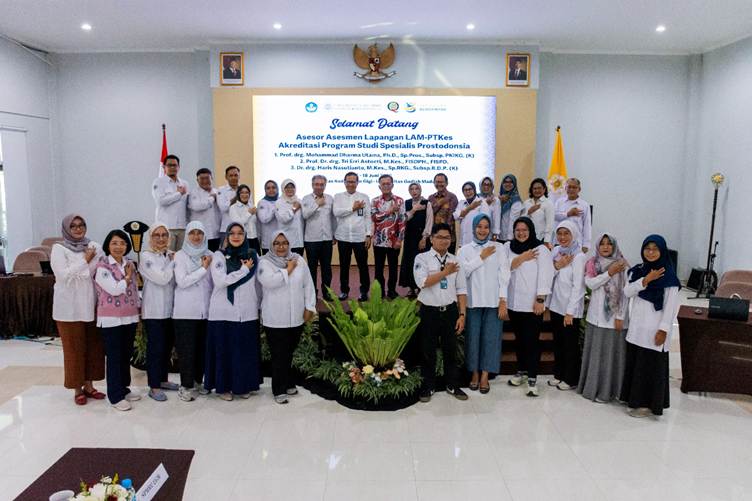
The Prosthodontics Specialist Study Programme of the Faculty of Dentistry, Universitas Gadjah Mada (FKG UGM), has reaffirmed its commitment to becoming a centre of excellence in prosthodontics education, healthcare services, and scientific development through strengthening clinical competencies, digital innovation, and maxillofacial reconstruction. This commitment was highlighted during the opening of the 2026 accreditation field assessment for the Prosthodontics Specialist Study Programme.
In presenting the programme’s academic vision, the leadership of the study programme emphasised that the main strengths of Prosthodontics UGM lie in advanced prosthodontic practice and maxillofacial prosthetic reconstruction, which distinguish it from similar programmes in Indonesia.
“Maxillofacial prosthetic reconstruction is one of the areas of excellence that we are seriously developing and strengthening,” the programme leadership stated during the presentation.
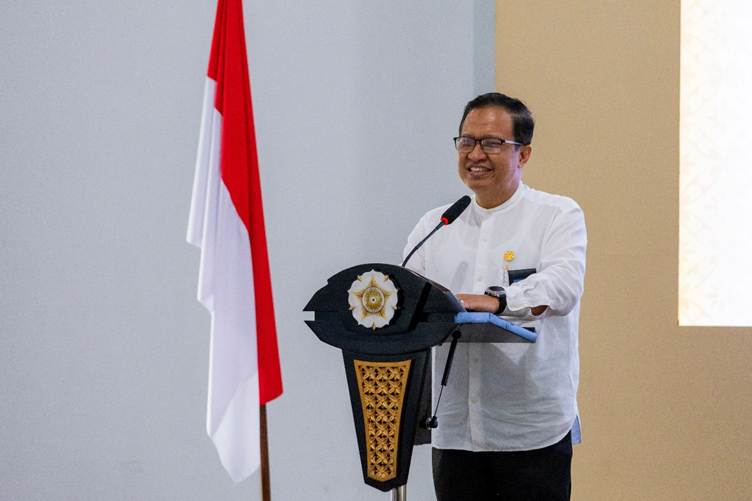
Addressing the Challenges of an Ageing Population
The increasing elderly population in Indonesia, particularly in the Special Region of Yogyakarta, has become one of the foundations for developing scientific expertise and services within the Prosthodontics Specialist Study Programme. Yogyakarta is recognised as an area with a continuously increasing proportion of elderly residents, resulting in greater demand for oral rehabilitation services and prosthetic treatment.
According to the programme presentation, modern prosthodontic services are no longer limited to replacing missing teeth. Instead, they also consider the systemic conditions of elderly patients, including the need for implant-supported prostheses and more comprehensive functional rehabilitation.
The programme also highlighted national demographic data showing the continued growth of Indonesia’s elderly population. This condition is viewed as both a challenge and an opportunity for the future development of specialist prosthodontic services.
Outcome-Based and Digital Technology-Oriented Curriculum
In education, the Prosthodontics Specialist Study Programme implements an Outcome-Based Education (OBE) approach in accordance with university policies. Students are not only equipped with theoretical knowledge but are also required to demonstrate the ability to apply clinical competencies to real-world cases.
The programme emphasises the integration of digital technology into both learning processes and patient care. Technologies such as intraoral scanners, digital prosthesis design, and digital workflows have become important components of the curriculum.
“For cases where conventional impressions are difficult to perform, we utilise digital impressions to produce more precise treatment outcomes,” a programme representative explained.
This digital transformation is further supported by the availability of digital laboratories, intraoral scanner equipment, and plans to strengthen three-dimensional printing (3D printing) facilities through strategic partnerships with industry.
From an analytical perspective, this digital transformation demonstrates the programme’s efforts to align itself with developments in global dentistry. Digital workflows have become a new standard in prosthodontics because they improve accuracy, efficiency, and patient comfort.
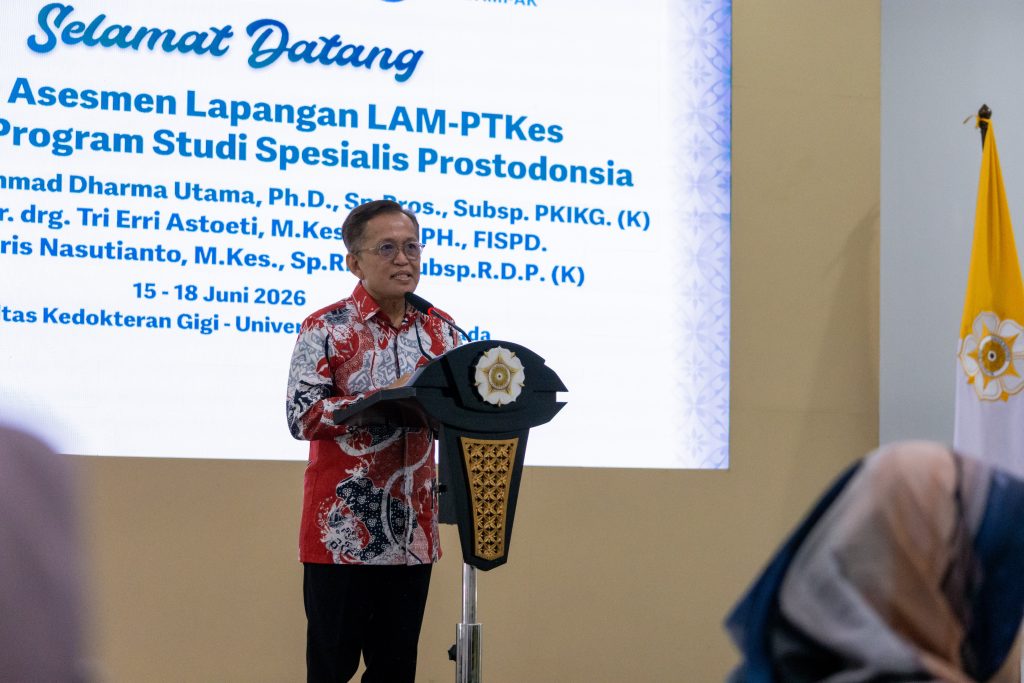
Scientific Publications as a Quality Indicator
Beyond clinical education, the Prosthodontics Specialist Study Programme also continues to strengthen its research culture. Scientific publications are positioned as a key indicator of academic quality and serve as an important requirement for student graduation.
“Publication has become a faculty priority because research outcomes must ultimately lead to scientific publications,” the programme stated during the presentation.
Research areas being developed include prosthesis hygiene, patient rehabilitation, as well as innovations in dental materials and technology. Research funding support from the faculty, university, and industry partners has also contributed to strengthening the productivity of research conducted by both lecturers and students.
Solution-Based Community Engagement
In terms of community service, the Prosthodontics Specialist Study Programme has developed an approach that goes beyond conventional health education by producing practical solutions and innovations for society.
Students are required to conduct community engagement projects integrated with real-world needs. Several activities are carried out in UGM-supported villages and areas with limited access to prosthetic healthcare services.
“We do not only provide education, but also develop prototypes and solutions that deliver direct benefits to communities,” the programme team explained.
This approach reflects a shift in dental education from merely transferring knowledge towards an innovation-based community empowerment model.
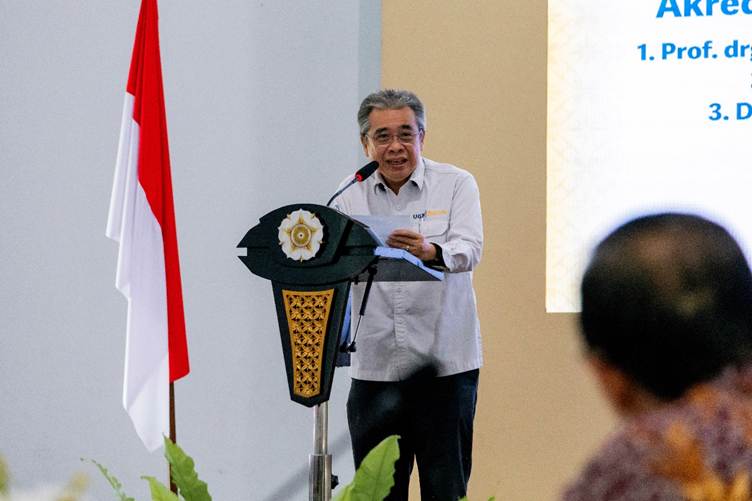
Strengthening the Quality Assurance System
On the same occasion, the Head of the University Quality Assurance and Reputation Unit (SPMRU) of UGM, Prof. Dr. Indra Wijaya Kusuma, M.B.A., emphasised that accreditation serves as an important instrument for maintaining the sustainability and quality of academic programmes.
“Maintaining quality is a very challenging responsibility. If a study programme fails to achieve accreditation, it cannot perform its functions optimally,” he stated.
He also highlighted that changes in higher education regulations, including policies regarding permanent and non-permanent lecturers, have become new challenges for many health science programmes in Indonesia.
According to him, a culture of quality assurance must become part of an institution’s daily practices rather than merely being implemented before accreditation processes.
Assessors Highlight the Distinctive Strengths of the Prosthodontics Programme
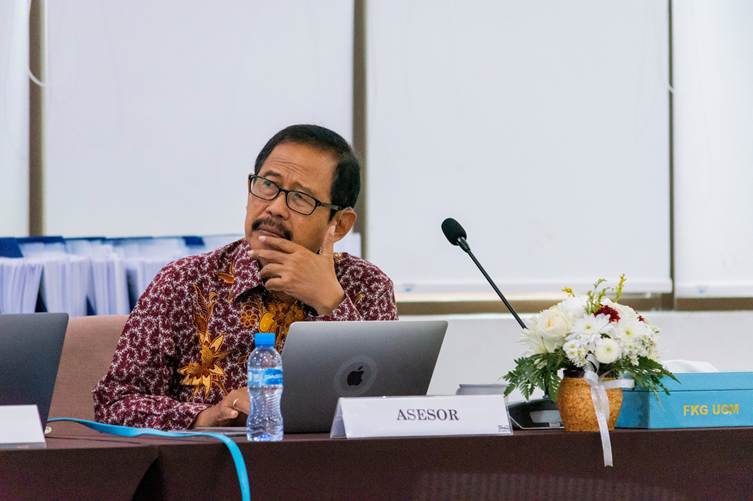
The assessment team noted that the Prosthodontics Specialist Study Programme has unique characteristics and challenges compared with other specialist programmes, particularly due to its clinical workload and highly specific professional competency requirements.
“We understand that the Prosthodontics Specialist Study Programme has its own distinct characteristics, ranging from clinical workload to competency demands,” a representative of the assessment team stated.
The assessors also provided opportunities for clarification and discussion to ensure that all academic documents and practices implemented by the programme could be objectively verified.
Opportunity to Become a National Referral Centre
Based on the presentations delivered throughout the assessment process, the Prosthodontics Specialist Study Programme at FKG UGM is developing three main pillars of advancement: Clinical excellence in maxillofacial reconstruction, Digital transformation in dentistry and Strengthening research based on community needs.
If consistently implemented, this strategy has the potential to establish the programme as one of Indonesia’s national referral centres for oral and maxillofacial rehabilitation. This opportunity is becoming increasingly relevant as Indonesia’s ageing population is projected to continue growing over the coming decades, creating greater demand for specialist prosthodontic services.
The ongoing accreditation process serves as an important opportunity to evaluate the programme’s readiness in addressing these challenges while maintaining the quality standards of specialist dental education at both national and international levels.
(Reporter: Andri Wicaksono, Photographer: Fajar Budi Harsakti)