
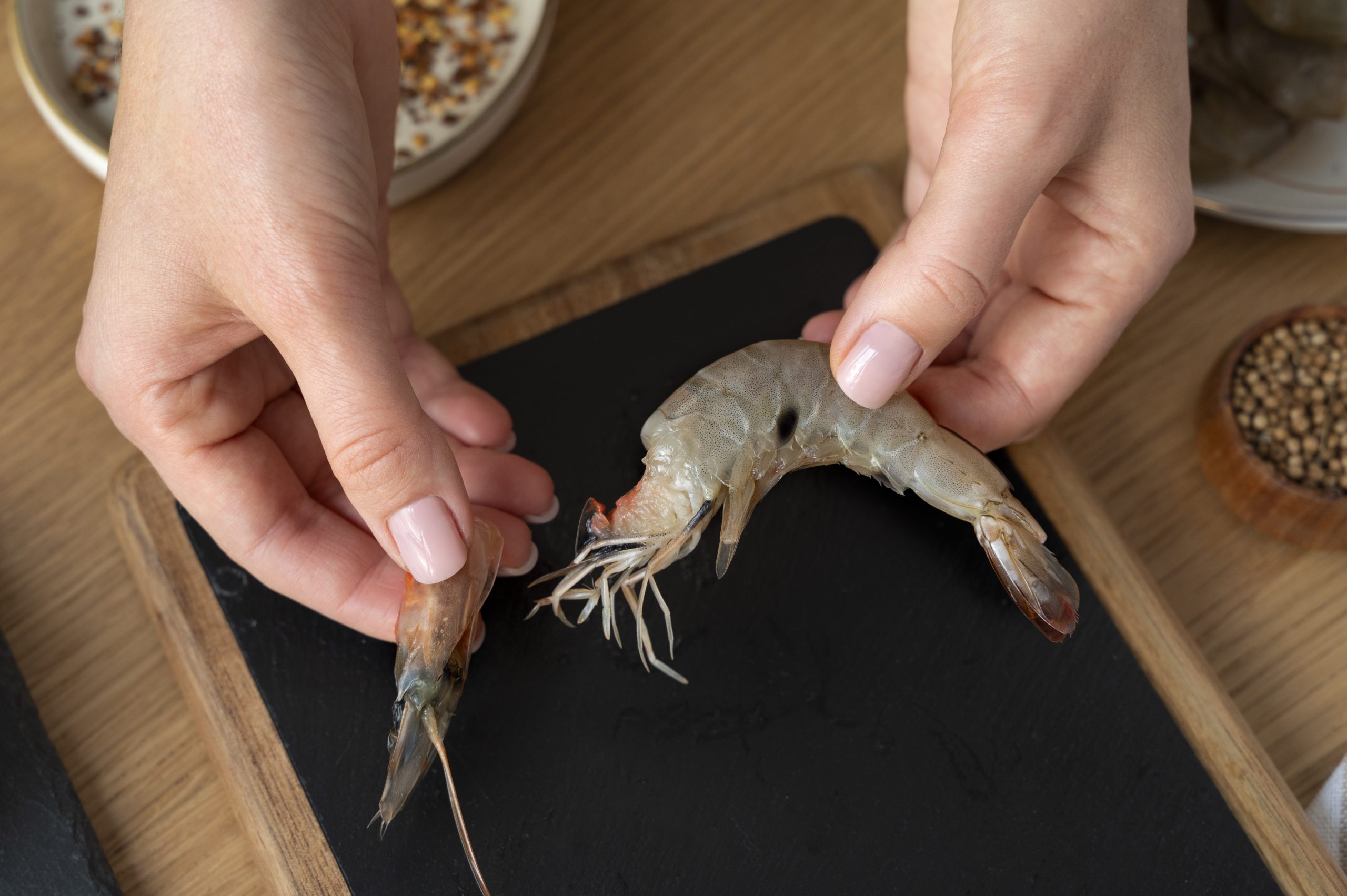
Prawn shells that are usually simply discarded turn out to contain remarkable potential. Researchers from the Department of Oral Biology, Faculty of Dentistry, Universitas Gadjah Mada, have found that nano chitosan extracted from the shells of giant freshwater prawns (Macrobrachium rosenbergii) can inhibit biofilm formation by two major bacteria responsible for tooth decay by more than 98 percent. This finding opens up new opportunities for developing more natural oral care products with minimal side effects.
The Enemy in the Mouth: Persistent Biofilms
Every day, hundreds of bacterial species live and thrive in the human oral cavity. Among them, two names appear most frequently in the dental literature: Streptococcus mutans and Streptococcus sanguinis. Neither is merely an ordinary inhabitant. S. mutans is known as a major culprit behind dental caries because of its ability to produce acids, adhere to tooth surfaces, and form a protective layer known as a biofilm. Meanwhile, S. sanguinis, although it does not directly damage teeth, acts as a pioneer of early colonization, paving the way for other bacteria to establish themselves.
Dental biofilm — commonly known as dental plaque — is not simply a thin layer of dirt. It is an organized microbial community protected by an extracellular polymeric matrix. This matrix makes the bacteria within it much more resistant to antibiotics than free-living bacteria. This is what makes biofilms a major challenge in the prevention and treatment of oral diseases, ranging from caries to periodontitis, which is now known to be closely associated with heart disease and diabetes.
Existing oral antiseptic products, such as chlorhexidine, triclosan, and delmopinol, are indeed effective. However, long-term use comes with consequences, including staining of the teeth and tongue, taste alterations, and increased supragingival calculus formation. Therefore, the search for alternative materials that are both safe and effective continues.
From the Kitchen to the Laboratory: Turning Prawn Shells into Nanoparticles
Prof. drg. Tetiana Haniastuti, M.Kes., Ph.D., and her research team at the Faculty of Dentistry, Universitas Gadjah Mada, took an unconventional approach: they looked to giant freshwater prawn shell waste as a raw material. Chitosan itself is not a new material in the biomedical field. It is a natural polysaccharide derived from chitin, which is abundant in crustacean shells, and has long been recognized for its antibacterial properties and high biocompatibility.
What distinguishes this research is the reduction of particle size to the nanoscale. Through an ionic gelation method using tripolyphosphate (TPP), the team successfully produced prawn shell nano chitosan (PSNC) with an average particle size of 432.9 nm, a molecular weight of 34.67 kDa, and a polydispersity index of 0.288. The measured zeta potential of +51.2 indicates good particle stability. The much smaller size compared with conventional chitosan is not merely a number — it means greater penetration into biofilm structures and easier access to bacterial cell membranes.
The extraction of chitosan from giant freshwater prawn shells itself involves three stages: deproteinization using 4% NaOH, demineralization with 1 M HCl, followed by deacetylation using 50% NaOH at 100°C. The resulting degree of deacetylation reached 77.61%, indicating chitosan of adequate quality for antimicrobial applications.
The Numbers Speak: More Than 98 Percent Biofilm Inhibition
The results of the laboratory tests, published in the International Journal of Dentistry (2023), are quite remarkable. At a concentration of 5 mg/ml after 24 hours of exposure, PSNC was able to inhibit the formation of S. mutans and S. sanguinis biofilms by 98.92 percent — even exceeding 0.2% chlorhexidine, which achieved 97.15 percent over the same duration. After 48 hours, the effectiveness of PSNC at the highest concentration remained at 85.30 percent, comparable to chlorhexidine at 84.94 percent.
“PSNC inhibits the development of S. mutans and S. sanguinis biofilms in vitro, indicating the high potential of PSNC as an antiplaque and anticaries agent that can be incorporated into oral healthcare products such as mouthwash and toothpaste.” — Prof. drg. Tetiana Haniastuti, M.Kes., Ph.D., lead researcher of the study
Visualization using confocal laser scanning microscopy (CLSM) with BacLight Bacterial Viability Kit staining revealed a dramatic picture. In the negative control group, the biofilm appeared thick and dense, dominated by green cells indicating actively living bacteria. As the concentration of PSNC increased, more bacterial cells turned red — indicating dead or dying cells. At a concentration of 5 mg/ml, almost no biofilm had formed; the remaining bacteria appeared scattered as damaged individual cells.
Scanning electron microscopy (SEM) reinforced this picture. The control biofilm showed bacterial colonies stacked on one another and tightly embedded within an extracellular matrix. After exposure to PSNC, this structure collapsed: the number of bacteria decreased drastically, and those that remained no longer formed an intact biofilm structure.
The Mechanism of Action: How Nano Chitosan Destroys Biofilms
How does PSNC work? The researchers describe at least two main mechanisms. First, the polycationic nature of PSNC, derived from amino groups (NH3+) in N-acetylglucosamine units, gives it a positive charge. This positive charge interacts electrostatically with negatively charged components of the biofilm — including EPS, proteins, and DNA — thereby disrupting the structural integrity of the biofilm while also causing leakage of bacterial intracellular components, ultimately leading to cell death.
Second, the small particle size of PSNC (432.9 nm) and its low molecular weight allow these nanoparticles to penetrate bacterial cell walls and bind to bacterial DNA. The resulting disruption of protein synthesis then inhibits the bacteria's ability to adhere to tooth surfaces — a crucial first step in biofilm formation.
These findings are clinically relevant. Given that S. mutans and S. sanguinis coexist in multispecies biofilms in the oral cavity, research that simulates these dual-species conditions provides a more realistic picture of PSNC's effectiveness under actual conditions. Chlorhexidine has long been considered the gold standard for plaque control, but its long-term side effects remain a limitation. PSNC, which is derived from organic waste and is biodegradable, offers a more promising safety profile.
Of course, the path from the laboratory to a product that can be purchased at a pharmacy is still a long one. Human clinical trials, stable formulations for mouthwash or toothpaste, and comprehensive toxicological studies still need to be conducted. However, for those who have always viewed giant freshwater prawn shells merely as kitchen waste, this research provides a strong reason to think again.
Source DOI: https://doi.org/10.1155/2023/8890750
Authors: Anny Anggraini; drg. Achmad Zam Zam Aghasy, M.Kes.
Photo: Freepik