
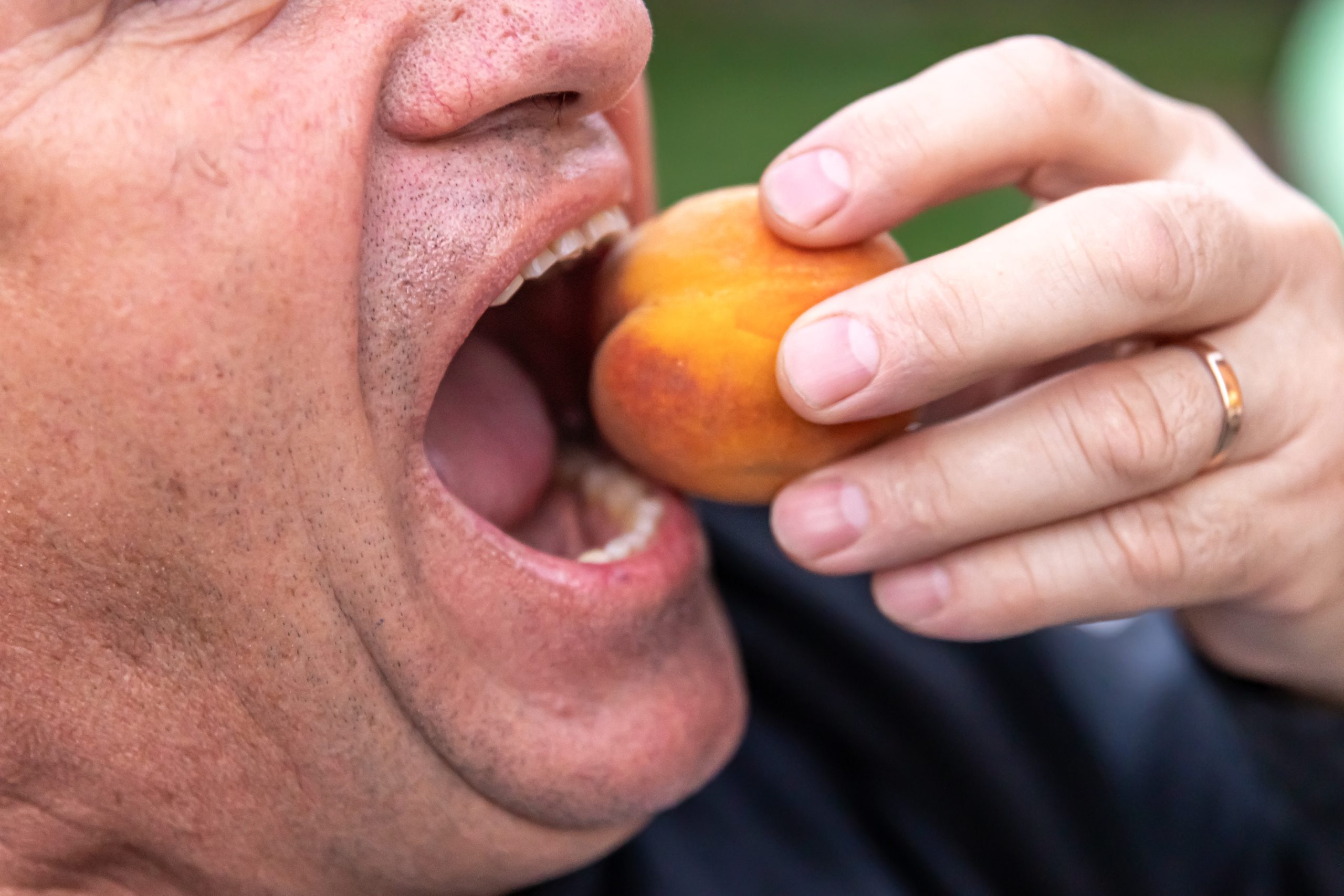
Imagine a 70-year-old woman who wakes up every morning with a mouth that feels like sandpaper. She has been taking antihypertensive medication for years and never imagined that those small pills might gradually reduce saliva production in her mouth. This condition is more than a mere inconvenience. According to a study published in the Journal of International Oral Health (2021), she would face a 5.68-fold higher risk of poor oral hygiene compared with older adults with normal salivary production.
The study was conducted by Prof. Dr. drg. Dewi Agustina, MDSc, together with Bernadetta Esti Chrismawaty and Lisdrianto Hanindriyo from the Faculty of Dentistry, Universitas Gadjah Mada. They examined 158 older adults from five Posyandu Lansia (integrated health service posts for older adults) in Yogyakarta City—a city with the highest life expectancy in Indonesia and one of the provinces with the largest proportions of older residents.
When Saliva Stops Doing Its Job
Saliva is more than just fluid in the mouth. It serves as a protective mechanism: it neutralizes acids, contains antibodies, supports tooth enamel remineralization, and maintains the balance of the oral microbiome. Without sufficient saliva, teeth lose an important protective barrier.
In this study, hyposalivation was defined as an unstimulated salivary flow rate of less than 0.1 mL per minute. Meanwhile, xerostomia refers to the subjective sensation of dry mouth, which is not necessarily accompanied by a measurable reduction in saliva volume. The two conditions are different, and that distinction is clinically important.
Among the 158 participants examined, 59.5 percent experienced xerostomia and 25.3 percent had hyposalivation. The proportion with hyposalivation may appear relatively small, but its impact was disproportionately large. Multivariate analysis showed that older adults with hyposalivation had a 5.68-fold greater risk of poor oral hygiene, whereas xerostomia “only” increased the risk by 2.49-fold.
“Hyposalivation is a major risk factor for poor oral health status among older Indonesians.” — Prof. Dr. drg. Dewi Agustina, MDSc, et al., Journal of International Oral Health, 2021
Medications That Heal While Also Drying the Mouth
One of the findings most relevant to everyday clinical practice was the strong association between hyposalivation and long-term medication use. Of the 158 participants, 45 had hypertension, and most were taking antihypertensive medications such as captopril, which is known to inhibit angiotensin-converting enzyme and may cause dry-mouth symptoms. In addition, 18 participants had diabetes mellitus, a condition that is also strongly associated with reduced salivary flow rates.
This phenomenon is closely related to what is known as polypharmacy among older adults: the simultaneous use of multiple medications prescribed by different medical specialists. More than 500 types of medications are known to potentially cause hyposalivation, including antihypertensives, antihistamines, diuretics, antidepressants, and benzodiazepine sedatives. The older a person becomes, the longer their medication list tends to be—and the greater the likelihood that salivary production will decrease.
This creates a difficult cycle to break. Systemic diseases require medication; medication can cause hyposalivation; hyposalivation can worsen oral health; and poor oral health can ultimately reduce an older person's overall quality of life.
What the Numbers from Elderly Health Posts Tell Us
The research team adopted a community-based approach by visiting Posyandu Lansia in three subdistricts: Danurejan, Gedongtengen, and Jetis. Five health posts were randomly selected, and invitations were sent to 200 members aged 60 years and older. A total of 158 people ultimately participated fully.
The findings were striking. The most common condition was not dental caries or periodontal disease, but rather a very low number of natural occluding pairs (NOP): 73.4 percent of participants had five pairs or fewer. This indicates that most of these older adults had already lost a substantial number of their natural teeth. A high DMFT index was found in 71.5 percent of participants, while 27.8 percent had poor oral hygiene according to the Oral Hygiene Index-Simplified (OHI-S).
Bivariate analysis revealed a clear pattern: the proportions of periodontal pockets and poor oral hygiene differed significantly between participants with and without hyposalivation, with p < 0.001. Although xerostomia was more common, it showed a significant difference only for the oral hygiene indicator.
From Elderly Health Posts to Health Policy
This study is about more than numbers. It has urgent practical implications. Prof. Dewi and her team emphasized the need for interprofessional collaboration among dentists, general practitioners, and other healthcare professionals when caring for older adults. A physician prescribing antihypertensive medication needs to be aware that the medication may potentially affect the patient's oral health. Conversely, when a dentist encounters an older patient with poor oral hygiene, an important question should be: What medications are they currently taking?
The researchers also acknowledged the study's limitations. Its cross-sectional design cannot definitively establish a cause-and-effect relationship. Further cohort or case-control studies are needed to more comprehensively map how hyposalivation, xerostomia, systemic conditions, and quality of life interact throughout the aging process.
For now, however, the message is clear: dry mouth in older adults is not a minor complaint that should be ignored. It is an early warning sign that, if left untreated, can lead to progressive dental damage, tooth loss, impaired chewing, and a substantial decline in quality of life. In a country projected to have 72 million people aged over 60 by 2050, understanding this risk is not optional—it is essential.
Source DOI: http://10.4103/jioh.jioh_255_18
Authors: Anny Anggraini; drg. Achmad Zam Zam Aghasy, M.Kes.
Photo: Freepik