
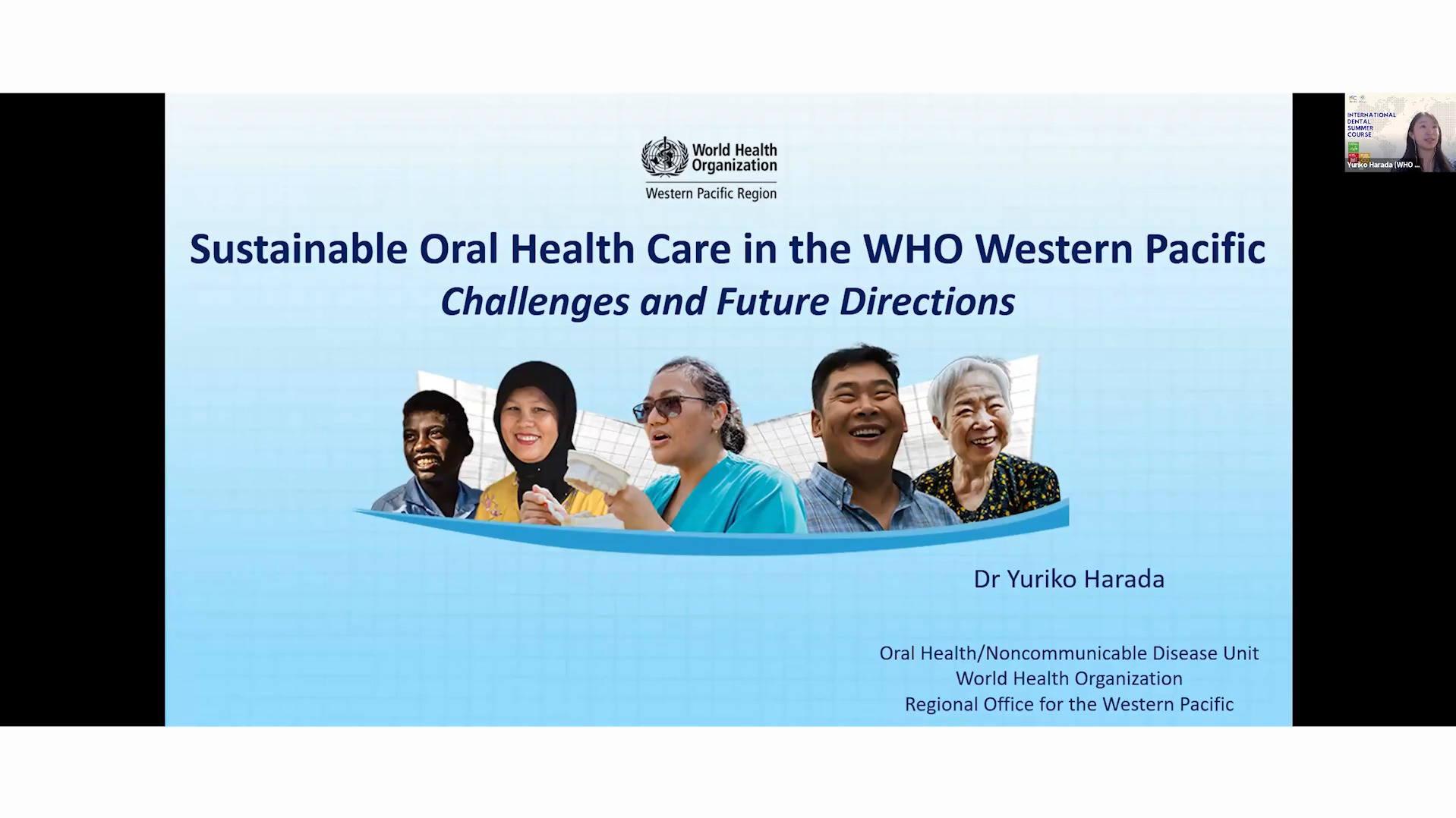
Have you ever considered that every time you sit in a dental chair to have a cavity filled, an environmental footprint and global health inequity may be left behind? This surprising reality was explored in depth by Dr. Yuriko Harada, DDS, MPH, Technical Officer for Oral Health at the World Health Organization (WHO) Regional Office for the Western Pacific.
During an interactive public lecture held online by the Faculty of Dentistry, Universitas Gadjah Mada (UGM), on Friday (10/7/26), Dr. Harada delivered a thought-provoking message to the modern medical community. Untreated oral diseases are among the most common noncommunicable diseases (NCDs) in the Western Pacific Region, including Indonesia, affecting nearly half of the population.
Five WHO Acceleration Projects Towards 2030
To achieve this target, WHO has outlined five national priority projects that member states need to implement immediately:
- Project A (Task Shifting): Train nurses and midwives to provide basic oral healthcare services. This task-shifting approach is crucial for addressing shortages of dentists in remote areas.
- Project B (Strengthening Community Health Centers): Integrate dental services into primary healthcare through Puskesmas (community health centers) and include them in national health insurance packages such as BPJS.
- Project C (Healthy Schools): Mandate large-scale oral health interventions in schools, workplaces, and elderly care facilities.
- Project D (The Fight Against Sugar): Work together with other NCD programs to combat one of the major threats to both dental and general health: excessive sugar consumption.
- Project E (Policy Blueprint): Develop strong and targeted national oral health policies in each country, including Indonesia.
Goodbye Amalgam, Welcome to the “Magic” Liquid SDF
One of the most revolutionary points in WHO's presentation was its global commitment to completely phase out dental amalgam by 2034. Amalgam, which contains mercury, is considered potentially harmful to humans and the environment.
As an alternative, WHO has issued new guidance emphasizing environmentally friendly and non-invasive treatment approaches:
- Targeted Mass Application: Use fluoride varnish in schools every six months, applied directly on site during screening regardless of the child's initial dental condition.
- The Cavity-Stopping Liquid (SDF): Use Silver Diamine Fluoride (SDF), a liquid capable of arresting tooth decay without requiring a dental chair, electricity, water, or the intimidating drilling process often feared by children.
- Sustainable Restoration: Optimize safe restorative materials such as Glass Ionomer Cement (GIC) while limiting the use of BPA-containing composite resins in vulnerable populations, including children and pregnant women.
Real-World Challenges: Professional Ego to Betel Quid Chewing
During the discussion session, Dr. Harada spoke candidly about the biggest obstacles in the field. In Asia, one of the most significant challenges comes from resistance within the dental profession itself, with some dentists seeking to maintain professional exclusivity and being reluctant to delegate basic tasks, such as applying fluoride varnish, to nurses. This is despite the fact that 30% of Puskesmas in Indonesia reportedly do not currently have a dentist.
The situation is quite different in Pacific Island nations such as Palau and Niue, which have only a handful of dentists because they do not have local dental schools. In the Pacific region, the challenges are compounded by cultural practices involving betel nut and tobacco-containing betel quid from an early age, contributing to a high incidence of oral cancer.
A Wake-Up Call for Future Dentists
Before concluding her session, Dr. Harada offered a pointed reflection for dental students. She criticized the global trend in which many dental graduates pursue specialties in aesthetics, implants, or orthodontics in pursuit of prestige and commercial value.
WHO is calling on the younger generation to consider careers in public health. The world is not currently short of cosmetic dentists; rather, it is desperately in need of big-picture thinkers willing to work in the field to ensure that every segment of society can enjoy a healthy smile without being held back by cost.
Reporter: Nanda, Andri
Photo: Zoom Meeting Screenshot