
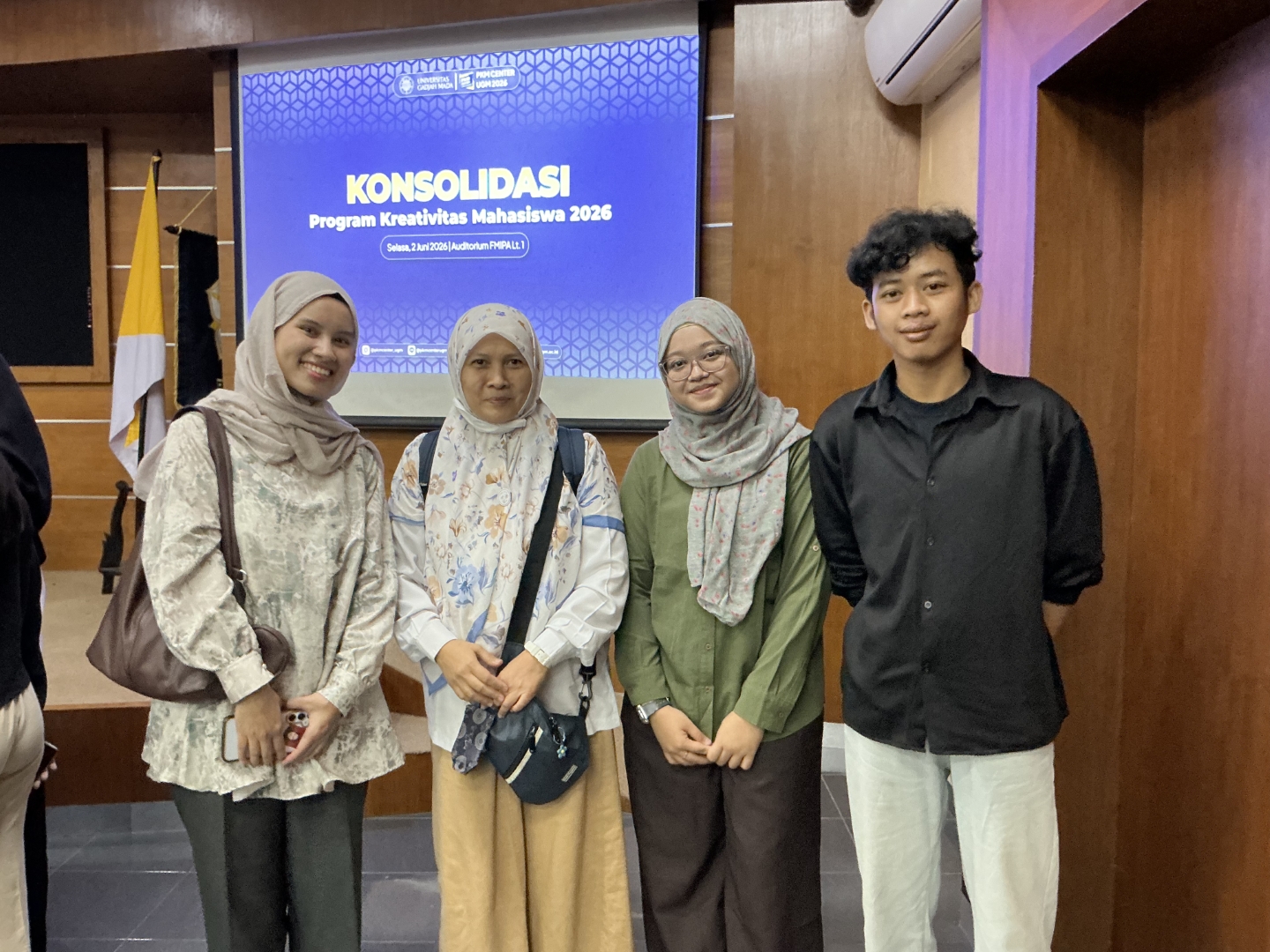
Four students from Universitas Gadjah Mada (UGM) have developed Glicovia, an innovative non-invasive saliva-based device for early prediabetes detection that integrates electrochemical sensor technology, artificial intelligence (AI), and the Internet of Things (IoT). The innovation was created in response to the growing burden of diabetes mellitus, which remains a major global health challenge, particularly in Indonesia.
The interdisciplinary team consists of Alya Ramadhani as team leader, Naefi Luthfia Zahra, and Emmily Martha Renaunia from the UGM Faculty of Dentistry, along with Hendra Kurnia Maliqi from the UGM Faculty of Engineering. The project is supervised by Dr. Indra Bramanti, DDS, M.Sc., Pediatric Dentistry Specialist (Consultant).
The innovation has secured funding through the 2026 Student Creativity Program in Technology Innovation (PKM-KC), supported by the Directorate General of Higher Education, Research, and Technology (Ditjen Diktiristek) and administered through the Directorate of Learning and Student Affairs (Belmawa).
According to Alya Ramadhani, the development of Glicovia was driven by the high prevalence of diabetes in Indonesia, which ranks fifth worldwide in the number of people living with the disease. In 2024, an estimated 20.4 million Indonesians aged 20–79 were living with diabetes. In addition, approximately 29.8 million Indonesians were estimated to have prediabetes, or impaired glucose tolerance, placing them at high risk of developing type 2 diabetes if the condition is not detected and managed early.
Prediabetes is a condition in which blood glucose levels are higher than normal but have not yet reached the diagnostic threshold for diabetes. Because it typically presents no obvious symptoms, many individuals remain unaware that they have the condition. However, early detection followed by appropriate lifestyle modifications and timely intervention can significantly reduce the risk of progression to type 2 diabetes.
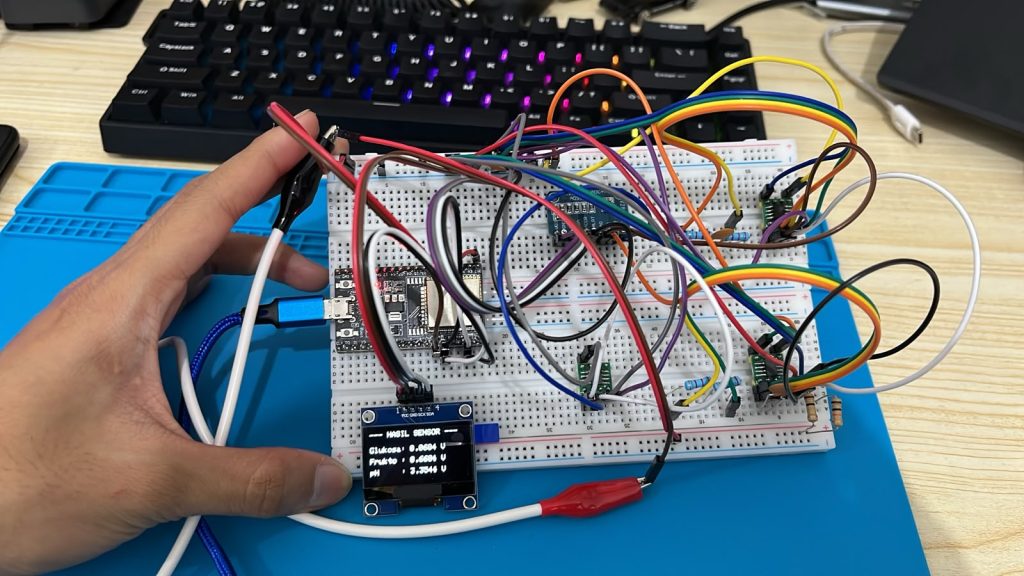
Glicovia was designed to improve public access to early diabetes screening through a technology that is both user-friendly and comfortable to use. “We wanted to develop a screening method that is not only accurate but also more comfortable for users. By utilizing saliva as the testing sample and integrating artificial intelligence with IoT technology, we hope to make early prediabetes detection more widely accessible, allowing the risk of diabetes to be reduced before the disease develops,” Alya said on July 26.
Unlike conventional blood tests, Glicovia uses saliva as the diagnostic sample, eliminating the need for blood collection. A saliva sample is placed on the device’s sensor, which measures several indicators associated with prediabetes risk, including glucose concentration, salivary fructosamine, and pH level. These measurements are then analyzed by an artificial intelligence system to assess an individual's risk of prediabetes. The results are immediately displayed through a mobile application or digital platform, enabling users to monitor their health more conveniently.
In addition to its non-invasive approach, Glicovia embraces the concept of green diagnostics. Using saliva as the testing sample has the potential to reduce the consumption of disposable materials commonly required for conventional blood-based testing. The integration of IoT technology also enables digital storage of patients’ screening histories, making long-term health monitoring more effective, sustainable, and supportive of data-driven healthcare services.
The development of Glicovia is currently about 70 percent complete. The research team has finalized the system design, developed the electrochemical sensor, integrated the device with IoT technology, and built an artificial intelligence model based on a Support Vector Machine (SVM). an artificial intelligence model based on a Support Vector Machine (SVM). “We are currently entering the validation phase using real saliva samples to ensure the accuracy and reliability of the detection results before advancing the device to the next stage of development,” Alya added.
Through the 2026 PKM-KC funding program, the team aims to advance Glicovia to the National Student Scientific Week (PIMNAS) while continuing its development into a practical, accurate, and accessible prediabetes screening device for both the general public and primary healthcare facilities. In the future, the team hopes that Glicovia will not only strengthen diabetes prevention efforts through early detection but also pave the way for the broader implementation of innovative, homegrown non-invasive diagnostic technologies across Indonesia.
Author: Alya Ramadhani
Editor: Fajar Budi Harsakti