
Have you ever realized that the simple routine of brushing your teeth every morning leaves behind a significant threat to the planet? Every year, billions of conventional plastic toothbrushes are simply discarded. Because they are non-biodegradable, discarded toothbrushes ultimately pollute terrestrial and marine ecosystems and contribute to the accumulation of harmful microplastics.
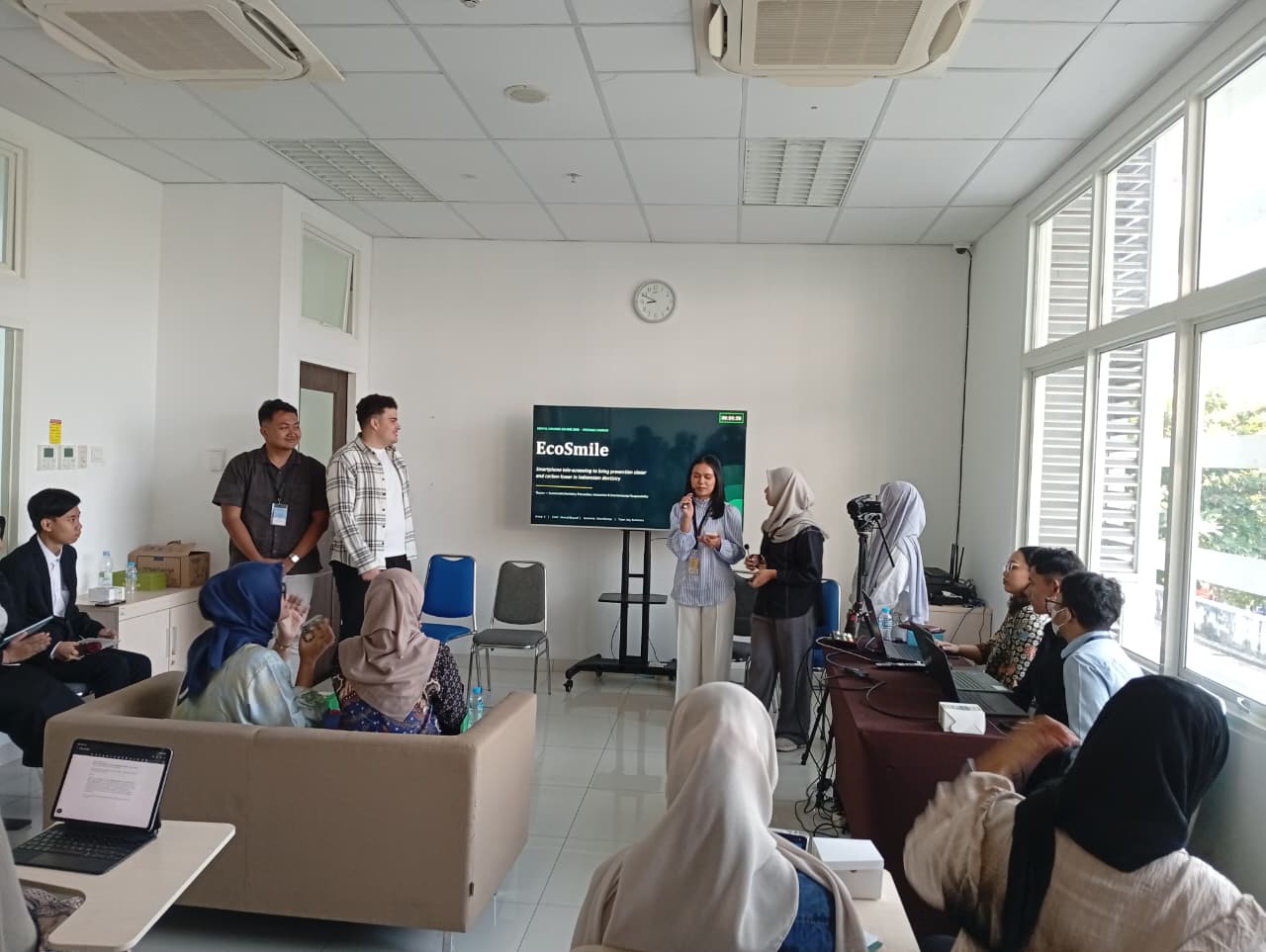
Recognizing this environmentally damaging disposal cycle, a group of students participating in the Dental Summer Course 2026 launched a green innovation called BRUSH. The innovative product was presented during a scientific presentation held at the Dental Learning Center (DLC) UGM on Thursday, July 16, 2026.
Rather than relying on fossil-based materials, the toothbrush utilizes an abundant agricultural waste product in developing countries: rice husks. “By switching to rice-husk-based products, we can practice transforming waste into a valuable resource,” said a representative of Group Four.
Education Strategy and Four-Stage Implementation
Group Four recognized that an environmentally friendly product alone would not guarantee long-term behavioral change without adequate education. Therefore, they introduced a four-stage implementation strategy:
- Product Development: Processing raw rice husk waste into ready-to-use toothbrushes.
- Ambassador Training: Training dental students and healthcare professionals to promote sustainable dental practices.
- Community Outreach: Conducting educational programs and distributing product samples directly to the public.
- Evaluation: Assessing public acceptance, measuring improvements in knowledge, and collecting feedback.

Addressing Audience and Jury Concerns: Hygiene and Advantages
The question-and-answer session at the UGM DLC became particularly lively when audience members and jury members raised critical questions. Devina, one of the audience members, questioned the hygiene of the toothbrush. Because rice husks have a porous surface, there was concern that the toothbrush handle could become susceptible to bacterial or fungal growth when wet, unlike nonporous plastic.
The group representative immediately addressed the concern with scientific data. “Rice husks naturally contain 20 to 25 percent silica, which helps strengthen the material and gives it very low water absorption,” the representative explained. In addition, during manufacturing, the biocomposite material is coated with a food-safe hydrophobic layer to help the handle dry quickly after use and prevent microbial growth.
The jury also questioned the product's novelty and advantages compared with bamboo toothbrushes, which are already widely available on the market.
The innovation team explained that the product's primary strength lies in its use of locally available waste. “Our country produces millions of tons of rice husk waste every year. We recycle some of this rice husk into a sustainable oral hygiene product,” the team representative emphasized. “Brush! Make nature design for smile!”
Reporter: Nanda, Andri Wicaksono, Photo: Andri Wicaksono