
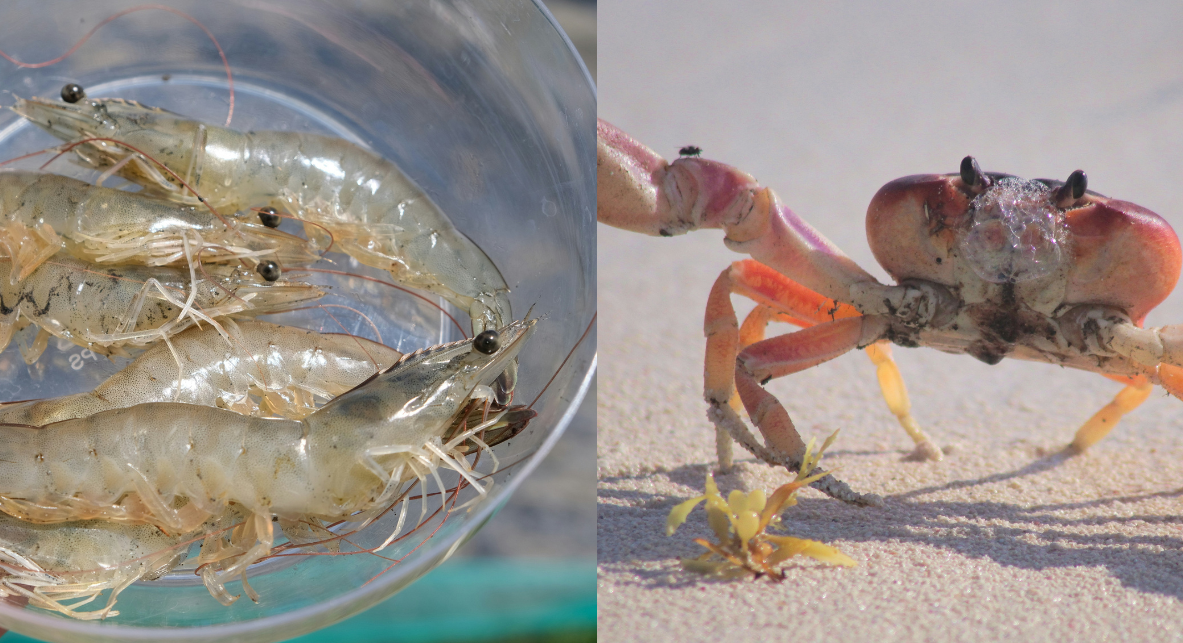
Drg. Raras Ajeng Enggardipta, MDSc., Sp.KG., a lecturer in the Department of Conservative Dentistry, Faculty of Dentistry, Universitas Gadjah Mada (FKG UGM), together with a team of scientists from Tokushima University, Japan, has developed a medical innovation using chitosan nanoparticles (CNPs) derived from shrimp and crab shell waste to kill Enterococcus faecalis. This bacterium is widely recognized as a major cause of failure in human root canal treatment. The international research was conducted at the Tokushima University laboratory, and its findings were published online on July 10, 2025, in the Journal of Applied Microbiology as part of its July 2025 issue. The study represents a response to the search for a tooth-cleaning solution that is safer for patients while remaining effective against harmful bacteria.
This innovation is promising for both dentistry and the wider community, considering that root canal treatment can fail because of bacterial contamination that is extremely difficult to eradicate.
Root canal treatment is a medical procedure designed to remove infected or inflamed pulp tissue, or the dental nerve. After the root canal is cleaned and disinfected through irrigation, it is tightly sealed to prevent reinfection. The key to successful treatment lies in how thoroughly bacteria inside the tooth can be eliminated.
Unfortunately, E. faecalis is exceptionally resilient. It can survive in highly alkaline environments, penetrate dentinal tubules—the tiny channels within tooth dentin—and form biofilms. A biofilm is a thick protective layer that makes bacteria much more difficult to eliminate than free-floating bacteria. Its remarkable adaptability makes E. faecalis one of the major reasons patients may need repeated dental treatment after an unsuccessful root canal procedure.
Dentists have traditionally relied on sodium hypochlorite (NaOCl), or bleach, as the primary root canal irrigant. Although this solution is highly effective at killing bacteria, it is not without risks. This harsh chemical can irritate tissues surrounding the tooth root and may cause burns to the oral mucosa if it is inadvertently extruded and not handled properly by the operator.
To address the limitations of conventional chemical agents, the research team turned to chitosan, a natural polymer derived from the shells of marine animals that has long been recognized for its antimicrobial properties. What makes this study particularly innovative is the use of chitosan in nanoparticle form (CNPs), making the particles far smaller than bacterial cells themselves.
Using a modified ionic gelation method, the researchers synthesized CNPs from two types of chitosan: low-molecular-weight chitosan (LMW) and high-molecular-weight chitosan (HMW). The resulting particles were highly uniform, spherical nanoparticles with a strongly positive surface charge.
This positive charge is the primary weapon used by CNPs to disable bacteria. Because the cell wall of E. faecalis carries a negative charge, CNPs are strongly attracted to and adhere tightly to the bacterial surface, much like a powerful magnet. This interaction damages the bacterial cell membrane, causes leakage of essential proteins, allows the particles to penetrate the cell, and eventually destroys bacterial DNA.
The laboratory experiment tested the effectiveness of CNPs under two conditions: newly formed bacterial biofilms that had developed for 24 hours and mature biofilms that had developed and hardened over two weeks. The laboratory results demonstrated remarkable performance.
In newly formed biofilms, the nano-based solution significantly reduced both bacterial biomass and bacterial viability. Meanwhile, in two-week-old mature biofilms, which are typically highly resistant to antimicrobial treatment, CNPs successfully penetrated the protective layer. Advanced observation using scanning electron microscopy (SEM) showed that although the external structure of the biofilm remained intact, the bacteria within it were dead or dying, with visibly damaged and distorted cellular structures.
In their scientific article, the researchers summarized the potential of this high-tech natural material:
“CNPs, regardless of molecular weight, exhibited antibacterial efficacy against E. faecalis by decreasing biofilm formation and bacterial viability.” — Enggardipta et al., Journal of Applied Microbiology, 2025
Beyond their antibacterial effectiveness, the greatest advantage of these shrimp-shell-derived CNPs is their safety profile. Compared with standard NaOCl solution, CNPs demonstrated substantially lower cytotoxicity. This means that the natural solution is potentially more tissue-friendly and less damaging to living tissues surrounding the gums and tooth roots in the event of accidental extrusion during treatment.
Nevertheless, the researchers from UGM and Tokushima University emphasized that the study remains at the in vitro laboratory-testing stage. Further research, including clinical studies in living organisms, is still required to optimize concentration, contact time, and the ideal formulation before this natural irrigant can be mass-produced and officially introduced into dental practice.
This collaborative research not only opens the door to the development of more environmentally friendly next-generation dental materials. More importantly, it demonstrates how appropriate scientific innovation can transform marine waste into a potential solution to major challenges in modern dental healthcare.
Author: drg. Achmad Zam Zam Aghasy, M.Kes., Annisa Dwi Noviyanti
Photo: FreePik
Source DOI: https://doi.org/10.1093/jambio/lxaf174