
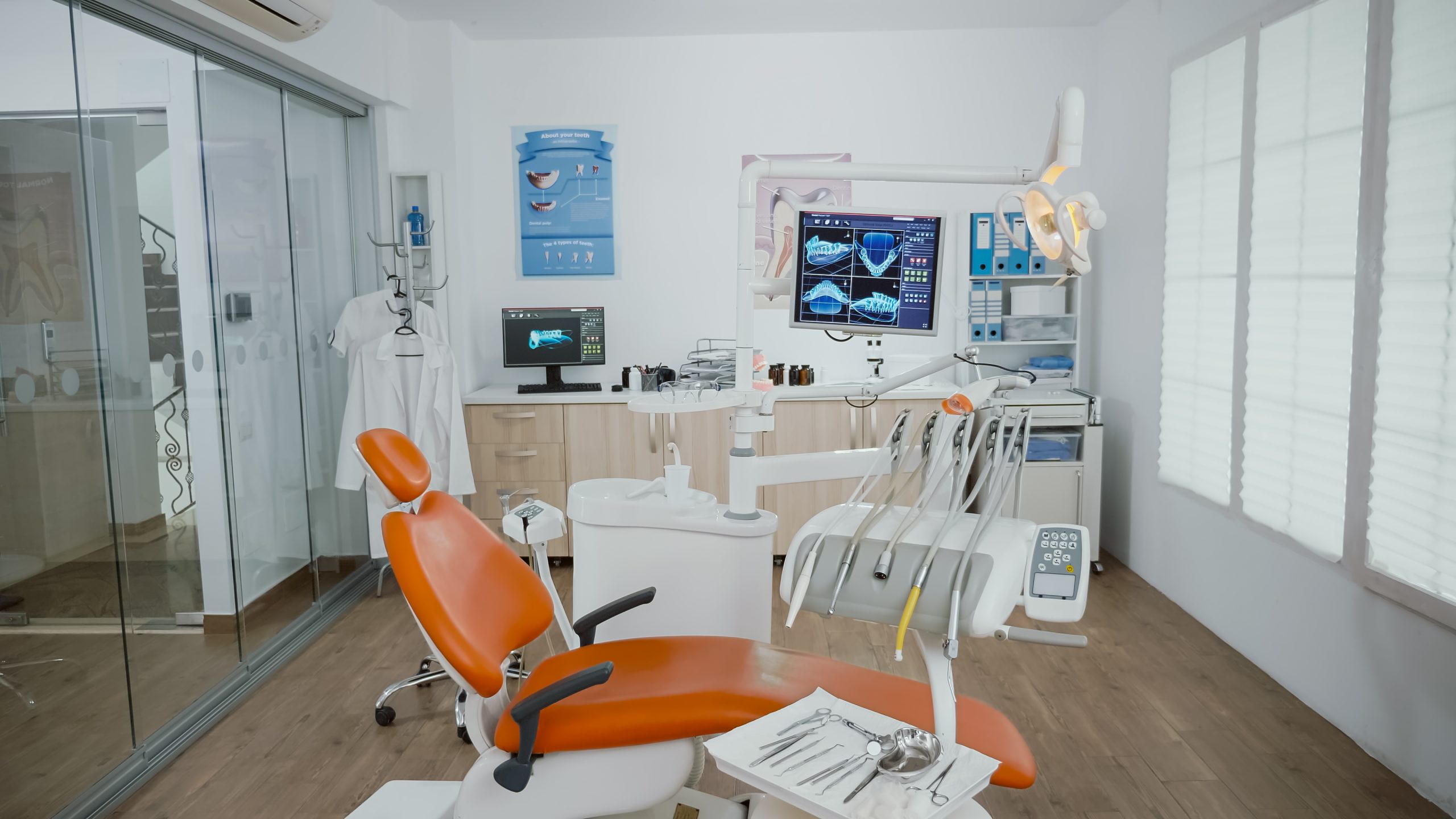
Imagine a dentist having to identify 19 anatomical landmarks on a lateral cephalometric radiograph—one by one, with meticulous precision, while also considering the patient’s unique clinical condition. The process can take more than ten minutes. An artificial intelligence algorithm can perform the same task in three seconds, achieving a detection rate of 97.30% within a two-millimeter deviation.
That figure is not science fiction. It comes from a scoping review published in the Journal of Dentistry in early 2025—a systematic review that mapped 71 studies on the application of artificial intelligence (AI) in orthodontic diagnosis and treatment planning. One of the authors was drg. Rellyca Sola Gracea, Sp. RKG. Subsp. RDP (K), an Indonesian researcher affiliated with the OMFS-IMPATH research group at KU Leuven, Belgium.
From Three Seconds to Thousands of Images: What Can AI Do?
The research team, led by Reinhilde Jacobs, searched PubMed, Web of Science, and Embase through June 2023. Of the 943 articles identified, 71 passed the rigorous selection process and were categorized into three major domains: diagnosis (29 studies), anatomical landmark detection (20 studies), and treatment planning (22 studies).
The results were striking. In the diagnostic domain, AI was shown to classify clinical and radiological images with accuracy of up to 99% in just 0.08 minutes. Assessment of cervical vertebral maturation stages—which normally requires experienced clinical judgment—could be completed by AI in 0.1 seconds, with a maximum reported accuracy of 90%. For diagnosing malocclusion from intraoral images, one CNN model achieved 99% accuracy in detecting conditions such as crowding, spacing, overjet, crossbite, open bite, and deep bite.
Anatomical landmark detection was the most extensively studied topic in the review. Most studies trained AI networks to recognize 19 anatomical landmarks on lateral cephalograms—a task that has long been a cornerstone of orthodontic cephalometric analysis. Interestingly, AI demonstrated better reproducibility than humans, meaning that its measurements were more consistent and less dependent on who performed the analysis.
Treatment Planning: AI Can Help, but It Cannot Work Independently
The findings in the treatment-planning domain were equally interesting. Two independent studies showed that artificial neural networks could predict the need for tooth extraction for orthodontic purposes with approximately 93–94% accuracy. Another system successfully assisted with orthognathic surgical planning, achieving 96.3% diagnostic agreement with expert clinicians.
One model was even designed to predict patients’ experiences during Invisalign treatment, including pain, anxiety, and quality of life, with predictive performance ranging from 88% to 93%. This goes beyond technical efficiency and touches on the human experience of medical treatment.
However, there is a clear limitation. The review emphasized that AI is not yet capable of independently developing treatment plans. Human oversight remains irreplaceable.
“AI should be regarded as a decision-support tool that enhances, rather than replaces, the critical role of clinical judgment in orthodontic care.” — Gracea et al., Journal of Dentistry, 2025
Great Promise, with Serious Caveats
Behind these impressive figures are several important considerations that need to be examined carefully.
First, there is the issue of data. Nearly all AI models in the studies were trained using limited and relatively non-diverse datasets. When tested on different public datasets, model performance often declined significantly. This is a problem of generalizability—a model that performs well at one hospital may not perform equally well at another.
Second, there is the issue of the gold standard. Many studies use expert clinicians’ assessments as the reference standard. Yet experts may also disagree when evaluating the same case. When AI is trained on data that are themselves inconsistent, the resulting models may inherit that uncertainty.
Third, there is the “black box” problem. Complex deep-learning algorithms often cannot explain why they make a particular decision. This is not merely a technical issue—it concerns clinical trust and legal accountability, both of which remain insufficiently defined.
More than 80% of the 71 articles analyzed were published between 2021 and 2023. This surge in publications reflects how rapidly the field is developing. However, the speed of research does not automatically translate into clinical readiness.
Human–Machine Collaboration: A Future Under Construction
The review does not end on a pessimistic note. On the contrary, it maps out areas that remain largely unexplored. Predicting the eruption patterns of impacted teeth, simulating long-term facial growth, automating study-model analysis, and assessing orthodontic indices using AI are all identified as promising areas that still require further research.
Most importantly, the review emphasizes that AI will not replace orthodontists. Instead, it may be most useful as a bridge for clinicians who are still developing their experience or as a second-check tool that can help identify findings that might be overlooked by a fatigued human eye.
Artificial intelligence is entering the orthodontic clinic not to take over the dentist’s chair. It is coming to sit beside the dentist—to assist, accelerate, and provide reminders. How reliable this collaboration ultimately becomes will depend greatly on how seriously the clinical and scientific communities engage in shaping it.
Source DOI: https://doi.org/10.1016/j.jdent.2024.105442
Authors: Anny Anggraini; drg. Achmad Zam Zam Aghasy, M.Kes.
Photo: Freepik