
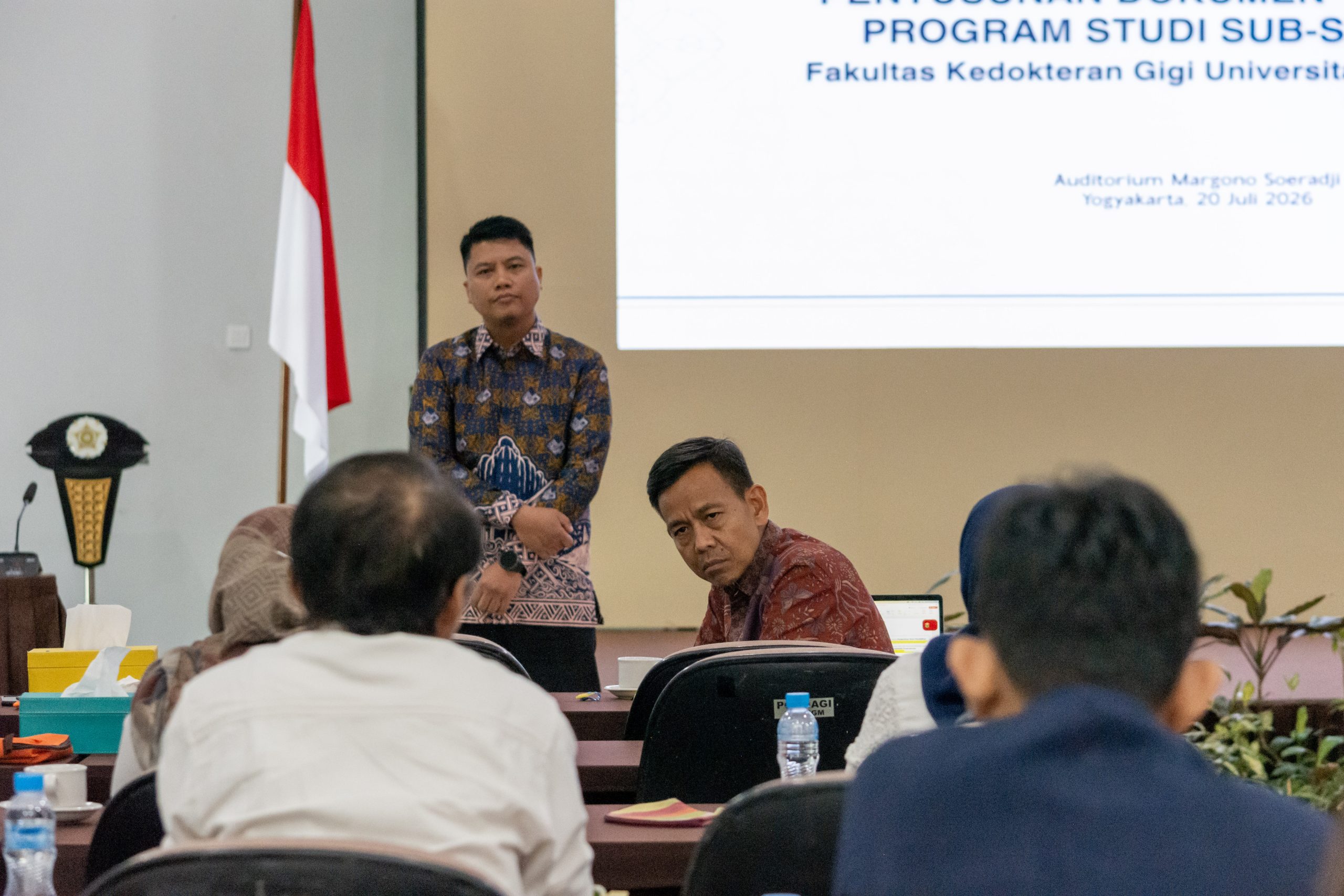
FKG UGM successfully held a strategic academic workshop to prepare for the establishment of a Specialist 2 (Sp-2) or Prosthodontics Subspecialty Program. The important event, which brought together experts and the curriculum task force, was held enthusiastically on the third floor of the Margono Soeradji Building, FKG UGM.
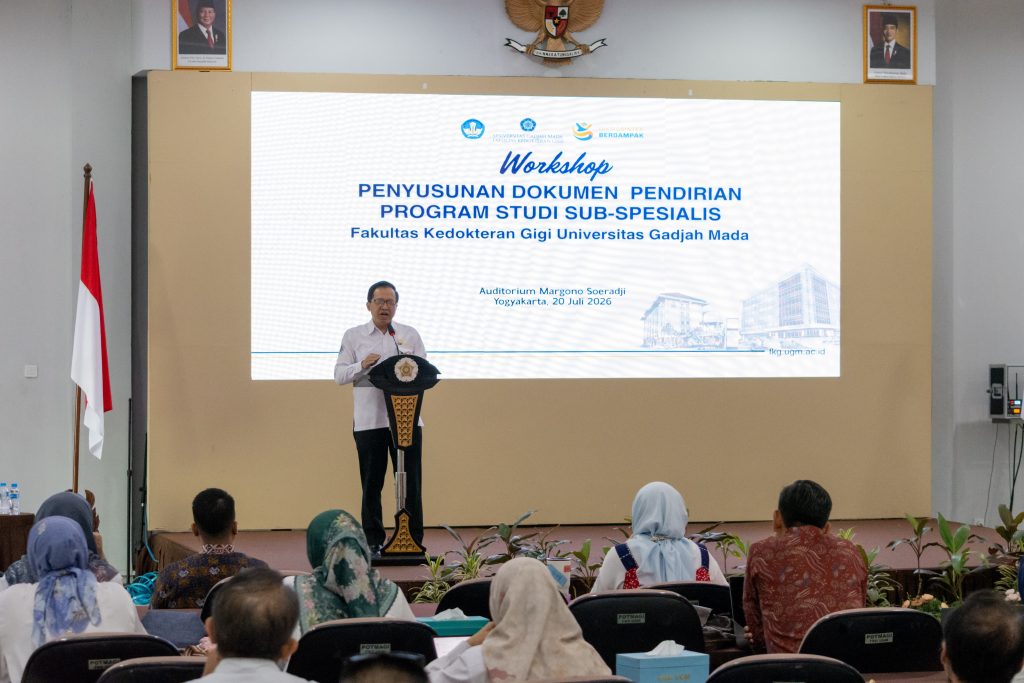
The workshop was attended by the Dean of FKG UGM, Prof. Dr. drg. Suryono, S.H., Ph.D., the Chair of the FKG UGM Senate, department heads, heads of specialist programs, members of the academic paper drafting team, as well as heads of offices and administrative units within FKG UGM. To provide comprehensive preparation, FKG UGM invited two experts from Universitas Hasanuddin (Unhas) as speakers. In his opening remarks, Dean Suryono emphasized the importance of the institution moving quickly to identify opportunities and address new regulatory challenges related to medical education. He highlighted crucial changes in terminology at the ministerial level, including the proposed change in the status of teaching hospitals.
“Let us move quickly. Let us broaden our horizons. We should not focus only on dentistry and oral health, but also look at external developments that have an impact on education,” Prof. Suryono told workshop participants.
Prof. Suryono also reminded the drafting team to adopt a double-track strategy in preparing the academic documents. This strategy involves developing documentation for a multidisciplinary subspecialty program with multiple areas of interest while simultaneously preparing documentation for a program with a specific flagship area of interest. This approach is intended to ensure that FKG UGM remains adaptable to whatever format may ultimately be required by the Ministry of Education, Culture, Research, and Technology (Kemendikbudristek).
Furthermore, the Dean commended the independence of programs such as Oral Surgery, which have successfully optimized internal campus facilities at the UGM Dental Hospital (RSGM UGM) and UGM Academic Hospital (RSA UGM). This model is expected to minimize dependence on external vertical hospitals and strengthen an ideal good governance framework under the university.
In an interactive discussion, the workshop featured drg. Acing Habibie Mude, Ph.D., Sp.Pros., Subsp. OGST(K) as a speaker from FKG UNHAS. He discussed the dynamics of faculty resource management and curriculum development strategies amid regulatory changes. The workshop was dynamically moderated by drg. Intan Ruspita, M.Kes., Ph.D., Sp.Pros., Subsp. OGST(K).
Navigating the “Reshuffling” of Faculty Members and Regulatory Paradoxes
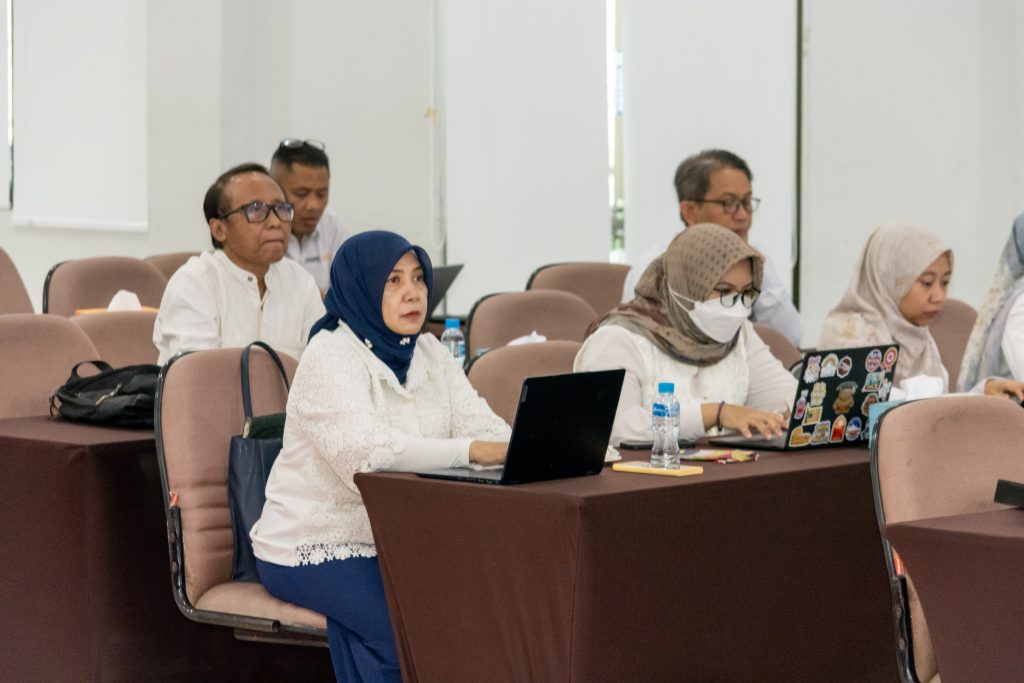
In his presentation, drg. Acing Habibie Mude highlighted a classic challenge frequently faced by institutions establishing new study programs, particularly regarding the mapping of faculty members' home bases. “A common problem is the complexity of faculty members who frequently have to be moved around or reshuffled to meet administrative home-base requirements when a new study program is opened.”
To address this issue, institutions need to establish a solid home-base structure from the outset. Fortunately, the current availability of teaching faculty is considered adequate, with a team of 15 experts ready to be distributed across various levels, ranging from undergraduate programs and professional education to Specialist 1 (Sp-1) and Specialist 2 (Sp-2) programs.
In addition to internal human resource issues, the discussion became more intense when addressing the “regulatory paradox.” Government policies encouraging a reduction in the number of study programs were considered potentially inconsistent with needs on the ground. One concrete strategy proposed to address this challenge was the development of a carefully projected self-financing platform. Through accurate calculations—including determining the minimum number of students required and the standard hourly teaching costs for a new study program—the program is expected to achieve financial independence without continued reliance on university subsidies.
Formulating a Scientific Vision and Simplifying Graduate Learning Outcomes
Another important point emphasized during the workshop was the need to formulate a specific Scientific Vision with a distinctive local advantage, rather than simply copying the organization's general vision. A strong scientific vision will serve as a key differentiator and source of appeal for the study program among external stakeholders and assessors.
In response to the emergence of various new regulations, the speaker recommended that the curriculum drafting team move quickly but strategically. One efficient step proposed was the condensation or simplification of Graduate Learning Outcomes (CPL). Rather than elaborating dozens of points covering attitudes and general skills in excessive detail, the task force was encouraged to condense them into a maximum of 10 focused and measurable learning outcomes, making the learning evaluation process significantly more effective.
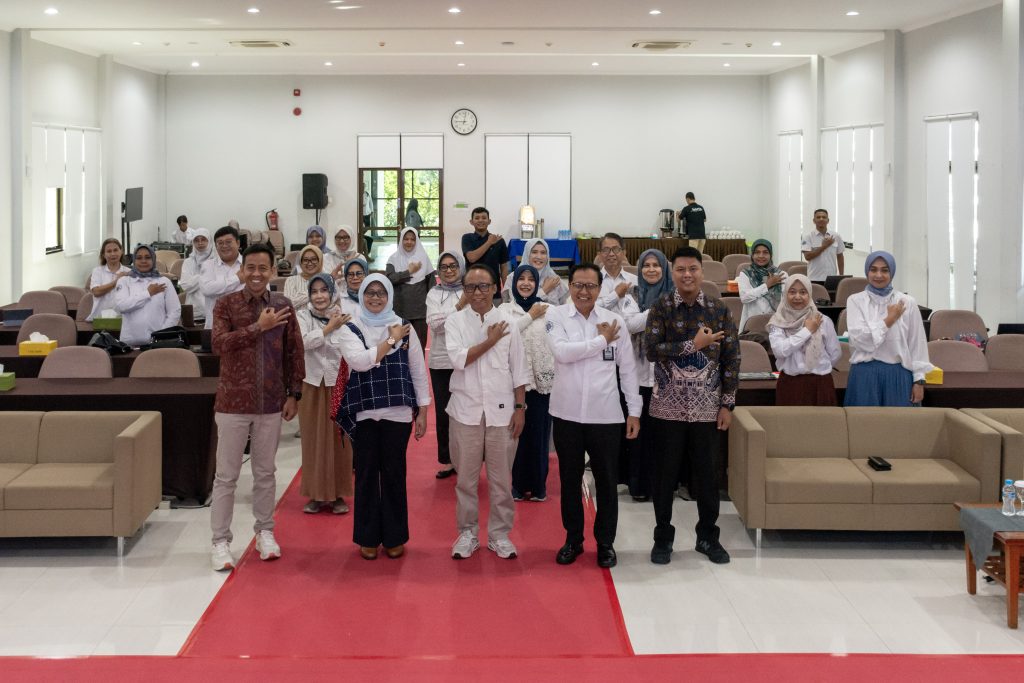
The workshop is expected to serve as a catalyst for FKG UGM in accelerating administrative processes and quality assurance, enabling the establishment of the Prosthodontics Specialist 2 (Sp-2) Program to proceed promptly and address the increasingly complex oral and dental healthcare needs of the Indonesian population.
Reporter: Nanda Ayu | Editor: Andri Wicaksono | Photographer: Fajar Budi Harsakti