
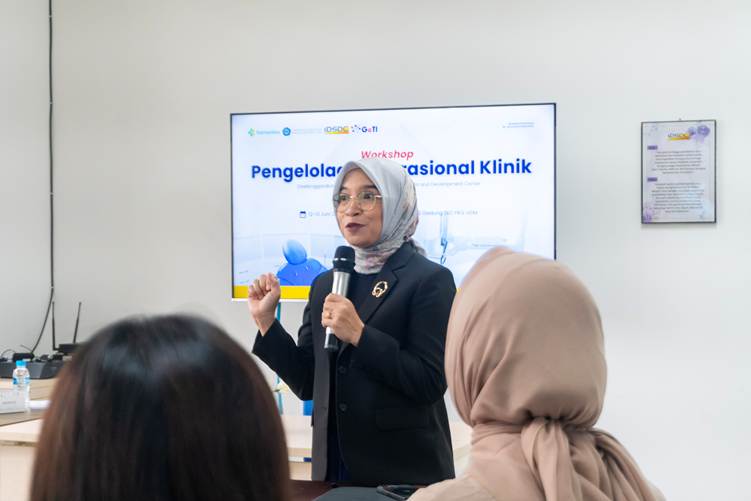
Amid the rapid growth of healthcare clinics, particularly dental clinics in urban areas, and increasing public expectations for services that are fast, safe, and high-quality, clinical expertise alone is no longer sufficient as the primary asset for dentists and healthcare professionals. Today’s healthcare competition requires clinic managers to master various aspects of management, including finance, human resources, marketing, and regulatory compliance in an integrated manner.
This awareness became the foundation for the organization of the Clinic Operational Management Workshop by Interdisciplinary Dentistry Skills Development Center (iDSDC), Faculty of Dentistry, Universitas Gadjah Mada (FKG UGM), held on 12–13 June 2026. This national-scale event was designed as a learning platform for healthcare professionals to understand that clinic success is not solely determined by the quality of medical procedures but also by the ability to professionally manage healthcare service organizations.
Workshop attended by participants from various healthcare professions, discussed comprehensive aspects of clinic management, ranging from human resource management, facility and infrastructure management, patient safety, clinic information systems, finance, marketing, branding, and business development. All materials were designed to address real-world challenges faced by clinic managers in practice.
The Paradox of Dentist-Owned Clinics
In the opening session titled Introduction to Clinic Management, drg. Trianna Wahyu Utami, M.D.Sc., Ph.D., invited participants to reflect on a paradox that has frequently occurred in the healthcare sector.
According to her, medical and dental education equips graduates with the competence required to diagnose and treat patients. However, very limited opportunities are provided to learn how to manage a healthcare service organization.
“The expertise that enables someone to open a clinic does not automatically mean they are capable of managing one. A clinic must be viewed as a system consisting of human resources, facilities and infrastructure, governance, finance, patients, and markets that are interconnected,” Trianna emphasized.
This message was based on realities frequently experienced by clinic owners. Many dentists possess excellent clinical skills but encounter difficulties when they have to manage employees, control cash flow, develop standard operating procedures (SOPs), or maintain patient loyalty.
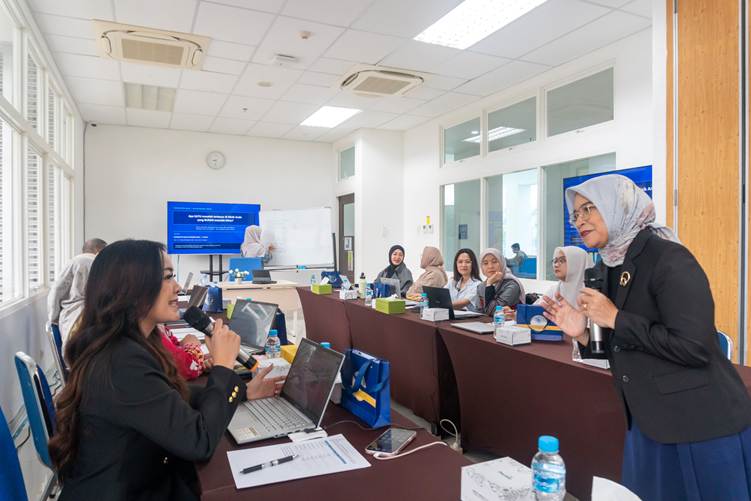
During class discussions, various non-clinical issues that hinder clinic growth emerged. These included staff suddenly resigning, inconsistent service standards, long patient waiting times, weak administrative responses to patients, and challenges related to branding and digital marketing.
These phenomena demonstrate that the biggest problems faced by clinics often do not originate from the treatment room but from the systems operating behind the scenes.
Managing Clinics as an Ecosystem
Analytically, the workshop introduced an approach that differs from conventional clinic training. Clinics are not positioned merely as collections of medical service activities but as ecosystems consisting of five main components: human resources, facilities and infrastructure, SOPs and governance, financial systems, and patients and markets.
From this perspective, disruption in one component can create a domino effect on other components.
For example, administrative staff who do not receive adequate training may cause errors in communicating treatment costs to patients. Such misunderstandings can lead to complaints, reduce patient trust, and eventually affect the clinic’s reputation and number of visits.
drg. Trianna emphasized that clinic owners must be able to wear “two hats” alternately: as clinicians and as managers.
“As clinicians, our focus is the health of the patients in front of us. However, as managers or owners, our focus is the overall health of the clinic organization,” she explained.
She reminded participants that many doctors work in clinics every day but do not necessarily work on their clinics. Meanwhile, clinic development requires dedicated time to evaluate systems, analyze financial data and patient profiles, improve SOPs, and design long-term growth strategies.

Clinic Competition and the Threat of Price Wars
One of the sessions that attracted the most attention from participants discussed strategies for surviving and growing amid increasingly intense competition in healthcare services.
The data presented showed that in urban areas, a clinic may have three to five competitors within a one-kilometer radius. At the same time, patients can now easily compare services through social media, digital platforms, and online reviews.
This situation has pushed many clinics into price wars. However, according to Trianna, this strategy is dangerous in the long term.
“Amid clinic price wars, the only solution is to build a clinic that cannot be compared. Not the cheapest one, but one with a unique position and one that is irreplaceable in patients’ minds,” she emphasized.
This statement criticized the mindset of relying heavily on discounts and promotions as the primary tools for winning competition. According to her, price wars are merely symptoms of a lack of strong identity within a clinic.
As alternatives, participants were introduced to three key strategies: service specialization, improving patient experience, and innovating service models. These approaches are considered more sustainable because they create differentiation that is difficult for competitors to imitate.
Patient Safety and Regulations Cannot Be Ignored
Beyond business and management aspects, the workshop also placed strong emphasis on patient safety and legal compliance. Participants received insights into clinic regulations, risk management, informed consent, medical record management, and healthcare facility accreditation.
In modern healthcare services, regulatory compliance is no longer merely an administrative obligation but an integral part of protecting patients and ensuring organizational sustainability.
Criticism regarding weak governance also emerged during discussions about clinic licensing, which often receives insufficient internal monitoring. When control systems fail to function properly, legal risks may arise at any time and threaten service continuity.
Preparing Future-Ready Clinics
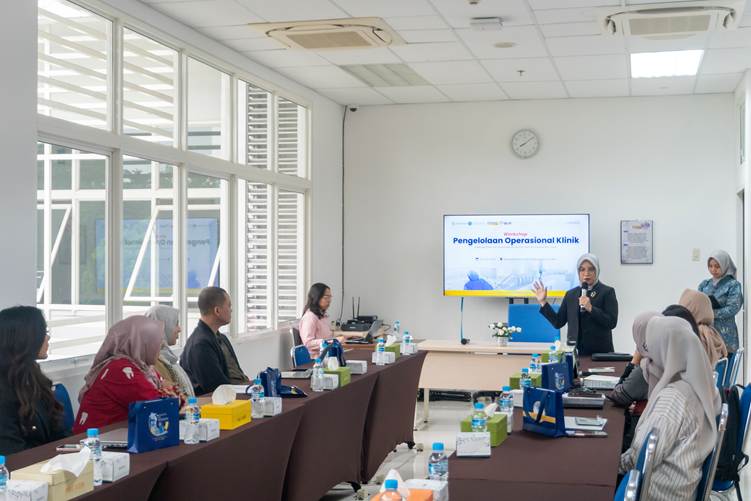
More than a technical training program, the Clinic Operational Management Workshop demonstrated a paradigm shift in primary healthcare services. If clinic success was previously measured mainly by the clinical skills of healthcare professionals, the definition of success has now shifted toward the ability to build effective, adaptive, and patient-oriented systems.
Through practical sessions covering organizational structure development, SOP simulations, logistics management, patient safety, and business planning, participants were encouraged to view clinics as organizations that must continuously learn and adapt.
Ultimately, the workshop delivered a clear message: healthcare quality does not emerge solely from doctors’ expertise in the treatment chair but also from the ability to manage the entire system that supports healthcare delivery.
“All issues related to staff, cash flow, patients who do not return, and licensing problems are actually symptoms of the same issue: clinics that have not yet been managed as a system.”
This statement serves as a reminder that the future of clinics will not be determined by those who own the most advanced equipment or offer the lowest prices, but by those who can build healthcare systems that are strong, humane, safe, and sustainable.
(Reporter: Andri Wicaksono | Photography: Dody Hendro Wibowo)